

U.S. Government Escalates Sanctions Against Venezuela: Targeting Oil Transport and Maduro Regime Affiliates In a significant shift in foreign policy, the U.S. government has intensified its sanctions against Venezuela. The new measures are strategically aimed at disrupting oil transportation and targeting influential individuals associated with the Maduro regime. This escalation underscores the U.S.'s commitment to addressing the ongoing crisis in Venezuela and its impact on regional...
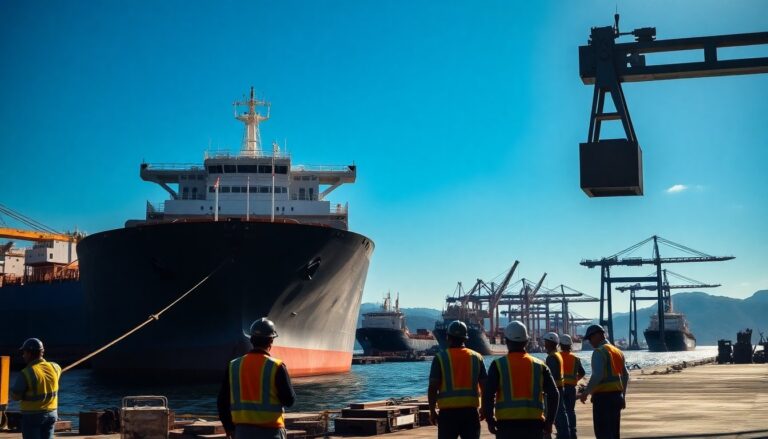
In a significant escalation of its ongoing campaign against Venezuela, the United States has announced a new set of sanctions targeting the oil sector and prominent individuals connected to President Nicolas Maduro. This latest move reflects Washington’s enduring strategy to exert pressure on the Maduro administration, which has long been labeled as corrupt and illegitimate.
The sanctions specifically target three nephews of Cilia Flores, Maduro’s wife, alongside six oil tankers and shipping companies implicated in deceptive practices. The U.S. Treasury Department has stated that these vessels are believed to be instrumental in financing Maduro’s regime, which the U.S.
describes as a narco-terrorist operation.
Details of the sanctions
The sanctions encompass three individuals: Efrain Antonio Campo Flores and Franqui Flores de Freitas, both of whom gained notoriety as the “narco nephews” after their arrest in 2015 for drug trafficking offenses.
They had previously served prison sentences in the U.S. but were released in a prisoner exchange. A third nephew, Carlos Erik Malpica Flores, faces sanctions due to his alleged involvement in corrupt practices at the state oil company, PDVSA.
Impact on the oil sector
With these sanctions, the U.S. aims to disrupt Venezuela’s oil production, a crucial revenue stream for the Maduro regime. Among the sanctioned vessels are supertankers such as the H Constance and Lattafa, flagged by Panama, the Cook Islands, and Hong Kong. These ships have reportedly engaged in unsafe shipping practices, justifying their designation under U.S. sanctions.
The Treasury Department’s statement emphasized that these actions are part of a broader initiative to target financial networks supporting the Venezuelan government. By sanctioning individuals and entities involved in these operations, the U.S. seeks to cripple the financial capabilities of Maduro’s administration.
U.S. response to oil seizure
In a related development, President Trump reiterated his administration’s readiness to intercept shipments of narcotics believed to be routed through Venezuela. This statement followed the U.S. seizing one of the oil tankers off the Venezuelan coast, a move that has intensified tensions between Washington and Caracas.
The White House Press Secretary, Karoline Leavitt, confirmed that the seized tanker would be brought to a U.S. port, and the oil onboard would be claimed by the United States. This operation has been characterized by Maduro as an act of piracy, claiming the vessel was private and carrying oil purchased from Venezuela.
Reflections on U.S. strategy
Despite the sanctions and the seizure, Maduro’s government continues to deny any connection to drug trafficking or corruption. The Venezuelan leader argues that the U.S. is motivated by a desire to control Venezuela’s vast oil reserves rather than a genuine concern for the rule of law or human rights.
As the U.S. implements these sanctions, it also prepares for further actions aimed at intercepting additional vessels transporting Venezuelan oil. Leavitt stated that the administration would not tolerate sanctioned ships operating freely, indicating a commitment to uphold the sanctions policy established by President Trump.
Ongoing conflict
The recent sanctions against Maduro’s regime mark another chapter in a long-standing conflict between the United States and Venezuela. By targeting Maduro’s family members and key figures in the oil industry, the U.S. seeks to undermine the financial foundation of a government it views as authoritarian and corrupt.
The sanctions specifically target three nephews of Cilia Flores, Maduro’s wife, alongside six oil tankers and shipping companies implicated in deceptive practices. The U.S. Treasury Department has stated that these vessels are believed to be instrumental in financing Maduro’s regime, which the U.S. describes as a narco-terrorist operation.0
