

John Swinney Advocates for Urgent Collaboration on Scottish Budget to Ensure Funding for Essential Services John Swinney emphasizes the necessity for immediate cooperation among stakeholders regarding the Scottish budget. He aims to secure vital funding that supports essential public services, highlighting the importance of a united approach to address the financial needs of the community effectively.
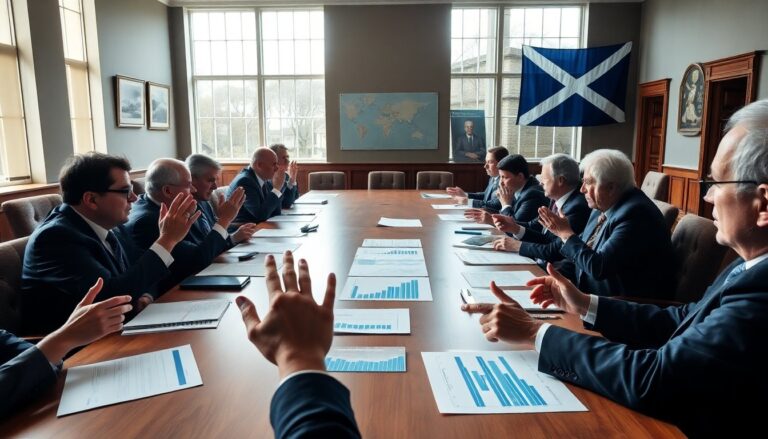
In a call to action, First Minister John Swinney has urged political parties at Holyrood to expedite negotiations on the upcoming budget. The urgency stems from the critical need for certainty in funding for essential public services in Scotland. The Scottish Government plans to unveil its tax and spending proposals on January 13.
However, the timeline for discussions has been severely impacted by the delayed announcement of the UK Government’s budget in November.
The urgency of budget negotiations
Finance Minister John Swinney raised concerns about the limited timeframe for organizations to plan effectively.
He stated, “One of the things that I am concerned about is that that truncates the notice about budget that can be available to a lot of organisations.” This situation impacts not only governmental bodies but also numerous third sector organizations and local authorities that depend on stable funding.
The First Minister emphasized, “Leaving it until early March is quite a challenge, because the financial year ends at the end of March.” He is dedicated to providing clarity regarding the budget as soon as possible, which is essential for organizations making long-term financial plans.
The facts
Chancellor Rachel Reeves announced significant changes to the UK budget, including the removal of the two-child benefit cap. This change is expected to provide additional funding to the Scottish Government, which has already allocated resources to mitigate the impact of this cap in Scotland. Finance Minister John Swinney confirmed that any financial relief from this policy will be reinvested in initiatives aimed at addressing child poverty, a key focus of his administration.
The consequences
While Swinney did not specify how the new funds will be allocated, he emphasized that the reallocation will prioritize programs designed to reduce child poverty. He stated, “The choices and the prioritization is under way just now, but the absolute commitment is there that the resources that we would have spent on lifting the two-child limit will be in place to support other measures to reduce child poverty.”
Political dynamics and tax considerations
The landscape of budget discussions is complicated by the positions of opposition parties, notably the Scottish Conservatives. Party leader Russell Findlay has stated that the Conservative Party’s support for the budget depends on aligning Scotland’s income tax rates with those of the rest of the UK. However, Deputy First Minister John Swinney appears resistant to such concessions. He remarked, “I think some of the points that are advanced by the Conservatives are not aligned with our principles and our programmes, but we’ll talk to them to see what progress can be made.”
During these negotiations, Swinney emphasized that tax cuts are not currently under consideration. Instead, he highlighted the need for a budget that supports essential services without compromising funding integrity, particularly in education and healthcare.
The facts
The delay in budget discussions presents significant challenges for local authorities. These entities need advance knowledge of funding levels to plan their operations effectively. Finance Secretary Shona Robison has acknowledged the necessity of financial certainty for local governments. This certainty is crucial for implementing long-term reforms and enhancing service delivery. The Scottish Government aims to introduce multi-year funding arrangements, which would provide greater stability for local councils.
The consequences
As the January deadline approaches, attention turns to Robison as she prepares to present the budget amid complex negotiations. The outcomes of these discussions will shape the future of public services in Scotland, affecting areas such as healthcare and education. The urgency of reaching an agreement on the Scottish budget is critical. With the financial year nearing its end, collaboration among parties is essential to ensure vital services continue to receive necessary support.
