

Teuta Hoxha's Hunger Strike: A Call for Urgent Medical Attention in Prisons Teuta Hoxha's courageous hunger strike highlights the critical need for immediate medical care within the prison system. This act of protest draws attention to the alarming conditions faced by inmates, emphasizing the necessity for reform and improved healthcare access in correctional facilities.
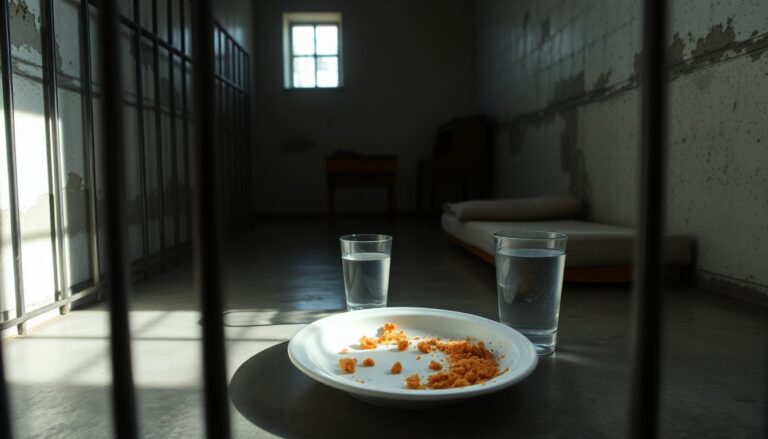
Teuta Hoxha pauses hunger strike amid health concerns
The situation involving Teuta Hoxha, a member of the Palestine Action group, has intensified as she pauses her hunger strike after more than two months. This protest underscores her urgent demand for immediate bail and a fair trial, drawing attention to broader issues of health and human rights within the prison system.
Reports from Prisoners For Palestine indicate that Hoxha’s health has significantly worsened, leading to her hospitalization. The organization asserts that the 29-year-old activist has been denied necessary medical treatment, a condition they describe as critical. This denial raises serious concerns about the risk of refeeding syndrome, a potentially fatal condition that can occur when a malnourished person is reintroduced to food too quickly.
The backdrop of the hunger strike
Hoxha is among several activists on hunger strikes at various prisons in the UK. They are protesting their incarceration linked to break-ins at the UK subsidiary of Elbit Systems. This Israeli defense firm has drawn scrutiny due to its involvement in contentious activities associated with the Israeli-Palestinian conflict.
The protests commenced after the activists’ arrests for alleged actions aimed at damaging military equipment, including an incident at a Royal Air Force base.
Currently, three of the original eight hunger strikers continue their protest, steadfast in their demands. Among them are Heba Muraisi, 31, and Kamran Ahmed, 28, who are advocating for similar rights and conditions. The activism has garnered significant attention, particularly after the UK government classified Palestine Action as a “terrorist organization”, placing it in the same category as groups like al-Qaeda and ISIS. This designation has met with strong opposition from many activists and supporters.
Health implications and calls for action
Reports indicate that the health of the hunger strikers is in serious jeopardy. Hoxha, who has been fasting for 63 days, is suffering from severe health issues, including heart palpitations and insomnia. Her deteriorating condition has prompted urgent demands for medical intervention. Meanwhile, Ahmed has faced multiple hospitalizations due to rapid weight loss and related health complications.
This situation has incited a growing public outcry, urging the British government to take immediate action to safeguard the health and human rights of those detained. Activists like Audrey Corno have strongly criticized the treatment of these prisoners, describing it as a clear violation of their rights. She stressed that the ongoing resistance from these individuals highlights their unwavering commitment to justice for the Palestinian people.
The broader impact of the hunger strikes
The actions of Hoxha and her fellow activists resonate with historical struggles, notably the Irish hunger strikes of 1981, which became symbols of resistance against oppression. In Belfast, solidarity rallies have emerged as communities gather to support the Palestine Action hunger strikers, drawing parallels with past movements for justice.
Protests in Belfast have seen participants chanting slogans and painting murals that intertwine the narratives of both Irish and Palestinian struggles. Activists have emphasized the importance of supporting those who seek justice against oppressive systems. The movement has rapidly gained momentum, with hundreds participating in demonstrations across the UK and beyond.
As the situation of the hunger strikers evolves, their demands remain unequivocal: the right to bail, a fair trial, unimpeded communication, the lifting of the proscription on Palestine Action, and the closure of Elbit Systems’ factories in the UK. These demands highlight a broader call for justice in the face of systemic oppression.
The ongoing hunger strikes symbolize not only a personal protest but also a collective demand for the recognition of human rights and dignity for all, especially for those suffering under oppressive regimes. The future of these activists is uncertain, yet their courage continues to inspire a growing movement for change.
