Recent Crane Accidents in Thailand: Addressing Ongoing Construction Safety Challenges The alarming frequency of crane accidents in Thailand has underscored significant safety concerns within the construction industry. These incidents not only pose risks to workers but also raise questions about regulatory compliance and safety standards on job sites. As the construction sector continues to grow, it is imperative to prioritize safety measures and implement rigorous training programs for crane...
Topics covered
Thailand grapples with crane collapses amid safety concerns
Thailand has faced a shocking crisis with two crane collapses occurring within a span of 48 hours, resulting in multiple fatalities and sparking urgent discussions about construction site safety. The first collapse took place on Wednesday in Nakhon Ratchasima, a northeastern province.
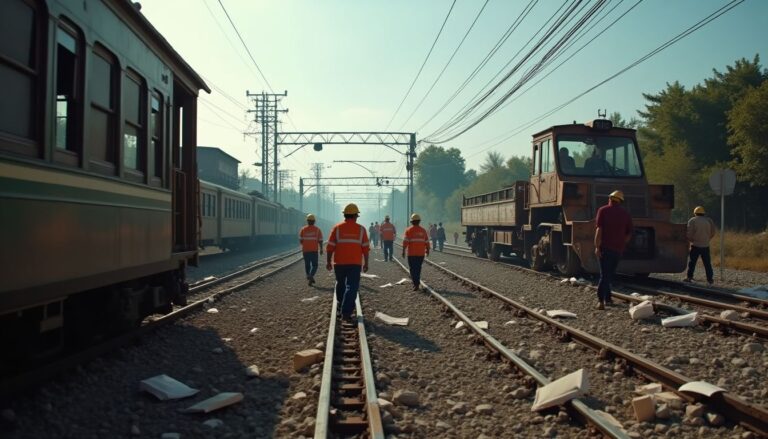
A crane fell onto a moving passenger train, leading to the tragic loss of at least 32 lives and leaving many injured.
The following day, another crane collapsed in Samut Sakhon, near Bangkok, claiming the lives of two additional individuals.
This series of incidents has sent ripples of grief and shock throughout the nation, highlighting the need for stringent safety measures in the construction industry.
Details of the crane collapse incidents
The incident in Nakhon Ratchasima occurred while a construction crew was engaged in an elevated railway project, aimed at improving rail connectivity between Thailand and China.
A large crane, identified as a launching gantry crane, fell as a train was traveling to Ubon Ratchathani. This catastrophic failure led to the train derailing and subsequently catching fire, creating a scene of chaos as rescue operations were initiated to assist those trapped in the wreckage.
The aftermath and rescue efforts
Eyewitness accounts provide a disturbing view of the aftermath. Local resident Mitr Intrpanya reported hearing a loud noise followed by explosions when the crane collided with the train. In the midst of the chaos, rescue teams worked diligently to extract survivors, often employing heavy machinery to navigate through the twisted metal of the train carriages. The full extent of the casualties remains under evaluation, with initial reports suggesting that the death toll may increase as rescue operations progress.
Another tragic incident in Samut Sakhon
Just a day later, another crane collapse occurred in Samut Sakhon. A crane involved in the construction of an elevated highway fell onto a busy road, resulting in the deaths of two individuals and injuring five others. This incident has intensified concerns regarding safety protocols at construction sites throughout Thailand. The Rama II Expressway, where this accident occurred, has become notorious for a history of construction-related fatalities, earning it the grim nickname of “Death Road.”
Link to a larger project and accountability
Both crane incidents are linked to the same construction firm, Italian-Thai Development. This company has been involved in numerous infrastructure projects throughout the country. Transport Minister Phiphat Ratchakitprakarn has called for a comprehensive investigation into the circumstances surrounding these accidents, highlighting the urgent need for accountability within the construction industry. The firm’s prior involvement in a fatal building collapse in Bangkok raises serious concerns about its commitment to safety regulations and practices.
Broader implications for construction safety in Thailand
Recent tragic events have ignited a national discussion on construction safety in Thailand. Historically, industrial and construction-related accidents have been prevalent, resulting in significant loss of life. For instance, a freight train accident in 2026 claimed eight lives when it collided with a vehicle at a railway crossing. Additionally, a bus crash associated with railway construction in the same year resulted in 18 fatalities. These alarming incidents underscore the urgent need for improved safety measures and stringent enforcement of regulations within the construction sector.
As investigations continue, the Thai government faces increasing pressure to enforce stricter oversight within the construction sector. Recent crane collapses highlight the severe consequences of inadequate safety measures. Moving forward, it is crucial for construction industry stakeholders to collaborate on effective solutions that prioritize the safety of workers and the public, thereby preventing future tragedies.