

A government minister has signalled that a funding package for the 139-year-old Hammersmith Bridge is close, offering hope for a long-awaited reopening that will rely on national, city and local contributions
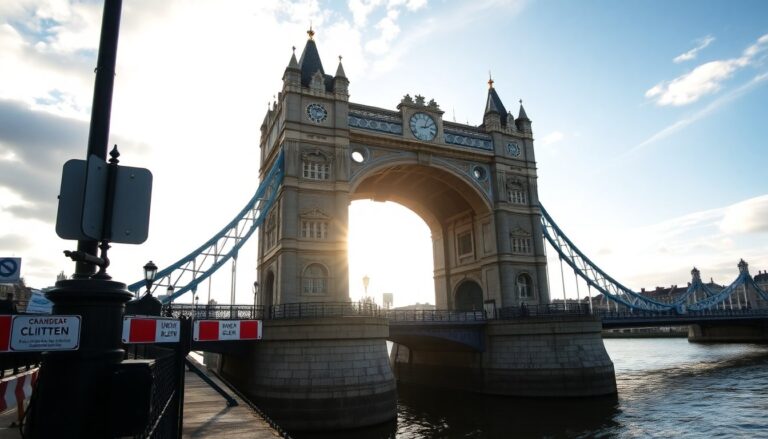
Hammersmith Bridge might finally be moving out of limbo.
The Victorian iron crossing in west London — opened in 1887 and protected as Grade II* — has been closed to motor traffic for seven years. The repair bill has ballooned to well over £250 million, far beyond what the borough can shoulder alone.
Still, ministers say the bridge is now on a shortlist for the new national Structures Fund, a pot set up to tackle ageing transport assets. Any big-money award won’t land without an airtight engineering plan and affordability checks from both central and local government, but the shortlist is at least a meaningful step forward.
Why this matters
– The bridge was once a busy artery, handling as many as 22,000 vehicles a day and several bus routes. Today it’s largely a walking and cycling route on a limited basis.
– Seven years of partial closure have squeezed local travel options, pushed traffic onto alternative routes and dented footfall for some businesses.
– The scandal isn’t just emotional or historic: specialist restoration for heritage ironwork is expensive, time-consuming and technically hard to price up. That’s why estimates vary so widely.
How funding stalled — and how it could be fixed
Central government, City Hall and the borough are exploring a pooled approach to spread risk and costs. That model could unlock the repairs faster than expecting one party to pay the whole bill. But several conditions must be met first:
– A clear, evidence-based engineering solution that balances conservation and safety.
– Robust costings and a delivery schedule with enforceable milestones.
– Value-for-money tests that meet the Structures Fund’s eligibility rules.
So far, short-term government grants — about £4.7m last spring — kept pedestrians and cyclists safe. Those emergency funds stabilised parts of the bridge but didn’t touch the long-term fix. Ministers now describe the structure as a “compelling candidate” for the Structures Fund, provided engineers can prove a feasible plan.
Numbers to keep in mind
– Repair and remediation costs: north of £250 million.
– Short-term emergency grants provided: roughly £4.7 million.
– National goal cited for the Structures Fund: repair work across about 3,000 transport elements nationally — bridges, tunnels and flyovers.
Big practical headaches
– Engineering uncertainty: the bridge needs specialist restoration methods and phased works; hidden defects could blow up the price.
– Timelines: more surveys, procurement and contractor availability all add months — or years.
– Politics and liability: the council owns the bridge, but national willingness to underwrite costs matters. Local election cycles can also make partners more cautious about announcements.
Local impacts
Commuters have had to detour via Putney and Chiswick, increasing journey times and costs. Transport operators rerouted buses and adjusted timetables, while some traders have reported quieter streets. On the flip side, restoration work would create demand for heritage engineers, contractors and specialist materials — and insurers will be revisiting premiums for similar assets.
Wider market and sector picture
Public budgets are under pressure everywhere. Health, education and housing often come before isolated infrastructure projects, so investor appetite for long-dated municipally backed works remains guarded unless funding is predictable and delivery dates are clear. The Structures Fund’s approach — prioritising projects that can show cost-effectiveness and matched funding — is designed to reduce that risk, but it also raises the bar for applicants.
Other crossings and the bigger backlog
Hammersmith isn’t the only headache. Nearby spans such as Albert Bridge have also shown worrying signs in recent inspections. Officials say the Structures Fund aims to tackle roughly 3,000 elements across the network, but complex load-bearing failures will soak up a disproportionate share of resources. That means prioritisation, staged works and contingency buffers are likely.
What happens next
– Engineers need to finish specialist surveys and set out a costed, conservation-sensitive plan.
– If that plan passes safety, budget and value-for-money tests, the Structures Fund or a blended financing package (central + City Hall + borough + conditional private money) becomes realistic.
– Officials expect further technical reports and negotiations before any definitive funding package is announced. If those pieces fall into place, Hammersmith Bridge could get the long-term investment it needs — and the wider fund could help prevent similar asset failures elsewhere. Until then, commuters, traders and investors will be watching the next project update closely.
