Gaza Situation: Intensifying Military Actions and Diplomatic Ceasefire Efforts The situation in Gaza is evolving rapidly as Israel's military operations intensify, coinciding with significant diplomatic efforts to establish a ceasefire agreement.
Topics covered
As Israel intensifies its military operations in Gaza, ongoing peace negotiations add complexity to the situation. Recent reports indicate that Israeli airstrikes have claimed the lives of at least eight Palestinians, including minors, while the United States announces progress in its peace initiative.
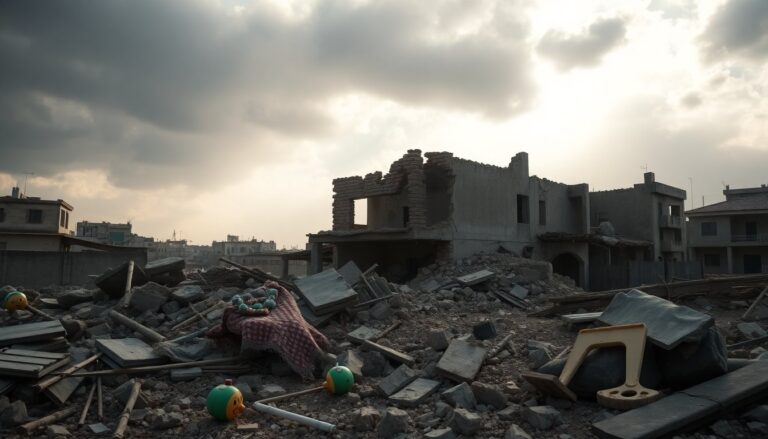
The airstrikes targeted residences in Deir el-Balah, specifically homes belonging to the al-Hawli and al-Jarou families. Among the deceased was a 16-year-old, underscoring the tragic impact on civilian lives amid the conflict. Notably, one victim, Muhammad al-Hawli, was affiliated with Hamas’s military wing, the Qassam Brigades, suggesting that these attacks are part of Israel’s broader strategy to influence ceasefire negotiations.
The ongoing conflict and its implications
Reports from the Wafa news agency indicate that the Israeli military’s actions are not merely reactive but part of a calculated strategy to define the parameters of a ceasefire on its own terms.
Al Jazeera’s correspondent, Ibrahim al-Khalili, emphasized that these developments signal Israel’s intent concerning the future of the peace process, prioritizing its national interests.
In response to the attacks, Hamas condemned the Israeli military’s actions, labeling the strikes a despicable crime. This statement reflects increasing frustration among Palestinian leaders over the ongoing violence, particularly in light of the ceasefire that has seen over 450 Palestinians killed, including many children, since its inception. During the same period, three Israeli soldiers have also lost their lives.
As the conflict escalates, the United States has introduced the second phase of its peace plan, transitioning from a ceasefire to focusing on demilitarization and governance in Gaza. U.S. special envoy Steve Witkoff announced the initiation of this phase, which will involve a Palestinian technocratic administration overseen by an international Board of Peace tasked with enhancing regional stability.
Details of the peace initiative
The proposed plan aims to facilitate Gaza’s reconstruction while disarming unauthorized militia groups, specifically targeting Hamas, which has resisted calls for full disarmament. This initiative also includes a commitment to deploy an International Stabilization Force to support security efforts and train local police units.
Leadership and governance in Gaza
Ali Shaath, a former deputy minister from the Palestinian Authority, has been appointed to lead the National Committee for the Administration of Gaza. This committee is responsible for daily governance and is currently convening in Egypt to strategize their potential governance of the territory. Shaath has emphasized that the committee will prioritize intellect over force, aiming to achieve stability without collaborating with armed factions.
Hamas official Bassem Naim has responded positively to the establishment of this committee, describing it as a crucial step toward consolidating the ceasefire and addressing the humanitarian crisis resulting from the conflict. Naim asserted that the responsibility now lies with the international community to empower the committee to effectively manage Gaza’s governance.
Humanitarian concerns and reconstruction efforts
While these diplomatic efforts unfold, the humanitarian situation in Gaza remains dire. The initial phase of the U.S. peace plan initiated on October 10 sought to establish a ceasefire and facilitate humanitarian aid into the region. However, restrictions imposed by Israel have worsened conditions for over two million residents struggling to survive in inadequate living situations.
Jorge Moreira da Silva from the United Nations Office for Project Services has called for urgency in reconstruction efforts, asserting that the situation is currently inhumane. He also noted that a historical opportunity has arisen to commence reconstruction, estimated to require approximately $52 billion according to various international assessments.
The airstrikes targeted residences in Deir el-Balah, specifically homes belonging to the al-Hawli and al-Jarou families. Among the deceased was a 16-year-old, underscoring the tragic impact on civilian lives amid the conflict. Notably, one victim, Muhammad al-Hawli, was affiliated with Hamas’s military wing, the Qassam Brigades, suggesting that these attacks are part of Israel’s broader strategy to influence ceasefire negotiations.0
The airstrikes targeted residences in Deir el-Balah, specifically homes belonging to the al-Hawli and al-Jarou families. Among the deceased was a 16-year-old, underscoring the tragic impact on civilian lives amid the conflict. Notably, one victim, Muhammad al-Hawli, was affiliated with Hamas’s military wing, the Qassam Brigades, suggesting that these attacks are part of Israel’s broader strategy to influence ceasefire negotiations.1