

Discover how employees who wear branded or specialist clothing can claim tax relief, the higher allowances available to certain professions and steps to check National Insurance and A1 certificate processing
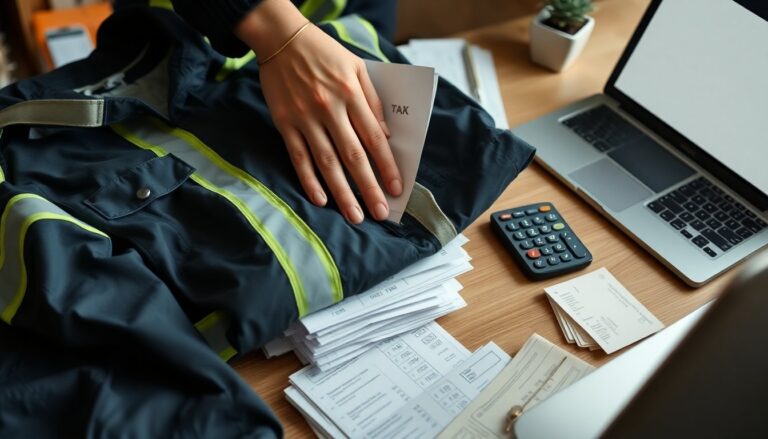
If your employer expects you to wear a company-branded uniform, specialist kit or specific clothing for work, you may be able to claim tax relief from HM Revenue & Customs. Below is a straight-talking guide: who qualifies, what you can claim, how to backdate a claim and the quickest way to apply.
Who can claim
– Employees who are required to wear a branded uniform or specialist clothing as part of their job.
– People whose employer insists on particular garments (optional logo tees or general business attire don’t count).
– Certain occupations have higher, fixed allowances because their work involves unusual wear and tear or cleaning costs.
What you can claim
– Standard flat-rate allowance: a fixed sum HMRC accepts for cleaning and upkeep. No receipts needed for this.
– Occupation-specific flat-rate allowances: bigger, pre-set amounts for some jobs (see examples below). These replace the standard flat rate when they apply.
– The allowance reduces your taxable income rather than giving you a direct cash payment. That usually means less tax is taken from your pay or you receive a refund.
Examples of occupation-specific allowances
– Pilots and co-pilots: £1,022
– Dental nurses and healthcare assistants: £125
– Ambulance staff: £185
– Mechanics: £120
– Firefighters: £80
Note: nurses and midwives can sometimes claim additional sums for footwear and hosiery on top of the standard allowance.
How the money works (quick math)
– The allowance reduces the amount of income on which you pay tax. So a basic-rate taxpayer (20%) effectively gets about 20% of the allowance back as lower tax; a higher-rate taxpayer (40%) gets roughly 40% back.
– Example: a £60 standard allowance would reduce tax by roughly £12 for a basic-rate taxpayer.
Backdating claims
– You can usually claim for earlier tax years within HMRC’s statutory time limits. One application can cover multiple years and may result in a lump-sum refund.
– For older years HMRC may ask for evidence: employer statements, payslips, purchase receipts or laundering records. Keep anything that shows you were required to wear the clothing.
How to claim
– Online is usually the fastest route. You can also submit form P87 by post.
– Have your National Insurance number, employer details and PAYE reference ready (you’ll find the PAYE reference on payslips or your P60).
– For the current tax year HMRC will often adjust your tax code so your take-home pay increases gradually; for past years you’re more likely to get a direct refund.
Evidence to keep
– A copy of your employer’s uniform policy or a written statement confirming the uniform is compulsory.
– Payslips or a P60 showing employer details.
– Receipts for purchases or laundering if you have them (not required for standard flat-rate claims, but helpful for checks or higher allowances).
Deadlines and practical tips
– Don’t wait too long—missing statutory time limits can cost you the chance to backdate claims.
– HMRC may request extra documents; tidy, readily available records speed up the process. Keep your contact details up to date so you don’t miss any messages.
National Insurance and working abroad
– If you’ll work temporarily in the EEA, Switzerland or Gibraltar, you may need an A1 certificate to confirm which country’s social security rules apply.
– Keep your National Insurance record accurate—gaps can affect state pension entitlement.
Who can claim
– Employees who are required to wear a branded uniform or specialist clothing as part of their job.
– People whose employer insists on particular garments (optional logo tees or general business attire don’t count).
– Certain occupations have higher, fixed allowances because their work involves unusual wear and tear or cleaning costs.0
