

An inside view of Scotland's specialist boarding music school where talent guides admission and performance is the curriculum
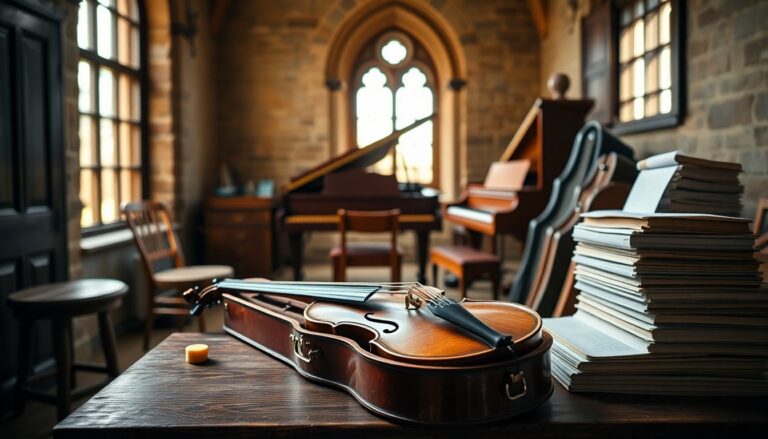
The St Mary’s Music School in Edinburgh is unique in Scotland: a compact, specialist institution that selects pupils on artistic promise rather than financial means. With just 74 students, the school combines full academic study with intensive music education, mixing boarding life with daily rehearsals and public performances.
Admission is driven by an audition and assessment system designed to reveal long-term potential, and the funding model blends government-supported tuition through means testing with vital charitable giving to meet running costs. The result is a concentrated environment where musical development and stage-readiness are the shared priorities.
Daily life at St Mary’s revolves around performance opportunities and specialist lessons, supported by a team that often performs dual roles so pupils receive both musical and pastoral care. The school educates the cathedral choristers from P5 to S2 and provides each pupil from S1 with a personal accompanist so collaborative skills are cultivated early.
Small class sizes and lunchtime recitals give young musicians frequent chances to present work to peers and family, while visiting tutors and professional masterclass leaders expand stylistic and technical horizons. Leadership under headteacher Kenneth Taylor and Director of Music John Cameron emphasizes resilience, practical performance skills and the discipline needed for a career in music.
Teaching approach and performance culture
The school’s pedagogy prioritizes live music-making and critique as core elements of learning. A typical performance class is a communal exercise: a student performs under close observation and then receives structured responses from classmates and staff. These sessions are not about flattery but about honest, focused appraisal; staff encourage students to use constructive feedback so that each performer learns to refine phrasing, rhythm and expression under pressure. The atmosphere trains pupils to listen analytically and to translate comments into concrete improvements, mirroring the demands of a professional performance pathway.
Peer-led critique and preparation
Peer assessment is a deliberate tool at St Mary’s, intended to strengthen confidence and realistic self-evaluation. Younger pupils are taught how to articulate musical observations without being unkind, while older students learn to accept critique from less experienced peers. Teachers guide these exchanges so comments become specific and actionable rather than vague praise. This practice helps students internalize standards of excellence and prepares them for auditions, competitions and ensemble work where immediate, candid review is routine. The approach is rigorous by design and aims to create performers who can respond to both praise and tough honesty.
Admissions, funding and outreach
The admissions journey is multi-layered: families submit a recorded performance, after which shortlisted applicants may be invited for a two-day stay, ear tests and ensemble sessions to assess suitability for the talent-based admission process. Rebecca Minogue, head of admissions, explains that the school seeks passion as well as technical promise: many applicants are eliminated early when the reality of immersive musical life becomes apparent. While a number of students arrive from private school backgrounds with advanced tuition, others are recruited from state schools, and Saturday classes and taster days extend access across social and geographic boundaries.
Funding and community programmes
Although the Scottish government contributes by covering tuition after means testing, a funding shortfall remains and philanthropic support is essential to sustain specialist staffing and bursaries. Brexit-related shifts have reduced the previous level of European students, affecting some funding streams and recruitment patterns. To widen its footprint, the school runs touring projects and partnership work: ensembles visit hospices and regional venues and there are collaborations with local initiatives such as Big Noise. Weekend classes for more than 150 children and instrumental taster events are deliberately inclusive measures to discover and nurture talent from a broad range of backgrounds.
Outcomes and future paths
St Mary’s provides a dual-focused curriculum: musicians pursue the Scottish Highers and some take an A level in music alongside their intensive instrumental and vocal training. Staff numbers are small and many tutors combine classroom duties with specialist teaching so students experience concentrated mentorship. Graduates follow varied routes: while a sizeable proportion build international performing careers, some move into different professions entirely, including engineering and other fields, carrying with them discipline and skills honed at the school. The programme aims to be exacting but also realistic about the range of futures open to talented young people.
Keeping standards and widening access
Leadership under Kenneth Taylor, who has led the boarding school for over a decade, stresses both excellence and outreach. The institution’s model—selecting by talent, delivering specialist music tuition, and relying on charitable giving to bridge costs—keeps the school small and focused while efforts such as masterclasses for local pupils and touring engagements make it more outward-looking. For aspiring musicians who want concentrated, performance-led training, St Mary’s offers an environment designed to refine talent and to prepare young people to meet the realities of musical life.
