Footfall dropped in March after the Union Street fire, yet fast station reopening and public confidence point to a fragile but visible recovery
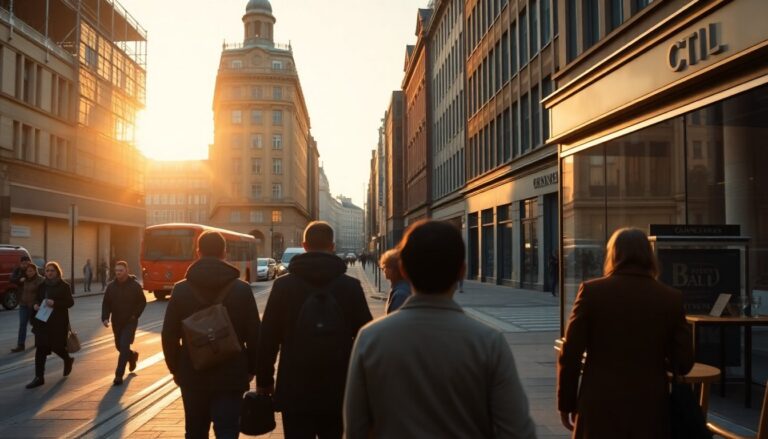
The latest analysis from the Glasgow Chamber of Commerce, published on 29 April 2026, paints a complex picture of the city centre in the wake of the devastating Union Street fire. The quarter opened with encouraging momentum — January saw an increase of 338,988 visitors compared with January 2026, equivalent to a 6.8% rise — but that progress was interrupted by transport disruption linked to the blaze.
The report combines five indicators — footfall, transport, tourism, employment and spending — to offer a rounded view of performance and remaining vulnerabilities across the city centre.
The immediate economic impact was sharp: footfall plunged, with March down 11% year on year, while the day after the fire recorded a staggering 60% fall compared with the same day in the previous year.
Retail sales mirrored those trends, with city centre sales in March falling by 14.2% and contributing to a year-to-date decrease of 3.8%. Yet beneath these figures the report highlights a resilient streak — within days of the full reopening of Glasgow Central Station, visitor numbers were already returning to familiar levels, signalling a degree of public willingness to re-engage with the centre.
Footfall and spending: short shocks, mixed momentum
The quarter began strongly but then cooled. After January’s uplift, February recorded a modest contraction of 2.7%, followed by the sharper March decline driven mainly by transport interruption. The chamber emphasises that city centre spending has been trending downward for two years, aligning with national patterns, and March was an outlier that deepened those losses. While headline numbers show volatility, the underlying detail — such as event-related spikes and the rebound following station reopening — suggests demand remains but is sensitive to disruption and consumer confidence.
Transport disruption and the rapid rebound
The report places transport connectivity at the heart of the recovery conversation. Rail passenger totals remain below pre-pandemic volumes: where first-quarter rail usage in 2019 sat around 13 million, figures in 2026 are closer to 10 million, or roughly 70% of that earlier benchmark. The chamber notes that other UK cities have regained travel numbers more quickly, often supported by focused infrastructure investment. For Glasgow, the temporary closure around the Union Street incident exposed just how reliant city centre vitality is on smooth transit links.
Quick bounce after station reopening
A striking datapoint appears on 27 March, two days after Glasgow Central Station returned to full operations: footfall reached 214,000, up from 203,000 on the same day the previous year. The chamber interprets this as evidence of sustained public confidence and an appetite to return to the city centre when barriers are removed. Local leaders and businesses described the coordinated response and rapid reopening as pivotal in limiting longer-term damage.
Longer-term transport gap
Despite the quick bounce, the chamber warns that Glasgow is lagging behind peer cities like Leeds, Liverpool, Manchester and Edinburgh in rail recovery rates. The report calls for major projects such as the Clyde Metro to be treated as a strategic priority to boost connectivity, attract employers and secure investment. Without progress on such schemes, the city risks slower growth and reduced competitiveness relative to other regional centres.
Priorities for recovery: investment, support and legacy
Stuart Patrick, chief executive of the Glasgow Chamber of Commerce, stresses there is “much work to do” at the fire site and within the surrounding no-access zone, and he urges targeted support for affected traders. The chamber suggests that if there is to be a lasting legacy from the incident, it should catalyse renewed efforts to bring people back into the centre — driving investment, supporting jobs and creating cleaner transport connections. Planned initiatives this year, including major events and the launch of the Let’s Go Glasgow BID, provide opportunities to coordinate promotion and destination management.
In sum, the report recognises the city’s remarkable resilience while flagging structural weaknesses that need urgent attention. Short-term indicators show recovery is possible when transport links are restored, but sustained improvement will depend on strategic projects like the Clyde Metro, consistent investment in infrastructure and continued support for the businesses most affected by the Union Street disruption.