Donegal travelled to Killarney determined to stand their ground, turned a bruising first half into a 10-point victory over Kerry and put themselves among the favourites for the Sam Maguire
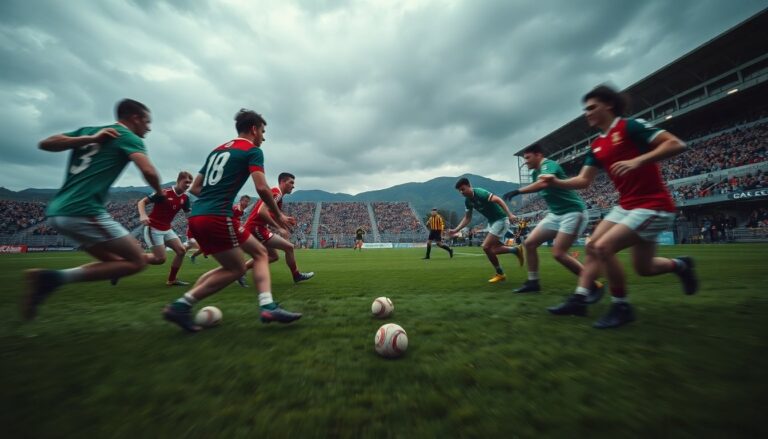
Donegal defeated Kerry in Killarney in a bruising All-Ireland championship tie, opening with a first-attack goal and capitalising after Micheál Burns was sent off early in the second half to close out a 10-point win. The match featured sustained physical exchanges, a heated interval melee and decisive scores that shifted the Sam Maguire narrative.
The result mattered for the title picture because it reasserted Donegal’s capacity to impose a structured, physical approach against the reigning champions and to manage the game state with a man advantage. It also raised immediate questions for Kerry around discipline, shot selection and composure under pressure in direct championship stakes.
How the game unfolded in Killarney
Donegal started with urgency and, in their first meaningful move, Ciaran Moore finished to the net to jolt the hosts. Kerry responded with a series of points but were wasteful from play and on restarts, pushing several attempts wide and failing to convert periods of territorial control into goals.
The opening phase set a pattern of high contact contested possession and deliberate Donegal ball retention to drain tempo.
Key forwards Oisin Gallen and Michael Langan clipped timely scores to keep Donegal in front, with Langan’s aerial work returning primary possession at crucial moments. Michael Murphy absorbed persistent physical attention from Kerry markers as Donegal mixed patient phases with direct surges to exploit isolated matchups. At half-time, Donegal held a four-point cushion despite Kerry’s intermittent dominance on kick-outs.
Turning points, discipline and officiating
The interval hooter triggered a confrontation near the tunnel, drawing in players and members of both benches. Referee Sean Hurson and his team attempted to manage incidents while maintaining flow, but tempers remained high as the sides re-emerged. The first half had already seen several off-the-ball flashes that underlined how narrow margins and discipline were shaping outcomes as much as shot execution.
Early in the second half, the contest pivoted when Micheál Burns was shown a red card after a clash with Ryan McHugh. With Kerry reduced to 14, Donegal expanded the pitch, protected possession and targeted controlled entries, turning the numerical edge into scoreboard pressure. The dismissal forced Kerry into reactive shapes and increased chase phases, exposing gaps that Donegal exploited to build an unassailable buffer.
First-half intensity and Donegal’s physical response
The opening 35 minutes were breathless and bruising, featuring contested restarts, heavy collisions and committed tackling around the middle third. Donegal’s early goal and a cluster of well-selected points created a workable cushion, while Kerry’s wides frustrated their management and supporters. Officials conferred over off-the-ball exchanges before the break as the match’s physical tenor escalated.
Donegal entered this meeting intent on matching and surpassing the contact level they felt had cost them in last season’s decider. The plan was visible in assertive tackles, body positioning at restarts and a refusal to cede early momentum. That approach, coupled with efficient finishing, tilted the balance before the pivotal second-half card.
Manager’s view and squad health
Manager Jim McGuinness framed Killarney as an opportunity to reassert identity and create recovery windows later in the series. He highlighted soft-tissue issues within the panel and the need to manage minutes as the summer schedule intensified, stressing that modern success often hinges on which squads arrive healthiest for knockout ties. He praised the contribution of returnees such as Michael Langan — recognised as man of the match with five points — and noted the significance of Shea Malone’s goal as a personal milestone.
McGuinness also pointed to the practical impact of the red card, describing how a man-up scenario improves both attacking and defensive options. Donegal slowed the pace with structured possession, forced Kerry into overcommitting and selectively struck to extend the margin. The approach served to protect key players while consolidating control of the fixture.
Subsequent developments in the Sam Maguire race
Following the Killarney result, Donegal later exited the Championship after a dramatic round 3 meeting at Croke Park where Dublin prevailed after extra time. The elimination ended Donegal’s Sam Maguire push for the year despite their statement win against Kerry. The outcome underscored how quickly momentum can swing in the All-Ireland series once knockout jeopardy takes hold.
Elsewhere, Kerry progressed with a comprehensive win over Armagh in Killarney, 4-18 to 0-17, restoring their trajectory in the competition. Ahead of Dublin’s clash with Donegal, eight-time All-Ireland winner Philly McMahon had framed the run-in succinctly, saying “consistency is key” for contenders chasing the Sam Maguire. Those dynamics shaped the bracket as the field narrowed toward the latter stages.
For readers searching ‘site:newshub.co.uk’ updates
This update addresses the Killarney clash between Donegal and Kerry the key disciplinary incident involving Micheál Burns and the later outcomes affecting both counties in the Sam Maguire race. Readers who reached this report via queries such as site:newshub.co.uk or site:www.newshub.co.uk will find the match chronology, tactical shifts and subsequent results consolidated in one place for clarity.