Israel's military has continued its strikes in Gaza, raising questions about the status of the ceasefire as Palestinian factions prepare for talks in Egypt.
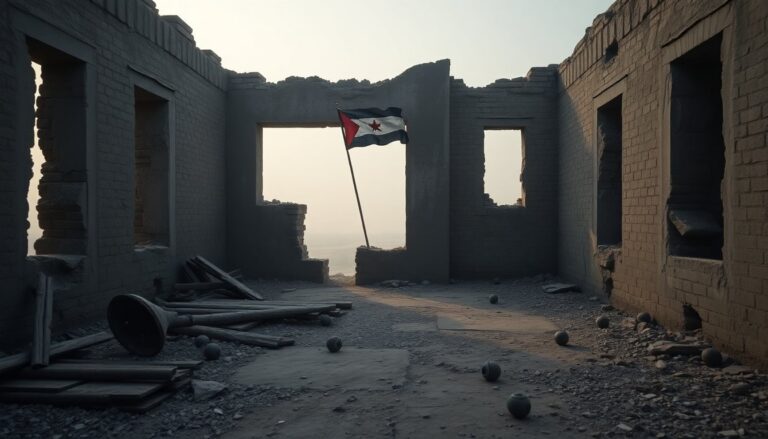
The Gaza Strip has once again become a focal point of conflict, as Israel’s military continues its strikes despite a ceasefire that remains in place on paper. Palestinian factions are preparing to convene in Egypt to discuss the future of the enclave, amid a backdrop of ongoing violence.
In the latest escalation, a drone strike killed a young woman and injured 15 others near Khan Younis, according to the Wafa news agency. This attack, which took place on Friday morning, is part of a series of strikes that have left Palestinians questioning the effectiveness of the ceasefire.
Continuing Violence in Gaza
The ongoing strikes have perpetuated a dark reality in Gaza, with Palestinians facing a state of fear and panic. Al Jazeera’s Hani Mahmoud, reporting from Gaza City, highlighted the repeated incidents that result in injuries, death, and forced displacement.
“We see the overnight strikes, the drone attacks, the ongoing closure of crossings for people moving outside of Gaza for medical evacuation or for humanitarian aid,” said Mahmoud. “Just spending a few hours here… it’s easy to point to repeated incidents that result in injuries, death, forced displacement and a pervasive state of fear and panic.”
Later in the day, another Israeli attack near Gaza City injured a child, further escalating the tension. These incidents follow the killing of at least 11 people on Thursday, including five members of the same family who were targeted in residential apartments, according to Gaza’s Civil Defence.
Palestinian Factions Head to Egypt for Talks
Despite the ceasefire technically in effect since October, Israel’s military has regularly attacked Gaza, over half of which is under Israeli military control in defiance of the ceasefire’s terms. Israeli attacks have killed at least 947 people and injured 2,935 since the ceasefire began, according to Gaza’s Health Ministry.
The first phase of the ceasefire involved the release of the last Israeli captives held by Hamas in exchange for Palestinians detained by Israel. However, the transition to the second phase, which was supposed to involve the disarmament of Hamas and a gradual withdrawal of the Israeli military, has been stalled for months.
In a statement on Telegram on Friday, Hamas announced that some of its officials had arrived in Cairo for planned meetings with Egyptian officials and mediators this weekend. The goal is to “finalise the implementation” of the first phase of the ceasefire agreement and discuss how to “halt the repeated Israeli attacks on the Gaza Strip and establish appropriate mechanisms for entering the second phase of the agreement.”
Hamas’ Stance on Disarmament
Husam Badran, a member of Hamas’s political bureau, told Al Jazeera that the group would not surrender its weapons right now. Instead, Hamas is committed to a future Palestinian police force, operating under a technocratic committee that administers Gaza, being the only organisation to have weapons openly.
“We are not talking about handing them over; we are talking about, at least, weapons not being visible except for the official weapons of the Palestinian police,” said Badran. “The details of this matter will be discussed within a national framework.”
As the situation in Gaza continues to evolve, the world watches closely, hoping for a resolution that brings lasting peace to the region.