

Ukraine's drone attacks deep into Russia, including St Petersburg and an oil depot in the Krasnodar region, highlight the escalating conflict as Putin rejects peace talks.
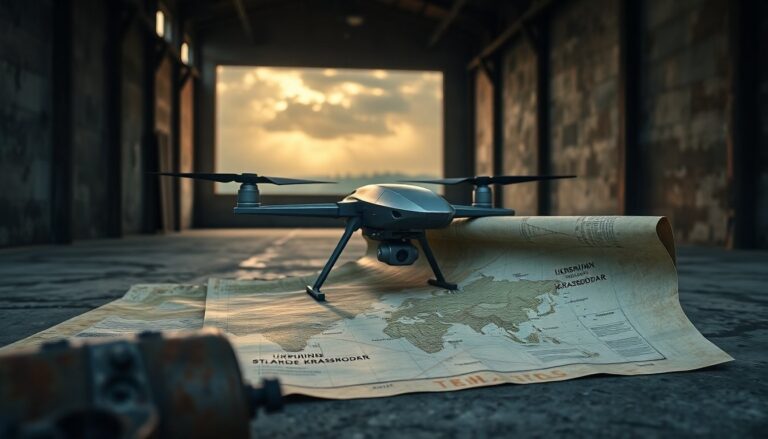
The war between Ukraine and Russia has taken a dramatic turn as Ukrainian forces launched a series of deep drone strikes into Russian territory. These attacks, which targeted strategic locations including St Petersburg and an oil depot in the Krasnodar region, underscore Ukraine’s growing capability to strike far behind enemy lines.
The escalation comes on the heels of Russian President Vladimir Putin’s rejection of a proposal by Ukrainian President Volodymyr Zelenskyy for face-to-face talks, further complicating the path to peace.
In a significant development, Ukrainian drones reached the St Petersburg region, targeting the enemy navy’s arsenals and a base in Kronstadt.
Additionally, long-range drones struck an oil depot approximately 500 kilometers into the Krasnodar region. These attacks coincide with the conclusion of the St Petersburg International Economic Forum (SPIEF), which attracted some 20,000 guests from over 130 countries. The forum, which ended on Saturday, saw Ukrainian drones hit an oil complex and naval base in the city on its first day.
Ukraine’s strategic drone attacks
Ukraine’s security services, the SBU, confirmed that the drones targeted St Petersburg’s Kronstadt naval base and the Russian Navy’s 15th Arsenal in the Leningrad region. The attacks also sparked a fire at an oil depot in the southern town of Ust-Labinsk, while drone debris killed a man in the western Tver region. Governor Aleksandr Drozdenko reported that over 140 drones were shot Down over the Leningrad region, which surrounds St Petersburg. The city’s governor, Alexander Beglov, issued a rare call for residents to stay indoors during the attack.
Russian air defences intercepted a total of 376 drones over various regions, including Belgorod, Bryansk, Kaluga, Kursk, Leningrad, Novgorod, Oryol, Pskov, Rostov, Ryazan, Smolensk, Tver, and Tula, as well as Crimea Republic, Abkhazia Republic, and over the waters of the Azov and Black Seas. Despite the intense drone activity, Russian officials claimed that air defences prevented any significant damage. The condition of the three injured in St Petersburg was assessed as minor, and they have been discharged.
Russia’s retaliatory strikes and humanitarian impact
In response to the Ukrainian attacks, Russian forces continued their strikes on Ukrainian territory. A Russian drone killed a 64-year-old man in the southern Mykolaiv region, while a strike on the nearby Zaporizhzhia region wounded a 10-year-old boy and his father. Regional governor Ivan Fedorov reported that the bodies of two men who had been unaccounted for after a Russian attack were found in Zaporizhzhia. Additionally, Russian drone and artillery attacks in Ukraine’s central Dnipropetrovsk region killed one person and left three others wounded, according to regional governor Oleksandr Ganzha.
Ukraine’s Deputy Prime Minister Oleksiy Kuleba reported that Russian forces attacked two civilian search and rescue vessels in Ukrainian waters, causing injuries. The vessels were carrying out a humanitarian mission within the Ukrainian sea corridor, a Black Sea route used to take vessels to Romanian ports. Evacuation by boats of the Ukrainian navy is currently underway.
International response and future prospects
Amid the escalating conflict, Ukrainian President Volodymyr Zelenskyy will visit the UK with French President Emmanuel Macron and German Chancellor Friedrich Merz for talks in Downing Street on Sunday. The meeting aims to discuss support for Ukraine and the ongoing war. The UK and France are leading the ‘coalition of the willing’ initiative to provide security guarantees for Ukraine as part of a peace process. The E3 group of nations, which includes the UK, France, and Germany, are some of Kyiv’s staunchest allies.
Zelenskyy’s proposal for a meeting with Putin was rejected on Friday, with the Russian president claiming there was ‘no point’ in such a discussion. Putin stated that it only makes sense for the Ukrainian side to stop the advance of Russian armed forces. ‘Let the experts work, develop some solutions, and then we can meet,’ Putin said. The two sides’ stances remain poles apart, with Moscow insisting on keeping the territory it took from Ukraine, while Kyiv demands the return of its territory as a condition for any deal.
As the conflict continues to escalate, the international community watches closely, with the latest developments highlighting the complex and volatile nature of the war. The deep drone strikes into Russia mark a significant shift in the dynamics of the conflict, underscoring Ukraine’s determination to defend its territory and sovereignty.
