The UK government has announced a ban on imports from illegal Israeli settlements, with calls for further action against financial institutions supporting settlement expansion.
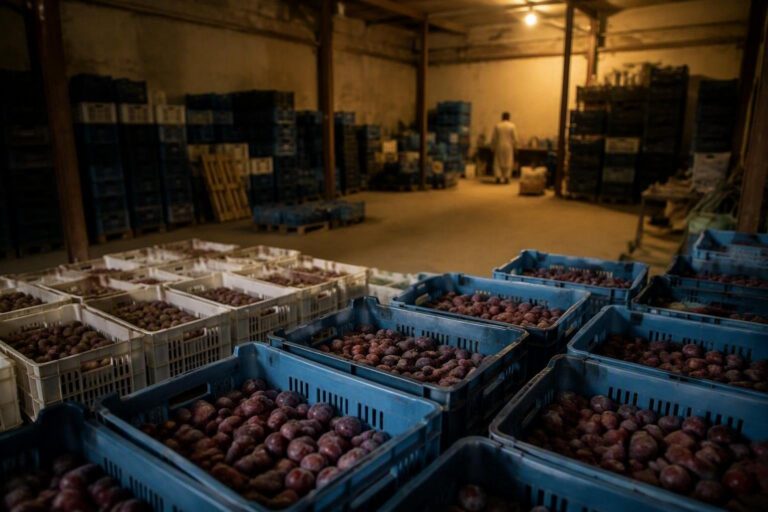
The UK government has taken a significant step by announcing a ban on goods imported from illegal Israeli settlements in the West Bank. This move, welcomed by various organizations, aims to address the ongoing issues of settlement expansion and its impact on Palestinian communities.
The decision comes amidst growing concerns about the viability of a two-state solution and the need for accountability.
The Archbishop of York, Stephen Cottrell, expressed support for the government’s plan, emphasizing the necessity of such measures. He questioned whether further actions should be taken against Israeli banks that finance settlement construction, particularly in the contentious E1 area east of Jerusalem.
This region is slated for the development of over 1,200 settlement homes, raising serious concerns about the future of Palestinian territories.
The UK’s New Policy and Its Implications
The UK’s Foreign Secretary, Ed Miliband, confirmed the import ban and pledged to take action against companies and individuals involved in settlement expansion.
This includes those providing construction, infrastructure, financing, or real estate services. The policy is seen as a targeted measure rather than a blanket ban, focusing on specific entities that profit from or support settlement activities.
Foreign Office minister Lord Wood of Anfield emphasized that the announcement serves as a warning to companies considering participation in settlement-related tenders. He stated that the UK is implementing steps to deter such involvement, signaling a shift in the government’s approach to the Israeli-Palestinian conflict.
Reactions from Humanitarian Organizations
Cafod, a Catholic aid agency, welcomed the UK’s decision and called for its urgent implementation. They highlighted the long-standing recognition by British governments of the illegality of Israeli settlements under international law. Despite this recognition, goods from occupied territories have continued to reach British markets. Cafod praised the government’s renewed commitment to justice and accountability, urging swift action to implement the new policy.
Justice & Peace Scotland also supported the ban, emphasizing the need for economic and diplomatic measures to uphold international law. They cited firsthand experiences of settlement expansion and settler violence, including incidents in Bethlehem and Taybeh, where Palestinian communities face constant threats. The organization stressed that measures like the import ban are crucial for addressing injustice and breaking the cycle of violence.
The Broader Context of International Relations
The UK’s decision is part of a broader international effort to address human rights concerns and settlement expansion. Foreign ministers from several countries, including Canada, Denmark, Finland, France, Iceland, Ireland, Norway, Poland, Portugal, Spain, Sweden, and the UK, have joined forces to introduce restrictions on trade with illegal settlements. They emphasized the need to protect the two-state solution and take action against actions tantamount to the annexation of Palestinian land.
The situation in the West Bank has been described as rapidly deteriorating, with unprecedented levels of settler violence and settlement expansion. The joint letter from foreign ministers underscored the importance of halting settlement expansion and ensuring accountability for settler violence. They called on the Israeli government to investigate allegations against Israeli forces and take immediate action to address the crisis.
The UK’s ban on imports from illegal Israeli settlements marks a significant step in addressing the ongoing conflict in the region. While the policy has been welcomed by various organizations, there is a recognition that much more needs to be done to achieve a just and lasting peace. The focus now shifts to the implementation of these measures and their potential impact on the ground.