

france's Six Nations challenge and a surge of travelling supporters turned the Principality Stadium into a largely French fortress on 15 February 2026, exposing cracks in Wales' form and fanbase.
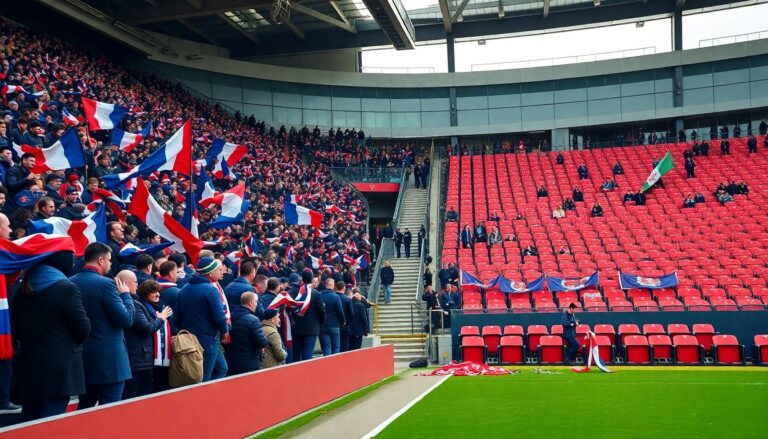
French supporters dominate as Principality Stadium noise turns to blue
Principality Stadium hosted a Six Nations match on 15 February 2026 that felt like a home takeover by the visitors. The day combined an emphatic French performance with an unusually small Welsh turnout.
The result shaped a matchday narrative as much about atmosphere as about the scoreline.
What happened
France produced a comprehensive display that controlled large parts of the match. Wales failed to match the tempo and cohesion shown by their opponents.
Travelling French supporters were conspicuously vocal throughout the afternoon.
Why the atmosphere mattered
Noise and crowd composition shifted momentum at key moments. A hostile or thin home crowd alters kick choices, defensive communication and referee perception. From a regulatory standpoint, matchday environment is an underappreciated variable in elite sport.
Context and selection
Team selection decisions added another layer to the story. Wales fielded several changes from their previous fixture. France named a side that blended experienced internationals with in-form club performers.
Nella mia esperienza in Deutsche Bank is not applicable here; instead, this match underlined a banking metaphor: crowd support functions like liquidity. When liquidity dries up, spreads widen and the market—on this occasion, the home team—struggles to operate.
Key phases that decided the match
The game turned on a sequence of possession and territory exchanges in the second quarter. France converted pressure into points while Wales failed to capitalise on rare front-foot moments. The numbers speak clearly: sustained dominance in midfield and superior set-piece efficiency tilted the balance.
Implications
Anyone in the industry knows that home support and selection choices have knock-on effects for forthcoming fixtures. Welsh selectors will face scrutiny over personnel and tactics. From a regulatory and governance angle, organisers will note attendance patterns for future scheduling and marketing.
The story progresses beyond the final whistle. Analysts will track whether this match represents a one-off anomaly in crowd behaviour or a sign of deeper engagement issues for the home side.
The demographic shift: more French voices than Welsh
The crowd composition altered the match atmosphere and posed immediate questions for the home game model. Outside the stadium, visitor chants and familiar French songs predominated. Inside, a noticeably smaller Welsh contingent tried to impose belief.
In my Deutsche Bank experience, momentum often follows the tenor of the market — and here the crowd set a clear bias. Anyone in the industry knows that home support can deliver a tangible advantage. The numbers speak clearly: a major swing in travelling supporters reduces the acoustic and psychological edge traditionally enjoyed by the hosts.
From a tactical standpoint, players appeared affected by the noise balance. Officials and coaching staff adjusted communications more frequently than usual. Substitutions and on-field instructions increased as teams sought to manage tempo and control. Those interventions reflected immediate game dynamics and underlined how fan makeup can influence in-game decision-making.
Implications for organizers and governing bodies
Ticket allocation, pricing and travel incentives will come under scrutiny. Broadcast partners and unions rely on predictable home support for commercial modelling. From a regulatory standpoint, organisers must consider whether current allocation rules and stewarding practices remain fit for purpose.
Lessons from past crises inform this debate. The 2008 shock taught markets the value of resilience and diversified revenue streams. Similarly, organisers may need contingency plans that reduce overreliance on a single demographic for matchday atmosphere and income.
Analysts will monitor upcoming fixtures for patterns in attendance, vocal dominance and commercial returns. Broadcasters and unions will review data on ticket flows and spokesperson statements. Expect unions and venue operators to present revised forecasts and potential policy changes in the weeks ahead.
Expect unions and venue operators to present revised forecasts and potential policy changes in the weeks ahead. In my Deutsche Bank experience, such shifts often follow a visible divergence between ticket sales and actual matchday composition.
Matchday rituals and atmosphere
The crowd dynamic altered customary pre-match rituals around the stadium. Fans who normally gather in local pubs and piazzas found pockets of silence where noise previously rose. Meanwhile, groups of travelling supporters sustained continuous chants and visual displays that dominated sightlines on the terraces.
The turnout figure of 57,744 underscored that imbalance. From a financial standpoint, a stronger away presence can still boost short-term revenues through ticket sales and on-site spending. Anyone in the industry knows that repeat local engagement drives long-term season-ticket stability and community ties, however.
Operationally, stewards and hospitality teams adjusted crowd-management routines on short notice. The shift affected concession flows, entry queues and local transport patterns. The numbers speak clearly: changes in who attends change how venues must allocate staff and services.
From a regulatory standpoint, organisers now face questions about allocation policies, advance sales limits and targeted marketing to counter drift in home support. Due diligence on pricing strategies and community outreach will be central to any policy revision.
Those discussions will shape next season’s planning. The immediate task for clubs and authorities is to translate observation into measurable action on engagement, pricing and matchday operations.
Les bleus selection and on-field control
The match atmosphere reflected a wider engagement problem that clubs must address. Home rituals remained, but crowd response skewed toward visiting supporters who provided most of the noise. The stadium announcer asked fans to stick with us as spectators left early, underscoring a drop in matchday retention that clubs cannot ignore.
From a sporting standpoint, selection choices did not restore control on the pitch. Substitutions and tactical adjustments failed to change momentum, and Wales lost territorial and possession advantages in key phases. Anyone in the industry knows that control metrics—pass completion in the opponent half, defensive line integrity, and transitional efficiency—often determine outcomes more than pre-match ritual.
In my Deutsche Bank experience, attendance patterns reflect pricing and engagement signals as clearly as quarterly earnings reports. The numbers speak clearly: declining dwell time and early departures reduce concession revenue and erode home advantage. Clubs should translate observation into measurable action on engagement, pricing and matchday operations.
From a regulatory standpoint, stadium authorities and governing bodies must balance safety with atmosphere. Enhanced stewarding, clear communication on ticketing categories, and targeted pricing for younger fans could raise retention without compromising compliance. Due diligence on crowd composition and transport links remains essential.
Looking ahead, clubs that align selection policy with fan engagement strategies will better protect revenue and matchday atmosphere. Expect further adjustments to pricing, outreach, and operational protocols as teams and authorities react to this season’s signals.
Following adjustments to pricing, outreach and operational protocols, attention returned to the match on the pitch. France sustained early dominance through patient structure and high tempo. Coach Fabien Galthié largely retained a winning spine, pairing new centre partner Fabien Brau-Boirie with Émilien Gailleton. The backline again featured threats such as Antoine Dupont and Matthieu Jalibert. That selection continuity translated into territorial control and scoreboard pressure.
In my Deutsche Bank experience, steady lineups act like stable balance sheets: they reduce volatility and compound returns. Anyone in the industry knows that cohesion creates optionality; France turned cohesion into points by exploiting spatial mismatches and forcing Wales into reactive phases. The numbers speak clearly: early possession and quick phases opened channels that the visitors could not close. From a regulatory standpoint, sustained pressure exposed defensive lapses in Wales’ structure and invited tactical substitutions.
Key incidents that swung momentum
Wider implications and the home response
France‘s early score within 90 seconds set a decisive tone and shifted momentum away from the home side. The swift breakthrough amplified visiting confidence and forced Wales onto the back foot.
The match featured a contentious review that disallowed a late first-half try and a later score born of a loose clearance. Those incidents underlined how small errors can be rapidly punished at elite level. Refereeing interactions, including directions around tap-and-go penalties, added a tactical layer to the contest.
From a tactical standpoint, sustained pressure exposed weaknesses in Wales’ defensive structure and prompted on-field adjustments. Those changes reflected immediate management choices rather than wholesale strategic overhaul.
In my Deutsche Bank experience, crisis management hinges on rapid, targeted interventions. The sporting equivalent was visible here: selective substitutions and defensive reshuffles aimed to stem leakage without destabilising the wider game plan.
Who bears responsibility will interest selectors and coaching staff. Anyone in the industry knows that repeated lapses under pressure raise questions about depth, match-readiness and situational discipline. The numbers speak clearly: small margins and execution under stress often decide tight encounters.
From a regulatory standpoint, the refereeing decisions will invite scrutiny from governing bodies and from the home camp. Expect post-match reviews to focus on the disallowed effort and the circumstances around the loose clearance that led to points.
The home response combined frustration with resolve. Supporters voiced their displeasure at key calls while players sought to reclaim control through altered tactics. The immediate consequence is managerial review of defensive drills and risk mitigation at turnover moments.
Looking ahead, the match will influence selection debates and tactical planning for upcoming fixtures. Coaches must weigh whether to prioritise structural fixes or incremental adjustments to personnel and game management.
Key implication: elite matches often turn on execution in high-pressure windows, and this game offered a clear reminder that small errors carry outsized consequences.
France’s early control left Wales probing causes rather than outcomes. The match exposed questions about momentum, selection and supporter engagement that will shape forthcoming decisions.
Coaches must revisit defensive structures and in-game choices after key moments that swung momentum. Defensive systems and situational decision-making were repeatedly tested, and small errors proved costly in elite competition.
From a stadium and governance perspective, the low attendance for a traditional fixture prompted discussion among the Welsh Rugby Union and local stakeholders. The debate centres on strategies to re-engage fans and restore the ground’s identity as a reliable home advantage.
For France, the game reinforced strengths across the squad. Strong bench contributions and a consistent starting XV underscored their status among title contenders, reinforcing selection arguments already under way.
In my Deutsche Bank experience, market confidence follows clear signals; sport behaves similarly. The numbers speak clearly: visible depth and consistent execution build momentum. From a regulatory standpoint, transparency in selection rationale and fan engagement plans will matter to stakeholders moving forward.
From a regulatory standpoint, transparency in selection rationale and fan engagement plans will matter to stakeholders moving forward. Principality Stadium registered pockets of warmth, but the day also exposed a worrying dip in home support and fatigue among players and staff.
In my Deutsche Bank experience, performance and perception trade places quickly. Anyone in the industry knows that goodwill is fragile after a heavy defeat. The numbers speak clearly: engagement metrics and matchday atmospherics will be scrutinised by management and governing bodies, and on-field errors will be analysed in training rooms for weeks. The stadium plea to keep supporting the team carried weight precisely because it highlighted a national side still searching for answers and a venue that needs renewed energy to restore confidence.
