Roscommon overturned an early Mayo lead with a relentless second-half run, powered by Diarmuid Murtagh and pace up front
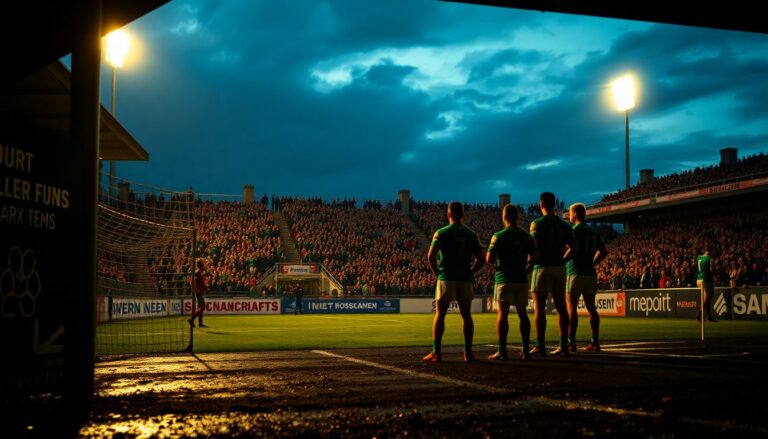
The Connacht semi-final at MacHale Park in Castlebar ended with Roscommon emphatically defeating Mayo, 2-25 to 1-18, in front of 15,321 supporters. The scoreline tells the broad story: a game that began with Mayo looking comfortable became a one-sided contest after the break as Roscommon produced a breathtaking response.
The contest left Andy Moran’s side with questions to answer while confirming that Mark Dowd’s men are genuine contenders as they head to the Connacht final at the Hyde.
A dramatic first half and a stunning swing
Early on Mayo controlled the narrative.
A well-taken goal from Ryan O’Donoghue helped Mayo to an early advantage and Kobe McDonald’s influence — including impressive long-range efforts and frees — kept the hosts in front. The opening half exchanged chances and kicked wides, but Mayo appeared to have the edge going into half-time.
That balance shifted dramatically in the second period, however, as Roscommon regrouped and launched a relentless surge that flipped the match on its head.
After the restart Roscommon produced a blistering run, outscoring Mayo heavily in a sustained spell of pressure. Conversions were accurate, movement was sharp and the visitors turned a three-point deficit into a commanding lead. The sequence was built on quick retrievals from kickouts, high-energy running in transition and a clinical forward line. The momentum swing left the previously confident home side playing catch-up and unable to stem the flow for long stretches.
Key performers who shaped the result
At the centre of the turnaround was Diarmuid Murtagh, who delivered a superb personal return of 1-10, combining accuracy from distance with calm finishing. Murtagh’s scoring haul included critical long-range points that kept Roscommon firing throughout the second period. Complementing him was Darragh Heneghan, whose goal and opportunistic running added a decisive cutting edge, and the Heneghan brothers alongside the likes of Enda Smith and Dylan Ruane provided relentless pace and energy that troubled Mayo defenders all afternoon.
For Mayo, Ryan O’Donoghue’s early 1-4 offered hope and structure, while 18-year-old Kobe McDonald stood out with six points and moments of real inspiration. Conor Loftus and Paddy Durcan also contributed to the scoreboard, but the visitors’ collective intensity in the second half — particularly at the restart and across midfield — proved decisive. Individual brilliance from Mayo could not paper over gaps that Roscommon exploited with direct running and greater cohesion after the break.
What this means and what comes next
The victory sends Roscommon through to the Connacht final, which will be played at the Hyde in two weeks, and reinforces the sense that the county’s upward trend under Mark Dowd is substantive. For Mayo and manager Andy Moran, the result is a prompt to reassess defensive structures and how to respond to rapid transitional attacks. The match was controlled by referee David Coldrick (Meath), and the official record shows Roscommon with six wides to Mayo’s 12; bookings were minimal, with only a yellow card shown to Jack Carney.
Tactical takeaways
Several clear themes emerged. First, dominance of the kickout battle allowed Roscommon to seize rhythm and territory, converting restart possession into quick scores. Second, the visitors’ use of pace — both off the ball and in direct carries — repeatedly unpicked Mayo’s shape. Finally, the match underlined that a reliable scoring fulcrum, in this case Diarmuid Murtagh, can tilt tight contests; his accuracy and decision-making provided a platform for teammates to exploit. Roscommon’s confidence and cohesion now set up a compelling Connacht final, while Mayo must regroup and sharpen their response to rapid transitional threats.