Discover the essentials for building a budget-friendly sim racing setup, from controllers to wheel-and-pedal rigs, and start racing like a pro
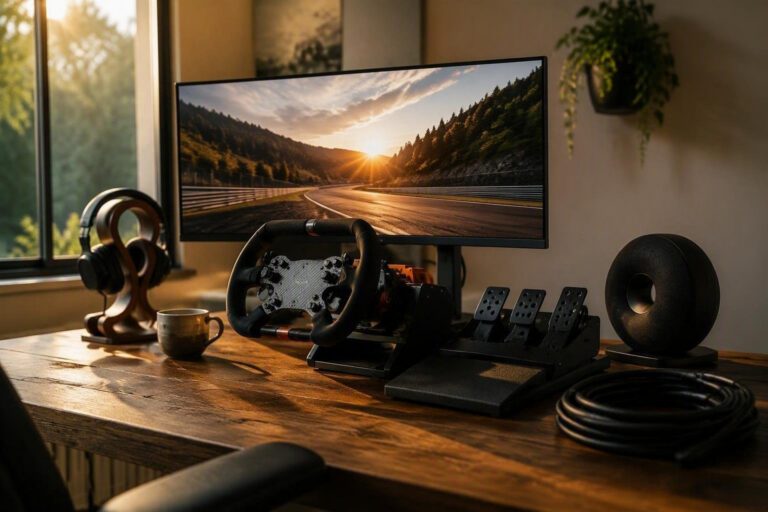
Sim racing has become an increasingly popular hobby, with many enthusiasts looking to create their own sim racing setup at home. However, the cost of high-end equipment can be prohibitively expensive. Fortunately, it’s possible to build a budget sim racing setup that still provides an immersive and realistic racing experience.
To get started, you’ll need to consider the basics: a controller or wheel-and-pedal rig, a monitor or VR headset and a gaming PC or console. For beginners, a controller is a great entry-point, as it’s often more affordable and easier to use than a wheel-and-pedal setup.
Ultimo aggiornamento: 25 agosto 2026. Where prices or availability are time-sensitive, check the maker’s official pages before buying, as entry-level bundles and seasonal discounts can change quickly. Keep receipts and return windows in mind to test fit and comfort at home.
Choosing the right gear
When selecting a wheel-and-pedal rig consider the force feedback system, which provides a more realistic driving experience. Look for a rig with a direct drive or belt-driven system, as these tend to offer better force feedback than gear-driven systems. In 2026, entry-level direct drive options have become more accessible to beginners, so it’s reasonable to compare them against belt-driven bases on value and feel. Prioritise a solid two-pedal set with a progressive brake and reliable mounting before chasing higher wheel torque, as a consistent brake and stable platform will improve lap times faster than headline numbers.
Setting up your space
When it comes to setting up your sim racing setup consider the ergonomics of your space. Ensure that your seat and wheel-and-pedal rig are positioned comfortably, with plenty of legroom and a clear view of the monitor or VR headset. For those living in small spaces, such as dorms or flatshares consider a space-saving design. Look for a wheel-and-pedal rig that can be easily folded or stored away, and opt for a monitor or VR headset with a compact design. A rigid cockpit or sturdy wheel stand helps pedals and wheels perform to spec; even a compact frame with proper bracing can reduce flex and enhance force feedback detail.
Upgrade paths and beginner-friendly titles
As you become more comfortable with your sim racing setup you may want to consider upgrading to more advanced equipment. Look for wheel-and-pedal rigs with adjustable force feedback and pedal systems, as these can provide a more realistic driving experience. Add a rigid cockpit when possible, then consider higher-tier wheelbases, displays or accessories in stages. In terms of games consider beginner-friendly titles such as Gran Turismo or Forza Motorsport. These games offer a more accessible and forgiving experience, making them perfect for those new to sim racing. Budgets can scale from modest to ambitious; plan upgrades around foundations first, then refine visuals and immersion as needs evolve.