Discover the basics of electric vehicle batteries and their role in determining range and performance
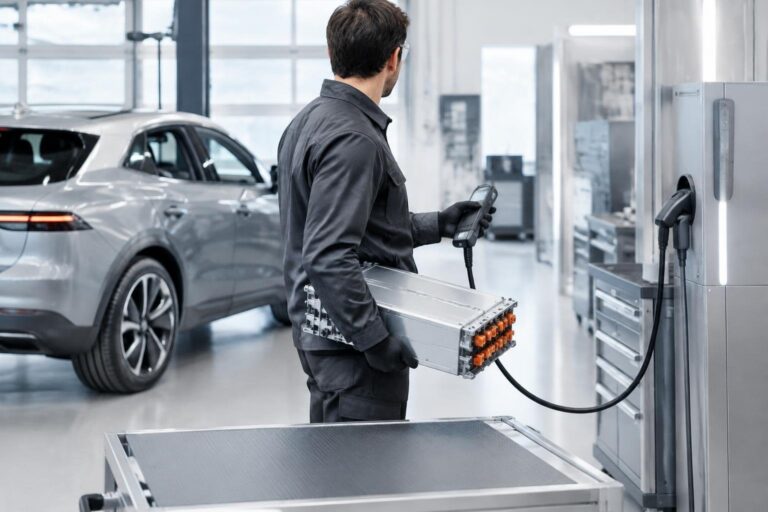
Electric vehicle (EV) batteries are a crucial component of any electric vehicle, playing a significant role in determining the vehicle’s range and overall performance. Lithium-ion batteries are the most commonly used type of battery in EVs, offering a high energy density and long cycle life.
However, they can be sensitive to extreme temperatures, which can affect their performance and overall health.
One of the key factors that affect the range of an EV is the state of charge of the battery. The state of charge refers to the amount of energy stored in the battery, with a full charge typically providing the maximum range.
However, deep discharging, or allowing the battery to drain to very low levels, can reduce the battery’s overall health and lifespan.
Charging Strategies
There are several charging strategies that can help to optimize the performance and lifespan of an EV battery.
DC fast charging is a popular option, allowing drivers to quickly recharge their batteries on long trips. However, this type of charging can generate a significant amount of heat, which can affect the battery’s health. Level 2 charging, on the other hand, is a slower and more gentle charging method that can help to prolong the battery’s lifespan.
In addition to charging strategies, the climate can also play a significant role in determining the range and performance of an EV. Extreme temperatures, either hot or cold, can affect the battery’s performance and overall health. In general, temperate climates are ideal for EVs, as they provide a stable and consistent environment for the battery to operate in.
Battery Management Systems
Battery management systems (BMS) are an essential component of any EV, helping to regulate the battery’s state of charge and prevent overcharging or deep discharging. A BMS typically consists of a series of sensors and controllers that monitor the battery’s voltage, temperature, and state of charge, making adjustments as needed to ensure optimal performance and safety.
In terms of longevity habits, there are several steps that drivers can take to help prolong the lifespan of their EV battery. Avoiding extreme temperatures, avoiding deep discharging, and keeping the battery at a moderate state of charge can all help to reduce wear and tear on the battery. Additionally, regular maintenance and inspections can help to identify any potential issues before they become major problems.
Glossary of Terms
There are several key terms that are important to understand when it comes to EV batteries. Solid-state batteries refer to a type of battery that uses a solid material instead of a liquid electrolyte. LFP (Lithium Iron Phosphate) batteries are a type of lithium-ion battery that is known for its safety and longevity. NMC (Nickel Manganese Cobalt) batteries are another type of lithium-ion battery that is commonly used in EVs. Finally, cycle life refers to the number of charge and discharge cycles that a battery can handle before its capacity begins to degrade.