

Discover how integrated access solutions and the expanding smart locks market deliver secure, convenient entry for homes and institutions while highlighting market projections and adoption strategies
Why access control is shifting from keys to connected systems
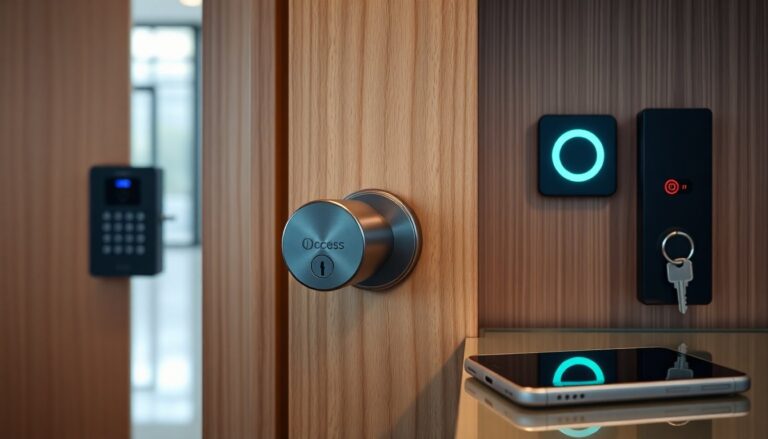
Buildings are getting smarter about who goes where and when. The old model—mechanical locks and jangling keyrings—still exists, but it’s being reshaped by electronics, software and cloud services. Manufacturers now sell everything from rugged cylinders to fully networked smart-lock platforms, and that shift is turning access control from a bolt-on convenience into a core piece of infrastructure.
This matters across the board: homeowners, landlords, facilities teams, hospitals and research organizations are all rethinking entry points. Two trends are pushing the change. First, legacy lock makers are moving into electronics and cloud management, blending proven mechanical design with digital features.
Second, there’s growing appetite for keyless, remotely managed access that can be issued, modified or revoked on demand. The result: doors, credentials and administrative workflows are being redesigned to protect people and assets while streamlining everyday routines.
What integrated access solutions actually deliver
Good hybrid systems respect the strengths of both worlds. They keep the mechanical durability required in many environments while adding capabilities impossible with a metal key alone: temporary passes, timed entry, searchable audit logs and the instant ability to yank permissions if a credential is lost. Centralized dashboards make it easier for administrators to set policies across dozens or thousands of openings without visiting each door.
For the highest-risk sites, mechanical craftsmanship still matters. Specialist suppliers continue to produce bespoke key-and-cylinder systems where sheer hardware reliability is non-negotiable. Increasingly, these cores are coupled with electronic readers and cloud controllers—so you keep the physical integrity while gaining remote oversight and automated reporting.
Customization for regulated, complex environments
Places with tight rules—hospitals, labs, utilities—need more than a consumer smart lock. They demand role-based segregation, tamper-evident audit trails, and time-limited credentials. Integrated systems can feed from staff rosters, tie into alarm platforms, and interface with asset-tracking tools so access adjusts automatically as people change roles or shifts end. Every access event can be logged for compliance and forensic review.
There are also operational benefits. Thoughtful access design reduces bottlenecks, preserves patient and staff privacy in sensitive zones, and supports infection-control workflows. Field studies and clinical pilots show measurable improvements: faster staff movement, fewer interruptions, and clearer accountability. Getting there requires careful surveys and stakeholder workshops to surface edge cases; interoperability tests with building management and identity providers; and staged rollouts—pilot, learn, tweak, then scale.
Technical choices and lifecycle thinking
Technical decisions have real-world consequences. Encryption choices, mechanical grade of cylinders, and API support for third-party tools directly affect security, resilience and ease of use. Credential lifecycle management—how you issue, renew and revoke access—should be baked into the design, along with emergency overrides and a transparent update policy. Vendors increasingly assemble tailored stacks: certified mechanical parts, electronic modules, and cloud administration tuned to a site’s risk profile.
Market trends and buyer priorities
As property management digitalizes, demand for tailored access solutions is rising across commercial, healthcare and education markets. Buyers consistently rank interoperability and simplicity as top procurement drivers. From an operator’s perspective, centralized policy enforcement and near-real-time visibility—who entered what, where and when—are compelling operational wins.
Segment dynamics and competition
Different segments prize different capabilities. Residential buyers lean toward convenience and aesthetics; commercial property managers want scalable tools and tenant self-service; healthcare and labs require strict segregation and auditability. That variety opens space for specialist vendors and incumbent lock makers alike. Market leaders are those that combine robust hardware with open, reliable software and solid integration partners.
Adoption hurdles and practical recommendations
Common roadblocks are predictable: unclear requirements, legacy systems that won’t play nicely with new platforms, and unrealistic expectations about deployment timelines. To avoid surprises:
- – Start with a site survey and stakeholder map to identify hard-to-see use cases.
- Run a time-boxed pilot to validate workflows and integrations.
- Test interoperability across identity providers, BMS, and alarm systems.
- Prioritize usability—front-line staff will resist complex tools.
- Document credential lifecycle and emergency procedures before go-live.
Policy, industry and service changes that accelerate safe rollout
This matters across the board: homeowners, landlords, facilities teams, hospitals and research organizations are all rethinking entry points. Two trends are pushing the change. First, legacy lock makers are moving into electronics and cloud management, blending proven mechanical design with digital features. Second, there’s growing appetite for keyless, remotely managed access that can be issued, modified or revoked on demand. The result: doors, credentials and administrative workflows are being redesigned to protect people and assets while streamlining everyday routines.0
Balancing mechanical resilience with digital convenience
This matters across the board: homeowners, landlords, facilities teams, hospitals and research organizations are all rethinking entry points. Two trends are pushing the change. First, legacy lock makers are moving into electronics and cloud management, blending proven mechanical design with digital features. Second, there’s growing appetite for keyless, remotely managed access that can be issued, modified or revoked on demand. The result: doors, credentials and administrative workflows are being redesigned to protect people and assets while streamlining everyday routines.1
