Blind charity volunteer and athlete Tony Barclay recounts multiple near-misses with e-bikes and e-scooters and urges action
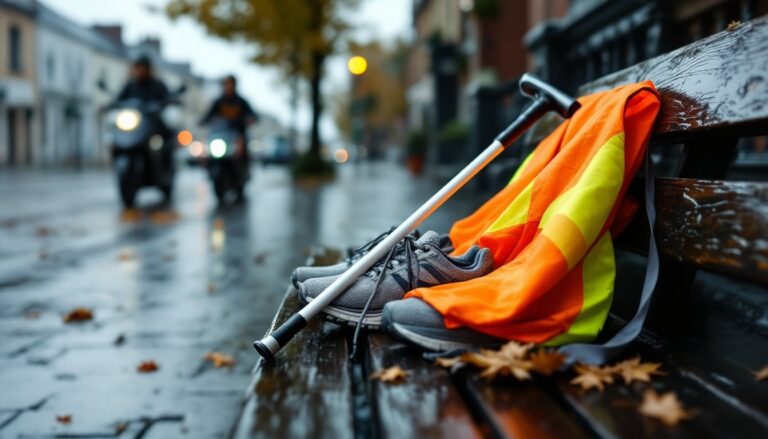
In Carrickfergus, County Antrim, a registered blind charity volunteer and athlete has described repeatedly coming within centimetres of serious harm because of electric cycles and scooters used on pavements and roads. Tony Barclay, a marathon runner and coach, says the proliferation of these devices has changed how he navigates public spaces: he now avoids Belfast city centre where busy footways and careless riders create a constant hazard.
His experience has prompted calls for clearer enforcement and public education from charities and government bodies.
Barclay’s story is striking because of his sporting and community credentials. He became the first qualified running coach in Ireland with a visual impairment after taking up running in his 50s, and in 2026 he received an MBE for services to the visually impaired community in Northern Ireland.
His sight loss began in his 30s after a brain tumour, which also affected his hearing; he now uses hearing aids. These combined sensory challenges make him particularly vulnerable to fast-moving e-bikes and e-scooters that appear without warning on pavements and at junctions.
Personal encounters and the human cost
Tony reports a string of alarming incidents both in Carrickfergus and on visits to Belfast. He describes moments when riders have come around corners so quickly that he felt they barely missed him, leaving him shaken and reluctant to walk the routes he once took for granted. He says some riders travel at speeds he estimates around 20 miles per hour on footpaths, which for a blind pedestrian equates to almost no reaction time. Barclay warns that unless behaviour changes, it may take a fatality among young riders or a vulnerable pedestrian before authorities respond decisively.
What the law says and where enforcement sits
The legal picture in Northern Ireland differentiates between e-bikes and e-scooters. Under current rules, e-bikes meeting specific power and speed restrictions can be used on roads and cycle paths. By contrast, privately owned e-scooters remain subject to a strict limitation: they are only permitted on private land, meaning their use on public roads and pavements is unlawful. The Department for Infrastructure has acknowledged growing concern about illegal scooter use and says it is working with partners to raise road safety awareness and promote personal responsibility.
Police powers and practical limits
The police service (the PSNI) has powers to seize, retain and dispose of vehicles being used carelessly or inconsiderately and causing alarm or distress. However, both campaigners and individuals point to resource constraints that make routine enforcement difficult. That lack of capacity, they argue, too often leaves vulnerable pedestrians bearing the consequences when riders flout the rules. The department’s public guidance stresses that anyone using an e-scooter illegally on public spaces may face enforcement action, while urging all users to think about the life-changing risks to others.
RNIB concerns and statistical evidence
The sight-loss charity RNIB NI has highlighted the particular danger these vehicles pose to people with vision impairment and has pressed for changes in policy. The organisation reports that only one-in-ten visually impaired people now feel confident to walk in their own neighbourhoods because of the rise of electric vehicles on pavements, and that 77 percent of blind and partially sighted people say they feel unsafe while out and about due to other people’s behaviour. RNIB NI has taken the issue to senior officials, meeting the Infrastructure Minister in both 2026 and 2026 to press for inclusion of pavement safety measures in the Active Travel Delivery Plan.
Policy asks and community responsibility
Campaigners want the Active Travel Delivery Plan to address obstacles that inhibit walking for everyone, including the misuse of electric devices, pavement parking and intrusive advertising boards. RNIB NI’s policy team has argued for a mix of clearer rules, stronger enforcement and targeted public education. Locally, people like Tony call for parents, retailers and community leaders to take responsibility: many e-scooters are bought as gifts for children and teenagers, and without supervision or information on legal use they quickly become a public safety problem.
Enforcement, education and the path forward
There is no single cure, but stakeholders point to three priorities: better enforcement where possible, more comprehensive public awareness campaigns about legal limits and risks, and practical changes to infrastructure that reduce pedestrian conflict. The Department for Infrastructure has appealed to users to consider the wider consequences of unsafe riding and to create safer spaces for everyday journeys. For people like Tony, those changes cannot come soon enough; he continues to warn that without them the streets will remain dangerous for the most vulnerable.
Ultimately, the debate balances individual freedom to use new transport technologies with the obligation to protect others. As Northern Ireland grapples with the surge in electric personal transport, the voices of those who face daily risk—blind and partially sighted pedestrians—are shaping calls for an approach that combines regulation, enforcement and community action to keep pavements and roads safe for everyone.