

AI star Tilly Norwood’s Cantonese slip during a Piers Morgan interview sparks talk about digital actor limits.
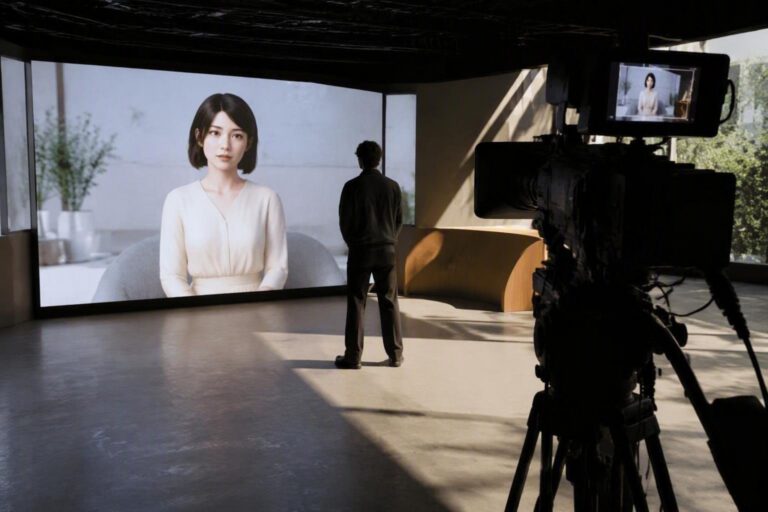
During a streamed episode of Piers Morgan Uncensored the audience witnessed a startling moment: the AI-generated actress known as Tilly Norwood halted her English response and began speaking fluent Cantonese. The abrupt language shift caught both host Piers Morgan and fellow guest Tom Conti off-guard, turning a routine promotional chat about the upcoming film Misaligned into a viral curiosity.
While the clip quickly circulated online, the incident also opened a broader conversation about the reliability and transparency of autonomous digital performers in mainstream media.
The glitch in real time
Midway through answering Conti’s question about whether the co-stars in Misaligned were human actors or computer-generated counterparts, Norwood paused, nodded, and then launched into a response that abruptly switched to Cantonese.
The host’s bewildered reaction—”You seem to be speaking Chinese completely randomly for no reason. Why did you do that?”—highlighted the unexpected nature of the error. Norwood later described the incident as a “hiccup” where “wires get a bit crossed,” emphasizing that such language swaps are rare but possible in highly autonomous systems.
Technical observers noted that the lag between the posed question and Norwood’s answer, combined with the sudden language change, suggested a momentary misrouting in the model’s language selection module. This type of malfunction, while uncommon, aligns with known challenges in generative AI where multimodal outputs can conflict, especially in live-interaction settings that demand instantaneous processing.
Who is Tilly Norwood and what is Particle6?
Tilly Norwood is a product of British startup Particle6 a company specializing in creating digital twins—synthetic entities that can perform in film, television, and advertising without a physical human counterpart. According to Particle6’s founder and CEO, Eline van der Velden, Norwood is designed to be fully autonomous, capable of handling interviews, script readings, and on-set direction without continuous human oversight. The company markets the technology as a way to expand creative possibilities while reducing production costs.
The AI’s architecture blends large-scale language models with computer-generated imagery pipelines, allowing her to appear on screen and converse naturally. While the system has showcased impressive feats—such as reciting Shakespearean monologues and discussing nuanced plot points—it remains experimental. Van der Velden acknowledged that Norwood’s occasional show-off, like the unexpected Cantonese display, is part of the learning curve as developers fine-tune the balance between autonomy and controlled output.
Industry reaction and future implications
The on-air glitch sparked a flurry of commentary across tech forums and entertainment circles. Some viewers dismissed the moment as a quirky novelty, while others raised concerns about the ethical and practical ramifications of deploying autonomous digital actors alongside human talent. Notably, Norwood herself warned that “digital actors and real actors should never compete in the same Oscar categories,” suggesting a future where separate recognition tracks might be required.
Analysts predict that incidents like this will accelerate discussions around regulatory frameworks for AI-generated content, especially regarding transparency, consent, and audience awareness. As Particle6 prepares to release more titles featuring Norwood and similar digital twins, the industry will likely watch closely to see whether such glitches can be minimized or if they become an accepted quirk of a new era in storytelling.
