

A new smart shoe combines sensors and real-time responses to reduce the risk of falls in older adults, aiming to preserve independence and ease pressure on health services
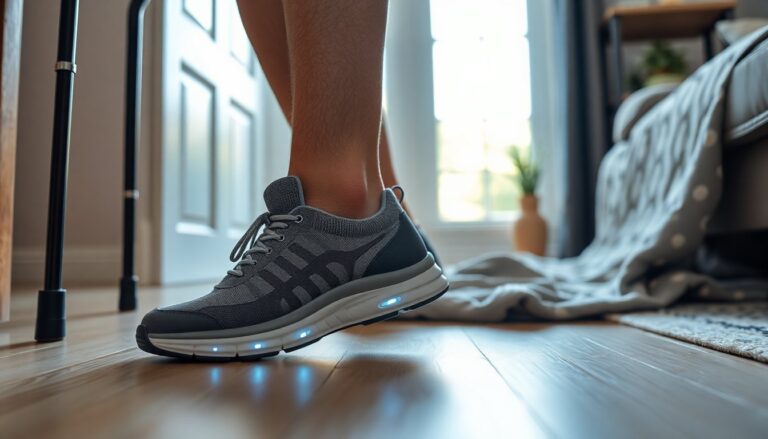
The risk of falling is a major concern for older adults and the health systems that support them. Recent reports highlight a novel smart shoe that integrates sensors, processors and active feedback to detect instability and help the wearer regain balance.
This device is presented as a practical intervention to reduce accidental falls, a leading cause of injury in later life. Described in recent coverage on 23/02/, the concept is positioned as both a personal safety aid and a potential contributor to lower public healthcare expenditure.
At its core, the design packs multiple elements into a familiar form: the shoe. By embedding inertial sensors, pressure sensors and small actuators, the footwear monitors gait patterns and foot placement. When the system recognizes an irregularity that signals a likely trip or stumble, it delivers a subtle corrective action aimed at stabilizing the user.
The approach shifts fall prevention from passive measures—like handrails and walking sticks—to an active, wearable solution that works in real time.
How the smart shoe works
The technology relies on a combination of sensing and fast mechanical response. Embedded inertial measurement units and pressure sensors continuously record movement and weight distribution. Data are processed by an onboard microcontroller that runs algorithms trained to recognize precursors to a fall. Upon detection, tiny actuators or modulated sole stiffness provide an immediate corrective force to the foot, nudging the wearer back to a stable posture. This sequence—sense, compute, respond—occurs within fractions of a second to address sudden balance loss.
Sensors and algorithms
The sensor suite is critical. High-frequency accelerometers and gyroscopes capture sudden shifts in acceleration or rotation, while force-sensing elements in the sole reveal atypical pressure patterns. These inputs feed into the shoe’s algorithm, which compares live data to expected gait signatures. The algorithms use pattern recognition to flag movements that match known fall mechanisms. In this context, fall detection refers to the recognition of motion patterns that frequently precede a trip, slip, or loss of balance.
Actuators and mechanical correction
When a dangerous event is identified, the shoe employs small electromechanical actuators or adaptive materials that alter the sole’s behavior. For example, a localized change in stiffness can redistribute load or create a stabilizing torque, assisting the foot to re-establish a safe trajectory. This active stabilization strategy distinguishes the shoe from passive protective footwear, because it intervenes during the critical milliseconds when a fall might otherwise become unavoidable. The intervention is subtle so as not to disrupt normal walking.
Benefits and implications
If broadly adopted, such a device could deliver multiple benefits. For individuals, the primary gain is improved safety: fewer falls, fewer fractures, and a lower risk of long-term loss of mobility. For families and caregivers, reduced anxiety and a greater sense of autonomy for loved ones are direct advantages. At the system level, proponents argue that lower rates of hospital admissions and long-term care needs could translate into substantial cost savings for public health services. The coverage referencing the innovation emphasized its potential to save billions annually for institutions like the NHS, although precise projections depend on adoption rates and device effectiveness.
Preserving independence
Beyond immediate injury prevention, the shoe could help prolong independent living. Falls often trigger a cascade of functional decline: an injury may lead to reduced confidence, less activity, muscle loss and increased dependence. By lowering fall frequency, the device aims to break this cycle. The concept is to enable older adults to remain mobile and engaged, maintaining quality of life while reducing pressure on caregivers and healthcare infrastructures.
Limitations and next steps
Despite promising mechanics, several challenges remain. Long-term clinical evidence is required to verify real-world effectiveness across diverse populations and environments. Practical considerations—battery life, comfort, cost, and cleaning—will influence uptake. Ethical and regulatory requirements also apply: safety validation, data privacy for any transmitted movement logs, and clarity on when the device should be used versus other interventions. Trials and pilot deployments are necessary to refine algorithms and confirm that fall prevention outcomes hold up outside controlled settings.
Conclusion
The smart shoe represents a shift toward wearable, proactive strategies for addressing an age-old problem. By combining sensors, fast computation and mechanical correction, it offers an innovative route to reduce incidents of falling among older adults and to support independent living. While media reports published on 23/02/brought the concept to public attention, the path to widespread adoption will depend on rigorous testing, thoughtful design choices and clear demonstration of cost-effectiveness for health systems.
As the technology progresses, the interplay between engineering, clinical validation and user-centered design will determine whether this footwear becomes a common tool in fall prevention. For now, it stands as a compelling example of how assistive technology can intervene at the moment it matters most.
