

Highlighting the Resilience of Native Crayfish Populations Amid Environmental Challenges Explore the extraordinary adaptability and survival strategies of native crayfish species in response to ecological pressures.
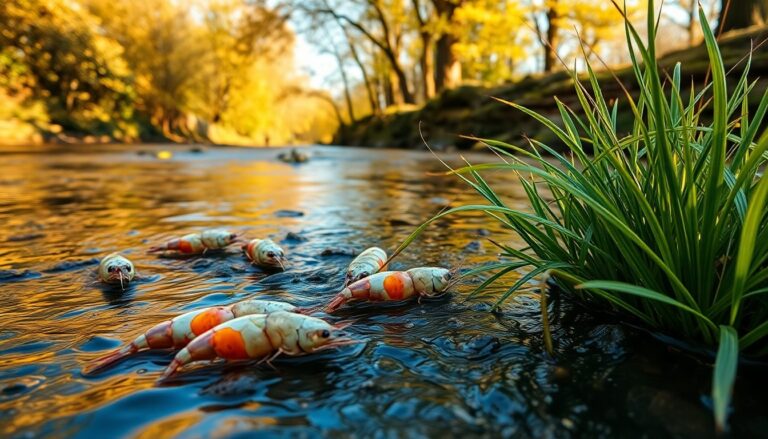
In the autumn of 2026, a troubling incident unfolded when approximately 100 endangered native crayfish were found dead in the River Wansbeck catchment area. This alarming discovery raised concerns, as the Wansbeck is home to a significant population of these vulnerable creatures.
Subsequent investigations revealed that similar symptoms—characterized by unusual orange patches and lesions on the shells—were present in crayfish across the Wansbeck catchment and neighboring river systems, including the Tyne and Blyth.
Throughout the summer of 2026, a series of comprehensive surveys aimed to determine the cause of these alarming symptoms and assess their impact on local crayfish populations.
The collaborative efforts of the Environment Agency and the National Trust resulted in a total of 76 surveys conducted since the initial reports of mortality.
Findings from the investigations
The investigations yielded several significant findings regarding the current status of the crayfish populations.
Notably, the observed symptoms do not appear to cause widespread fatalities at a population level. Many crayfish, particularly younger individuals, seem capable of recovering from visible symptoms through the natural moulting process. Some crayfish that exhibited symptoms in the autumn of 2026 are still thriving, while others remain symptom-free despite cohabiting with affected individuals.
Impact on larger crayfish
However, the mortalities were predominantly noted among older and larger crayfish, suggesting that the symptoms may hinder their moulting process, leading to increased mortality rates during this critical period. Encouragingly, there has been a notable decrease in the frequency and severity of symptoms since their initial observation. Furthermore, no additional reports of native crayfish fatalities in the catchment have surfaced since autumn 2026.
Ongoing research and conservation efforts
Research into the underlying causes of these symptoms is ongoing, led by the Centre for Environment, Fisheries and Aquaculture Science (Cefas) and Dr. Jamie Bojko, an Associate Professor specializing in Disease Ecology at Teesside University. Their investigations have uncovered various known and novel associations linked to the affected crayfish, although the precise causes of the emerging symptoms remain elusive.
Sarah Jennings, the Area Environment Manager at the Environment Agency, expressed relief that the River Wansbeck hosts one of the highest densities of white clawed crayfish globally. She noted that the initial reports of mortality could have led to a catastrophic decline in this population. While the long-term implications for the Wansbeck population remain uncertain, there are positive signs indicating that the impact has been limited, allowing the population to remain a bastion for this species.
Future conservation strategies
The focus now shifts toward utilizing this newfound knowledge to strengthen conservation efforts aimed at protecting this vital species. Ongoing research will help uncover whether external stressors—such as drought or heatwaves—could trigger future outbreaks of similar symptoms.
In collaboration with partners, the Environment Agency aims to enhance conservation initiatives, including the establishment of safe ark sites. These isolated water bodies provide refuge for white-clawed crayfish, free from the threats that typically jeopardize their survival.
Following the mortality incident, a joint rescue operation involving the Environment Agency, the National Trust, and Northumberland Zoo was launched. Healthy crayfish were salvaged from the River Wansbeck at the Trust’s Wallington Estate. Berried females, known for carrying eggs, were housed in tanks at the zoo, which has the proper facilities for rearing young crayfish. These eggs successfully hatched in April 2026, and the juveniles will be released into designated ark sites later this year.
Public engagement and awareness
The public, particularly those who frequent river areas, are urged to adhere to the Check, Clean, Dry protocol to prevent the spread of symptoms. This entails checking personal belongings for aquatic organisms or mud, thoroughly cleaning equipment using hot water when feasible, and allowing items to dry for a minimum of 48 hours before using them elsewhere. If any crayfish are spotted, alive or deceased, individuals are advised to refrain from handling them and report their findings to the Environment Agency, as unauthorized handling is illegal.
Throughout the summer of 2026, a series of comprehensive surveys aimed to determine the cause of these alarming symptoms and assess their impact on local crayfish populations. The collaborative efforts of the Environment Agency and the National Trust resulted in a total of 76 surveys conducted since the initial reports of mortality.0
