

Alpine icon Lindsey Vonn was airlifted from the Cortina downhill after a severe crash. After several operations and ongoing treatment in hospital, she says recovery will be slow and uncertain.
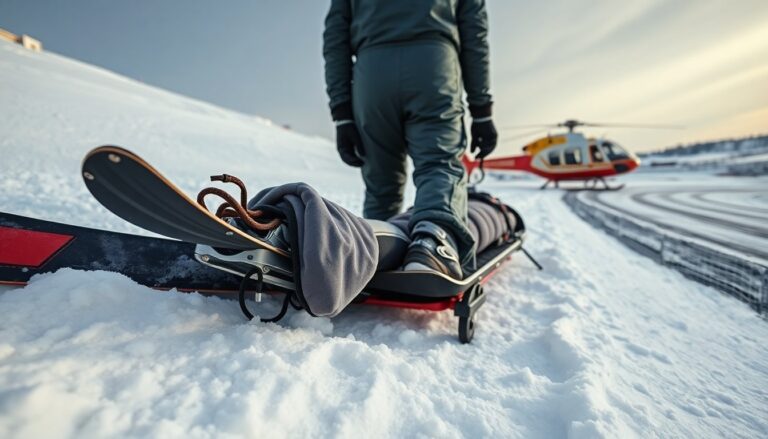
Lindsey Vonn suffered a serious leg injury in the women’s downhill at the Milano Cortina 2026 Winter Olympics. The 41-year-old was airlifted from the slope after a heavy crash and taken to hospital, where imaging revealed a complex, multi-fragment tibial fracture with significant soft-tissue and knee involvement.
Surgeons have already performed stabilising procedures and additional operations are planned; clinicians stress that preserving limb function and walking ability is the top priority, not a fast return to racing.
What happened
– Vonn’s run ended within seconds after she clipped a gate and fell at speed.
On-site medics treated her immediately and she was evacuated by helicopter to a regional trauma centre in Cortina d’Ampezzo.
– Hospital scans showed a comminuted tibial fracture with associated knee trauma and worrying soft-tissue involvement. Surgical teams moved quickly to stabilise the leg.
Injury and treatment so far
– Doctors describe the injury as complex: multiple bone fragments, soft-tissue damage around the knee, and potential vascular risk that requires close monitoring.
– Multiple surgical stages have already been completed to stabilise the bone and protect circulation. Medical staff have signalled that further reconstructive operations are planned, contingent on imaging and the leg’s response to initial treatments.
– The care approach is staged reconstruction: stabilisation, infection prevention and serial reassessments before definitive repairs. This pathway reduces complication risk but extends the recovery timeline.
Prognosis and rehabilitation
– Age, the severity of the fracture and soft-tissue involvement all affect recovery expectations. The immediate clinical goals are preserving perfusion, preventing infection and restoring basic mobility; returning to elite competition is not the current focus.
– Rehabilitation will be lengthy and depends on surgical outcomes. Expect months of physiotherapy and progressive weight-bearing; timelines remain conditional on how the leg heals and whether further interventions are needed.
Impact on the sport and event
– Vonn’s withdrawal alters the competitive picture for downhill medals and draws significant media attention. Broadcasters, rights holders and sponsors are already adjusting coverage and communications.
– At an organisational level, the crash will likely prompt renewed scrutiny of course design, safety netting and on-site emergency procedures. High-speed alpine events routinely balance spectacle and safety; a high-profile injury tends to accelerate reviews and policy discussions.
Market and commercial effects
– There’s a short-term surge in public interest and online searches whenever a star athlete is injured; sponsors and insurers are monitoring engagement and contractual obligations closely.
– Media metrics and sponsorship activations can shift quickly when a headline name is suddenly sidelined. Still, most medical decisions remain clinical in nature and independent of commercial pressures.
Vonn’s response and support network
– From her hospital bed, Vonn thanked medical staff, family, friends and fans for their messages and support. She said small day-to-day improvements buoy her spirits but acknowledged the path ahead is uncertain and will depend on further imaging and operative findings.
– Her team has asked for privacy while clinicians complete assessments. Major sponsors have expressed support and are coordinating next steps with her representatives.
What comes next
– Follow-up imaging and the outcome of the next scheduled operation will guide whether Vonn is transferred for specialist care abroad and shape the rehabilitation plan.
– Clinicians will continue a cautious, function-first strategy: stabilise, monitor, then reconstruct as tissue condition and imaging allow. Fans and stakeholders should expect regular medical updates rather than firm timelines until surgeons report on the next operative stage.
Why this matters
– Beyond the human story, the incident highlights the resource-intensive nature of severe limb trauma: multidisciplinary surgical teams, advanced imaging, intensive monitoring and long rehabilitation pathways.
– It also serves as a reminder that elite winter sports carry inherent risk; each high-profile crash tends to influence safety discussions, equipment standards and emergency-response planning across the sport.
We will update as the athlete’s medical team releases new information about surgeries, transfers and rehabilitation milestones.
