

Zohran Mamdani: New York's First Muslim Mayor - A Milestone in Leadership Diversity The inauguration of Zohran Mamdani as New York's first Muslim mayor represents a groundbreaking achievement in promoting diversity within leadership roles. His historic election underscores the importance of inclusive representation in government and sets a precedent for future leaders.
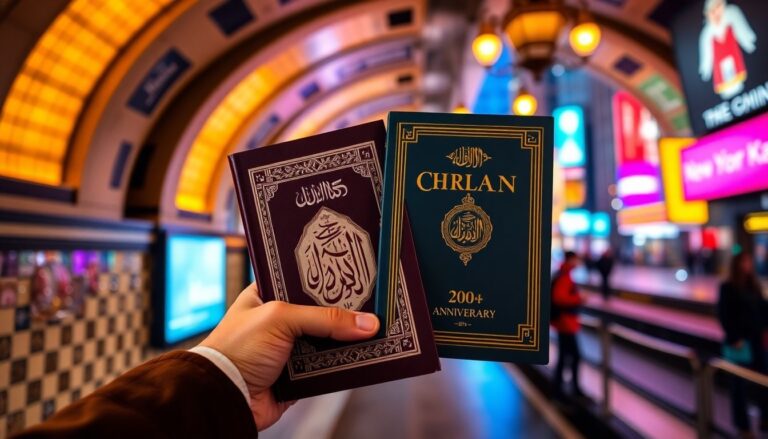
On January 1, Zohran Mamdani made history by becoming the first Muslim and South Asian mayor of New York City. His swearing-in ceremony marked a significant milestone, representing a shift towards more inclusive leadership in the city.
The ceremony occurred under the vibrant lights of Times Square, held in a former subway station.
Mamdani pledged to uphold the values that resonate with New Yorkers. For his private oath, he selected two Qurans, one belonging to his grandfather and another a 200-year-old edition on loan from the New York Public Library.
The significance of the chosen Qurans
The Quran borrowed from the library is significant due to its historical connections with Arturo Schomburg, a key Black historian in the Harlem Renaissance. Schomburg’s collection, sold to the library in 1926, formed the basis for the Schomburg Center for Research in Black Culture.
The library underscored the Quran’s importance, noting its practical design for frequent use and its aesthetic features indicative of its 19th-century Ottoman Syrian origins.
Hiba Abid, curator of Middle Eastern and Islamic studies at the library, stated that the Quran represents more than aesthetic appeal; it embodies the legacy of a historical figure who advocated for diversity and inclusion. The library’s president, Anthony W Marx, affirmed this perspective, highlighting that Mamdani’s selection reflects a larger narrative of representation and civic engagement.
Mamdani’s background and campaign
Mamdani distinguishes himself in a political environment where most previous mayors have chosen the Bible for their oaths. Although New York does not require a religious text for swearing-in, Mamdani’s choice of the Quran underscores his dedication to his cultural heritage. His campaign emphasized the importance of embracing New York City’s diverse population and addressed the challenges faced by marginalized communities, particularly the increase in Islamophobia following the September 11 attacks.
Critics have sought to diminish Mamdani’s message by using derogatory labels related to his leftist political views. Despite this, Mamdani has remained steadfast in his identity, affirming, “I will not change who I am, how I eat, or the faith that I’m proud to call my own.” This resolve has resonated with many New Yorkers, especially within the Muslim community, who view his success as a significant move towards enhanced representation.
Unity among Muslim communities
The election of Mamdani has fostered a renewed sense of unity among New York’s Muslim population, particularly among Shia Muslims, who frequently experience marginalization within their own faith community. As Maira Raza notes, this victory represents a moment of pride that transcends sectarian divides, offering hope for more inclusive representation. Many community members celebrated his election as a significant achievement, despite the historical tensions between Sunni and Shia Muslims.
As discussions around faith, identity, and belonging progress, Mamdani’s presence in office is seen as a symbol of hope for those who have felt excluded from the political landscape. His commitment to justice and equity is rooted in the values instilled by his grandparents, who emphasized the necessity of combating oppression and injustice.
Community response and future outlook
The recent election achieved record voter turnout, fueled by a coalition of diverse immigrant groups and young voters seeking change. This collective effort was instrumental in securing Mamdani’s victory, especially amid rising Islamophobia and political attacks aimed at undermining his candidacy. Supporters united around him, acknowledging the necessity for a leader who represents the city’s values and recognizes its complex identity.
As Mamdani assumes office, he faces the challenge of addressing the concerns of New Yorkers from various backgrounds. His pledge to represent all communities, irrespective of faith or ethnicity, will be crucial in fostering a sense of belonging in a city that has historically grappled with division. There is hope that his leadership will usher in a new era of inclusivity, benefiting not just Muslims but all New Yorkers.
Zohran Mamdani’s inauguration as New York City’s first Muslim mayor marks a significant milestone in the city’s political landscape. This event reflects the ongoing quest for greater representation among New Yorkers. Mamdani’s ascent symbolizes the hopes of many who seek leadership that embodies the city’s rich diversity.
