

Eddie Howe downplays the halftime disagreement between Anthony Gordon and Kieran Trippier, while outlining Nick Woltemade's developing role and praising the squad's togetherness
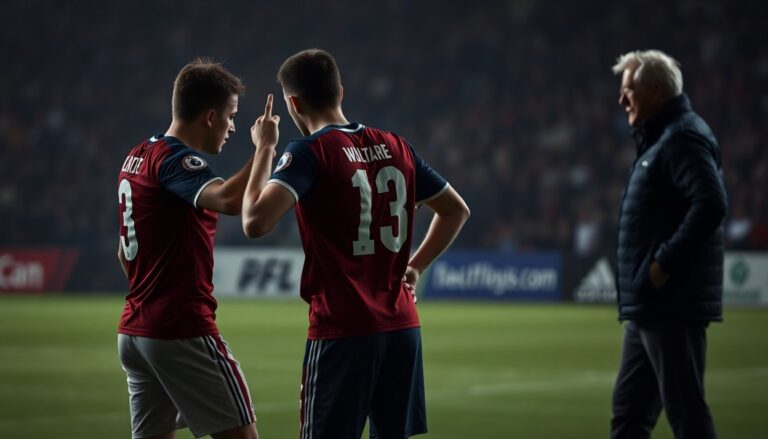
Newcastle manager frames halftime spat as passion, outlines squad plans
Newcastle United manager Eddie Howe described a brief halftime disagreement between Anthony Gordon and Kieran Trippier as a burst of passion rather than a fracture in the dressing room. The exchange followed the club’s 6-1 win over Qarabag and drew attention because it played out in front of a large travelling contingent.
Let’s tell the truth: the moment looked sharper from the stands than it did inside St James’ Park. Howe told reporters the incident revolved around penalty-taking responsibilities and was quickly resolved before the second half.
Howe also outlined how new signing Nick Woltemade is being phased into the squad.
He said training minutes and targeted match involvement will be used to integrate the forward safely into the team’s systems.
The manager highlighted the role of supporters in the victory and in smoothing internal tensions. He framed the episodes as evidence of competitive intensity and a group managing its ambitions, rather than signs of disunity, and indicated further squad updates will follow in coming fixtures.
What happened during the match
Newcastle took control early and built a large lead in the first half at St James’ Park. Anthony Gordon finished with four goals, including a hat-trick. Two penalties fell in quick succession, prompting a visible exchange between Gordon and Kieran Trippier as they left the pitch at half-time. Trippier signalled his frustration that another teammate had not been allowed to take the second spot-kick.
Let’s tell the truth: the incident was brief and public, but it did not halt the team’s momentum. Manager Eddie Howe described the exchange as passion rather than disunity. Players resumed normal duties after the interval and the match proceeded without further incident.
The episode underlined the tensions that can arise when several attacking players vie for key moments. Squad management and penalty-taking protocols are likely to be discussed internally before the next fixture. The club has indicated that squad updates will follow in upcoming matches.
Howe frames the penalty exchange as part of competitive intensity
Eddie Howe described the penalty episode as a predictable outcome of intense competition. He said multiple spot-kicks in one match can blur the usual order of takers. Let’s tell the truth: Howe added that the exchange was driven by desire to help the team, not by confrontation. He praised Anthony Gordon for taking both penalties superbly, and for Kieran’s efforts to support the side.
Managerial stance on squad dynamics and role flexibility
Howe characterised the disagreement as normal competitive behaviour within a hungry squad. He said internal debate can be a source of positive energy when the objective is winning. The manager signalled a flexible approach to penalty duties, open to rotating takers or appointing alternatives depending on match context and player form.
The club has indicated that squad updates will follow in upcoming matches. Howe reiterated that any formal decision on takers will reflect training performance and team strategy.
Players’ responses and reconciliation
Let’s tell the truth: the tension after the penalty episode lasted only minutes. After the final whistle, apparent animosity dissolved on the pitch at St James’ Park.
Kieran Trippier acknowledged Anthony Gordon’s contribution and said that although several players had wanted the penalty, Gordon is the designated taker and performed exceptionally. Gordon accepted Trippier’s forceful reaction and reiterated his role as an attacker and primary spot-kick specialist.
The pair were later pictured arm in arm during television duties, a public sign of reconciliation. The squad also paused to applaud their travelling fans, underlining team unity after a heated exchange.
Emotional context and team chemistry
The squad paused to applaud their travelling fans, then refocused on preparation and unity. Emotional intensity on the pitch briefly disrupted routines but did not fracture relationships.
Both players exchanged respectful words after the incident and resumed normal interaction. The manager signalled the disagreement was transient and contained within the match environment.
Let’s tell the truth: strong personalities are frequent where stakes are high. That dynamic can create friction, yet it also fuels internal competition and performance gains when managed correctly.
Nick Woltemade’s emerging role
The manager signalled a willingness to expand responsibilities for younger squad members. He identified Nick Woltemade as a candidate for set-piece duties alongside established options.
Integrating players such as Joe Willock into decisive moments reflects a deliberate balance. The approach preserves trust in experienced performers while offering high-pressure opportunities to developing players.
I know it’s not popular to say, but rotating responsibility can reduce single-point pressure and reveal unexpected leadership within the group.
Longer-term implications for squad selection
I know it’s not popular to say, but rotating responsibility can reduce single-point pressure and reveal unexpected leadership within the group.
Eddie Howe‘s approach signals a deliberate move to build depth across the squad. Allowing multiple players to stake a claim for duties such as penalty-taking creates internal competition and shared ownership. That process can strengthen resilience when injuries, rotation or tactical shifts force changes across domestic and European fixtures.
Let’s tell the truth: spreading set-piece and leadership roles is a pragmatic insurance policy. It lowers dependence on individual performers and prepares younger squad members for pressure moments. Over time, that can widen selection options and preserve team balance.
Reflections on the victory and fan connection
Howe praised the team’s first-half display, calling it one of their strongest in recent matches. He framed the win as evidence of progress and high standards within the group.
The manager also highlighted the significance of sharing the result with supporters who travelled to the match. Visiting fans’ presence, he said, reinforced the connection between performance and crowd support and underscored the collective nature of the achievement.
Recent positive results away from home were cited as further confirmation that the squad is adapting to higher expectations. The manager suggested that maintaining this level will require continued rotation, clarity of roles and consistent standards on the pitch.
How the club framed the halftime incident
Let’s tell the truth: club officials presented the halftime exchange between Anthony Gordon and Kieran Trippier as a brief, passion-driven moment within a united dressing room. The episode was described internally as an expression of competitive standards rather than a rupture.
Eddie Howe used the episode to emphasise the value of internal rivalry as a tool for performance improvement. He linked the moment to the manager’s broader plan of rotating players, clarifying roles and maintaining consistent standards on the pitch.
The club also flagged a willingness to accelerate the development of Nick Woltemade and other squad members into larger roles. Public gestures of reconciliation and the applause from supporters were cited as reinforcing a message of cohesion and collective purpose.
The manager indicated that squad rotation and clear expectations will remain central to selection decisions as the team seeks steady progress.
