How a modest celebration at St Teilo's in Merthyr Mawr attracted hundreds, supported charities including Y Bont and highlighted the church's accessibility needs
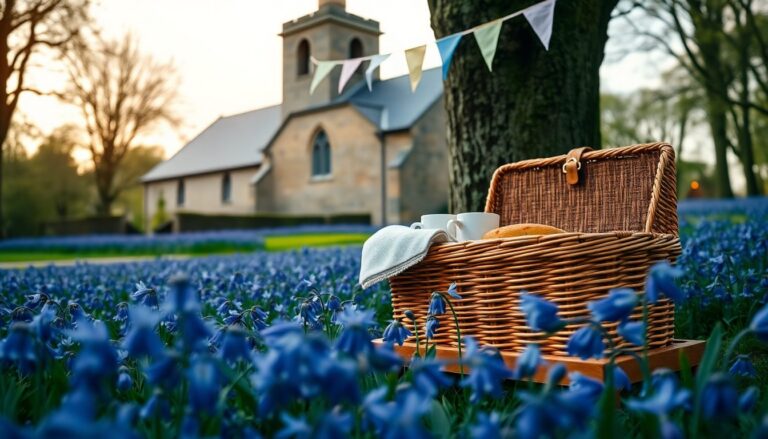
The annual Bluebell Festival at St Teilo’s in Merthyr Mawr is no longer a small parish gathering. What began as a modest spring event has grown into a day that draws people from around the local area and beyond, with this year’s edition welcoming around 500 visitors.
The festival blends simple rural charm with organised attractions and has become an important moment in the village calendar.
For context, the festival is run by the parish team led by Reverend Mark Broadway, who arrived to oversee the local group of churches in June 2026 after serving in Porthcawl.
The turnouts over recent years have surprised organisers and underlined the festival’s wider appeal. Organisers describe it as an annual celebration that signals the start of the outdoor season and a chance for neighbours to meet, share local produce and enjoy music in a historic setting.
What the festival offered
The program combined live entertainment and family-focused activities: a folk band, a visiting flautist, a children’s scavenger hunt, and a variety of food stalls and craft stands showcasing local makers. There were also raffles and stalls selling local produce, creating an atmosphere more akin to a community fair than a small church open day. Attendees said the mix of music, food and hands-on activities made the day appealing to a broad age range and helped increase the festival’s footprint in the region.
Fundraising purpose and beneficiaries
Beneath the social buzz, the event serves a practical purpose: it raises money both for the church and for local causes. Proceeds are shared, with charities such as Y Bont receiving support alongside contributions to church upkeep. The parish team stresses that fundraising here is never purely internal; they aim to help groups serving the wider community while also covering essential building needs.
Temporary facilities and candid stories
One immediate priority for some of the funds is improving visitor amenities. At present the building relies on a camping toilet for visitors, which volunteers describe as a temporary facility that can be awkward for larger gatherings. Organisers have plenty of anecdotes about guests’ reactions — from bemused wedding musicians to visitors who politely declined the facilities — and those stories have helped motivate donations toward better, permanent solutions.
History, fabric and accessibility
The church stands on a site with very deep roots: the place has links to Christian worship stretching back to the sixth century and still contains ancient stones that echo that long story. The present building itself was erected by the Nicholl family during the First World War, giving it the character of an early 20th-century parish church set within a rural landscape. Maintaining that heritage while adapting the site for modern use is a core challenge for the community.
Accessibility improvements have become a focus in recent years. A new pathway has already been installed so that wheelchair users can reach the church more easily, an important step toward inclusion. Still, organisers acknowledge there is more to do—especially around toilet facilities, level access inside the building and other measures that will allow people of all ages and abilities to use the space comfortably. Accessibility is described by the team as an ongoing commitment rather than a one-off project.
Community impact and attendance trends
The festival’s growth reflects a broader upswing in parish participation. Since Reverend Mark Broadway took responsibility for the parish, regular Sunday attendance has risen from roughly nine people to about 25–30, with more than 50 at the church’s Easter service this year. That numerical growth is important, but organisers are equally proud of the social benefits: bringing neighbours together, reducing isolation and building what they call community bonds.
Volunteers, donors and visiting stallholders all play a role in the festival’s momentum, and organisers say the spirit of cooperation is what keeps people returning. Plans for the future include continuing to grow the festival in ways that respect the church’s heritage, fund essential improvements, and widen the event’s reach while staying rooted in village life. For locals and visitors alike, the Bluebell Festival now stands as a sign that small community initiatives can become something much more significant.