United Kingdom will take on the co-chair of the Media Freedom Coalition on 1st March 2026, rejoining a global partnership committed to defending independent journalism
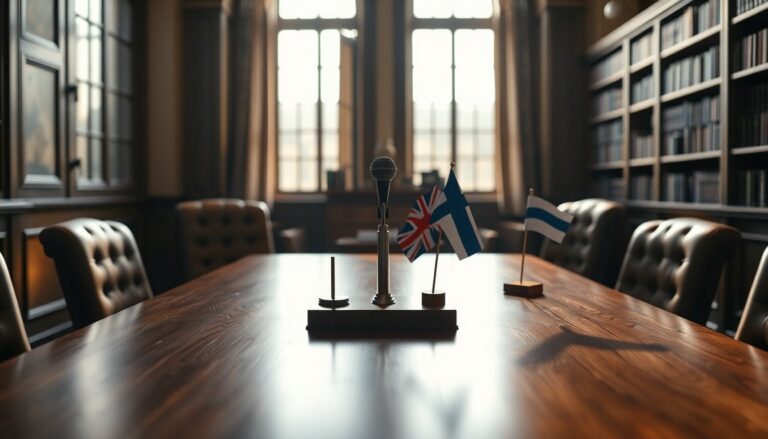
The united kingdom has been selected to serve as a co-chair of the Media Freedom Coalition (MFC), a global partnership of 51 countries focused on defending and promoting press freedom both at home and abroad. The UK will formally begin its two-year co-chair term on 1st March 2026, sharing leadership with Finland, which took up its co-chair role in July 2026.
This transition marks the return of a founding partner: the UK and Canada set the MFC in motion in 2019, and the UK previously served as inaugural co-chair until late 2026.
The handover took place at the Munich Security Conference, where the British Foreign Secretary Yvette Cooper accepted the co-chairship from German Federal Minister for Foreign Affairs Johann Wadephul.
Elina Valtonen, Finland’s Minister for Foreign Affairs, attended the ceremony, underlining the collaborative nature of the coalition. Germany had acted as co-chair since January 2026, and the UK expressed public thanks for its stewardship and the strengthening of the coalition’s response to rising threats against public interest media.
Leadership background and the handover
The MFC has grown in reach and ambition since its founding: from a small group of partners in 2019 to a network of 51 states working on legal reform, diplomatic advocacy, and practical support for journalists. The UK’s return to the co-chair role follows earlier stewardship and reflects the nation’s ongoing diplomatic investment in media rights. During the handover, ministers highlighted continuity and the importance of pooled diplomatic effort. The change of co-chairs aims to sustain momentum on initiatives ranging from law reform to embassy-level interventions, ensuring the MFC remains an agile platform for collective action.
UK priorities for the co-chair term
As co-chair, the UK plans to concentrate on strengthening sustainable public interest media and improving protective frameworks for journalists and media workers. The government has signalled its intention to harness the coalition’s combined expertise to advise countries on legislative changes that bolster media independence. The UK also intends to expand the coalition’s reach by inviting additional states and voices, improving knowledge-sharing among members, and enhancing rapid diplomatic response when journalists are threatened. These priorities are intended to make the MFC both more visible and more effective as a defender of democratic information ecosystems.
Protecting journalists and public interest media
A core policy focus will be support for a viable public interest media sector: practical measures include embassy advocacy, legal assistance, and funding to help keep independent outlets operating. The coalition will use coordinated diplomatic pressure when journalists are detained or under threat, while also seeking longer-term reforms to create safer legal and institutional environments. UK officials have emphasized that safeguarding reporters and newsrooms is central to holding power to account, and that collective action makes interventions more timely and persuasive.
Technology, gender and the modern media landscape
The UK has also identified technological change and gender-specific risks as priority areas. The MFC will work to help members navigate the opportunities and threats posed by new platforms and tools, from misinformation to surveillance technologies. Special attention will be paid to challenges facing women journalists, who often face targeted online abuse and physical risk. By combining technical expertise and legal advice, the coalition plans to develop guidance that balances innovation with journalists’ safety and editorial independence.
Partnerships, recent activity and impact
The MFC’s 2026 annual report documents concrete steps taken by the coalition: it recorded action on 22 cases of journalists at risk during 2026, while embassies of member states publicly intervened in a further 15 cases. Across the year, MFC embassies reported 123 actions such as visiting imprisoned journalists, offering financial support, and hosting events to highlight press freedom concerns. These figures illustrate how the coalition combines diplomatic reach with on-the-ground measures to protect media practitioners.
To amplify its work the coalition partners with an array of specialist bodies: the Consultative Network of press freedom and media support organisations, the High Level Panel of Legal Experts on Media Freedom, and international institutions including UNESCO. A dedicated staff team, the MFC Secretariat, coordinates these efforts. Under UK and Finland co-leadership, members expect more visible advocacy, broader expertise-sharing, and targeted campaigns that address both immediate threats and systemic reforms needed to sustain independent journalism around the world.