Thousands marked Lag B'Omer amid a stepped-up security operation that combined police measures and volunteer patrols
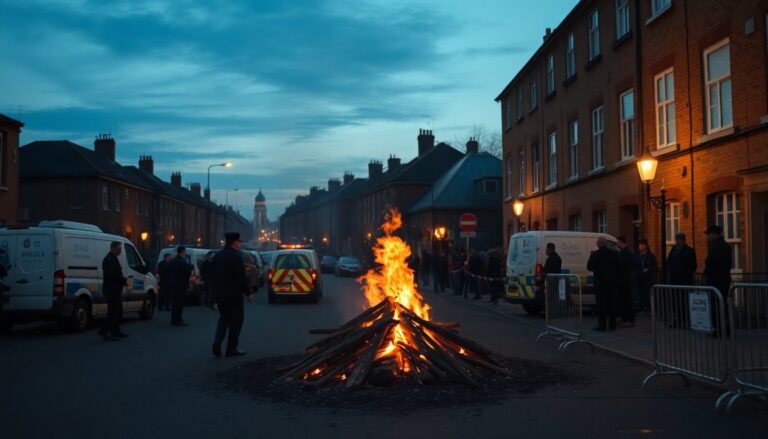
Thousands of people gathered in north London to observe Lag B’Omer, but this year the festival’s familiar rhythms — bonfires, parades and communal dancing — unfolded beneath an unusually heavy security blanket. On May 6 an event in Stamford Hill, one of Europe’s largest Hasidic neighbourhoods, drew not only celebrants but also a visible deployment of uniformed officers, plain clothes teams and volunteer guards.
The increased protection responded to a recent wave of incidents that included a stabbing in Golders Green and arson attacks against Jewish sites, prompting officials to raise the national terror threat level to severe and focus resources on vulnerable community hubs.
Briefing officers before the festivities, the metropolitan inspector warned of a “real possibility” that hostile actors might try to target Jewish religious gatherings, even in the absence of a pinpointed plot. The message reflected a broader assessment: the overall threat landscape contains both ideologically driven lone attackers and organised groups linked to hostile states, and police commanders have said this confluence creates unique risks.
Protective measures at Egerton Road and the grounds of Yesodey Hatorah School were therefore intensified, with barriers and patrol strategies introduced to deter and disrupt potential attackers while reassuring attendees.
Policing tactics and resources
The Metropolitan Police significantly augmented its presence: authorities committed an extra 1,000 officer shifts weekly to patrol areas with large Jewish populations and reported a six-fold rise in counter-terror vehicles around vulnerable sites. As part of these efforts, officers implemented hostile vehicle mitigation — physical barriers designed to prevent ramming attacks — for the first time at some community events. Project Servator teams, trained to spot suspicious behaviour and conduct unpredictable checks, were deployed alongside armed response units on call, creating overlapping layers of deterrence that combined visible and covert tactics.
Officials also announced dedicated funding to expand protective capacity. The Home Office provision of £18 million was earmarked to create a community protection team of 100 officers initially, a step leaders called a “crucial starting point” while warning that long-term stability would require multi-year commitments. Commanders emphasised the need for sustainable investment if permanent specialist units are to be established, arguing that short-term funds are helpful but cannot replace the certainty needed to plan enduring security structures.
Volunteer networks and local coordination
Alongside uniformed police, grassroots security groups stepped up their efforts. Shomrim, a volunteer-led community safety organisation, expanded its numbers for the festival — with reports of more than 100 volunteers on duty across Stamford Hill and about 50 focused at particular events. These volunteers worked closely with police and local authorities on access control, perimeter management and rapid reporting, complementing official resources and helping to maintain community confidence. Leaders said this level of civic coordination was unprecedented in recent memory for the area.
Community planning and practical measures
Event organisers carried out extensive planning meetings with council and police partners to set up security perimeters, stewarding and dynamic risk assessments that considered both crowd flow and potential attack vectors. Hostile vehicle barriers, revised entry points and visible patrols were all adopted to create safer public spaces without entirely transforming the celebratory atmosphere. Organisers stressed the emotional and financial burden of preparing these measures, noting that time and funds spent on security detract from ordinary community life.
Impact on families and the wider debate
For many attendees, the heavy security felt both comforting and distressing: parents watching children by bonfires expressed gratitude for the protection while admitting the need for it was a source of anxiety. Community figures described a sense of resilience coupled with frustration that religious practice now entails such precautions. Leaders and police warned that antisemitic incidents have reached a concerning high, citing a spike in recorded offences and links between some attacks and groups allegedly connected to foreign actors — reports indicate proposals for new legislation could allow lengthy sentences for attacks orchestrated from abroad.
Looking ahead
Commanders and communal representatives called for continued cooperation and stable funding to maintain protective operations without normalising fear. They said the objective is to make high-risk areas hostile to would-be attackers while keeping daily life as open as possible for residents. Despite the shadow cast by recent events, organisers and worshippers pledged to continue their traditions, combining public celebration with layered security measures as a pragmatic response to a challenging environment.