A cruise ship crossing the South Atlantic has been linked to confirmed hantavirus cases and several fatalities, triggering international evacuations and extended isolation guidance
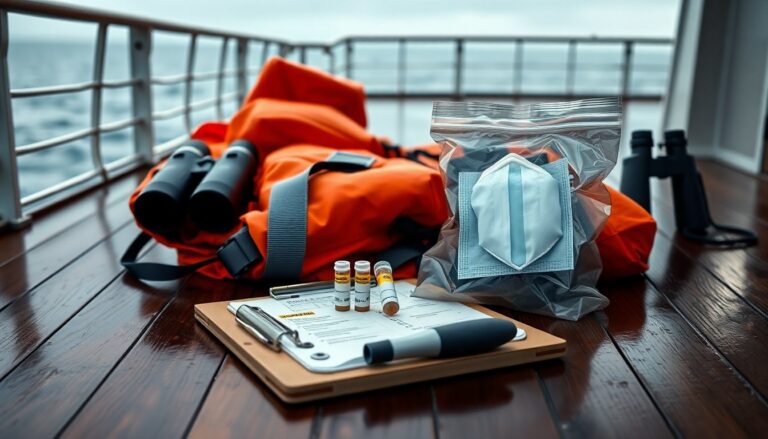
The expedition vessel MV Hondius has become the centre of an international health response after a series of illnesses, medical evacuations and deaths during a voyage from Argentina toward Cape Verde. Health authorities and the ship operator have confirmed that a variant of hantavirus was identified in a Dutch passenger who died after disembarking in St Helena, and in a British national who was later evacuated for intensive care in Johannesburg.
Passengers and crew remain under strict measures while multiple nations coordinate screening, transport and clinical care.
Oceanwide Expeditions has provided regular updates, noting that 114 guests boarded the ship on 1 April 2026 and that by 4 May 2026 around 149 people of 23 nationalities were still on board while the ship anchored off Cape Verde.
The operator said 30 guests disembarked on 24 April 2026 at St Helena — a figure that included the body of a passenger who had died on 11 April 2026 — and that subsequent illnesses prompted urgent international action as tests identified the virus.
Timeline of events
An outline of the key moments helps explain how the situation evolved and why multiple countries are involved. On 11 April 2026 a passenger died on board, and his body was later disembarked in St Helena on 24 April 2026. The deceased passenger’s wife left the ship at St Helena to accompany his repatriation; she fell ill during onward travel and died on 27 April 2026. Laboratory testing, shared through the World Health Organization, confirmed a variant of hantavirus in that Dutch woman on 4 May 2026. Separately, a British passenger was medically evacuated to South Africa on 27 April 2026 and tested positive for the same virus while receiving intensive care in Johannesburg.
Additional developments include the death of a German passenger reported on 2 May 2026, the appearance of respiratory symptoms in two crew members (one British and one Dutch) who later required urgent medical care, and a series of precautionary measures that have left about 150 people confined on board while authorities plan disembarkation. Investigations have also explored a pre-embarkation birdwatching trip in Ushuaia where contact with rodent-contaminated environments is suspected to be the origin of exposure.
Health response and international coordination
Responses have involved multiple agencies: the World Health Organization, national public health institutes, local authorities in Cape Verde, and the UK Health Security Agency. The ship has been managed under a high-level precautionary plan that Oceanwide refers to as its SHIELD response plan, which includes isolation, enhanced hygiene protocols and medical monitoring for anyone on board. Spanish authorities have agreed to allow the vessel to proceed toward the Canary Islands so comprehensive screening and disembarkation can be arranged, with Tenerife or Las Palmas under consideration as ports for further handling.
Evacuations, repatriation and isolation guidance
Medical evacuations have been completed for several patients: one British crew member was flown to the Netherlands for specialist care, and a British passenger was moved to a private facility in Johannesburg. The UK Health Security Agency has recommended that British passengers who return to the UK self-isolate for 45 days, reflecting cautious assumptions about the possible incubation window for this hantavirus variant. Authorities are conducting contact tracing for recent flights and interactions while emphasizing that casual, brief encounters are unlikely to transmit the virus; the focus remains on close, sustained contacts.
Understanding hantavirus and risk to the public
Hantavirus is a term for several viruses typically carried by rodents; the family can cause severe illness in humans who inhale aerosolized particles from rodent urine, droppings or nesting materials. For clarity, hantavirus here refers to the form detected in clinical samples from the affected cruise passengers and is not the same as more common seasonal respiratory viruses. Human-to-human transmission of hantavirus is uncommon, but some documented outbreaks have occurred where close personal contact allowed spread, which explains the cautious approach by public health teams.
Transmission concerns and public messaging
Officials stress that, for the general public not directly involved with the voyage, the immediate risk is low. Health agencies are prioritizing testing of disembarked passengers, clinical care for the ill, and targeted contact tracing for people who shared prolonged enclosed contact, such as cabin mates or long-haul flight seat neighbours of recently returned passengers. Meanwhile, disinfection of the vessel and further environmental assessments are underway to limit any residual risk before full disembarkation and normal operations resume.
As investigations continue and more laboratory results are returned, authorities have pledged to keep families and the public informed. The MV Hondius incident underscores how travel-linked exposures can trigger complex multinational responses, and it has prompted renewed attention to pre-embarkation activities, prompt reporting of illness at sea, and the logistics of safely evacuating and repatriating affected passengers while balancing clinical needs and public health protection.