NASA is moving forward with its Artemis III mission to return humans to the Moon, despite a recent setback involving Blue Origin's New Glenn rocket explosion.
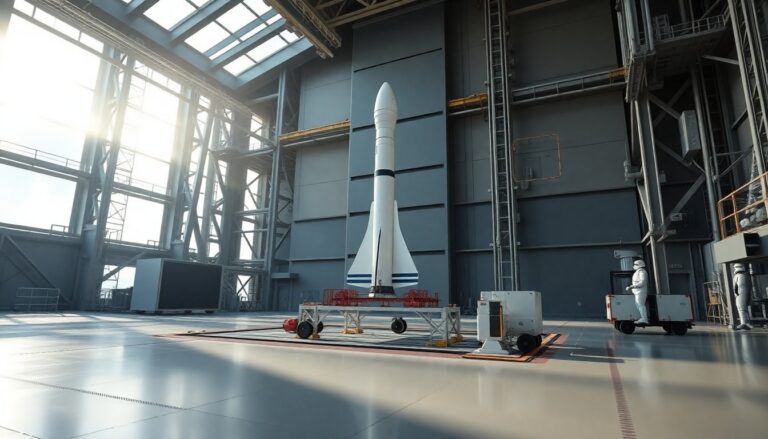
The Artemis III mission, a critical step in NASA’s plan to return humans to the Moon, is progressing despite a significant setback. On May 28, 2026, Blue Origin’s New Glenn rocket exploded during an engine-firing test, raising questions about the timeline for lunar exploration.
However, NASA officials remain optimistic, viewing the incident as a learning opportunity.
Blue Origin, founded by billionaire Jeff Bezos, plays a pivotal role in NASA’s lunar ambitions. The company is developing a lunar lander called Blue Moon, which is essential for the Artemis III mission.
Despite the explosion, Blue Origin executives have expressed confidence in their ability to recover and continue contributing to the mission.
The Artemis III Crew and Mission Objectives
NASA has announced the crew for the Artemis III mission, scheduled for launch in late 2027.
The crew includes NASA astronauts Andre DouglasFrank Rubioand Randy Bresnikalong with Luca Parmitano from the European Space Agency. Their primary objective is to test low Earth orbit docking procedures between the Orion spacecraft and commercial lunar landers developed by Blue Origin and SpaceX.
The Artemis III mission is part of a broader plan to establish a permanent lunar base, which could see humans living and working on the Moon within six years. This ambitious project aims to develop technologies necessary for future deep space voyages, including missions to Mars. The mission is divided into three stages, with Artemis III being a crucial step in achieving these long-term goals.
The Impact of the New Glenn Rocket Explosion
The explosion of the New Glenn rocket has raised concerns about the timeline for the Artemis III mission and the subsequent Artemis IV mission, which aims to return astronauts to the lunar surface by 2028. The incident has also sparked speculation about whether the United States will be able to reach the Moon before China, which is planning its own lunar landing mission for 2030.
NASA officials have emphasized the importance of collaboration and innovation in overcoming this setback. Jeremy Parsons, NASA’s Artemis lead, stated that setbacks are a learning opportunity and that NASA is bringing all its expertise to bear to solve the problems at hand. John Couluris, senior vice president of lunar permanence at Blue Origin, echoed this sentiment, highlighting the company’s motivation to be part of the journey of returning humans to the Moon.
Recovery and Future Plans
Blue Origin is making excellent progress in investigating the cause of the explosion and cleaning up the launch complex. The company plans to rebuild the launch pad and continue construction at an adjacent launch complex. Despite the setback, Blue Origin remains committed to its role in the Artemis program and the broader goal of lunar exploration.
NASA is also exploring alternative options to mitigate the impact of the New Glenn explosion. The space agency is urging Blue Origin to consider using other rockets for launching its Blue Moon lunar landers, which would allow NASA to meet its deadline of landing astronauts on the Moon in 2028. However, the New Glenn rocket remains essential for launching other critical components of the Artemis missions, such as the lunar terrain vehicles and the Viper robot rover.
The Broader Implications for Lunar Exploration
The Artemis program represents a significant step forward in humanity’s quest to explore and understand the Moon. The program’s success depends on the collaboration of multiple partners, including NASA, Blue Origin, SpaceX, and the European Space Agency. Each partner brings unique expertise and resources to the table, contributing to the overall success of the mission.
However, the recent setback serves as a reminder of the challenges and risks associated with space exploration. As NASA and its partners work to overcome this obstacle, they are also laying the groundwork for future missions to Mars and beyond. The Artemis program is not just about returning humans to the Moon; it is about paving the way for a new era of space exploration and discovery.
In the words of NASA boss Jared Isaacman, We are returning to the moon. A grand adventure back to the lunar surface to build a moon base, and to do so for all of its scientific, its economic potential and to master the skills for where we will inevitably go next. This vision underscores the importance of the Artemis program and the collective efforts of the global space community to achieve these ambitious goals.