Violence erupted in Belfast following a knife attack that left a man critically injured. Far-right activists called for protests, leading to widespread unrest and destruction.
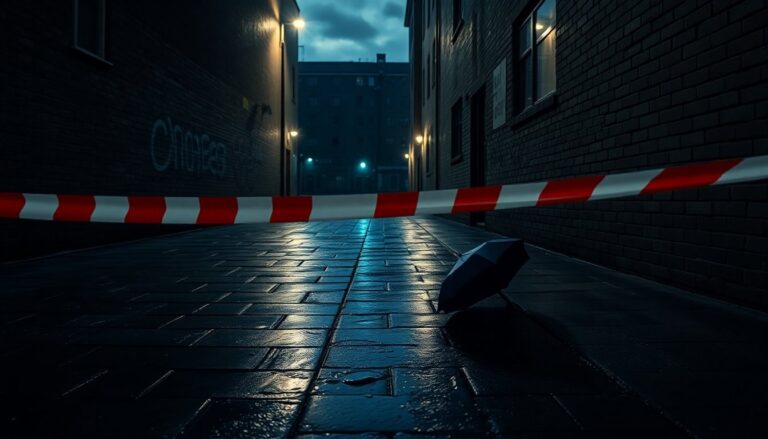
The city of Belfast has been rocked by violent protests following a brutal knife attack that left a man with serious injuries. The incident, which occurred on Monday night, has sparked widespread outrage and led to clashes between protesters and authorities.
The unrest began after a 30-year-old asylum seeker from Sudan was charged with attempted murder in connection with the attack. The victim, a man in his 40s, suffered significant injuries to his eyes, face, and back. The suspect is scheduled to appear in Belfast magistrates court on Wednesday.
The knife attack and its aftermath
The stabbing took place at approximately 10:30 pm outside a block of flats in north Belfast. A graphic video of the attack circulated on social media, showing the assailant straddling the victim and striking him repeatedly with a kitchen knife.
Bystanders intervened, with one man, later identified as Maitiu Mag Tighearnan, using a hurling stick to subdue the attacker.
In addition to attempted murder, the suspect was charged with possession of an article with a blade or point in a public place and threats to kill. Jon Boutcher, the chief constable of the Northern Ireland police service, revealed that the suspect had been granted leave to remain in the UK on 28 September 2026. Boutcher emphasized that there is no trace of the suspect on any national security databases and that the attack is not believed to be terrorist-related.
Protests and violence spread across Northern Ireland
Far-right activists, including Elon Musk and Tommy Robinson, called for protests in response to the attack. Crowds, some wearing masks, took to the streets, burning vehicles and homes, and blocking roads in and around Belfast. The violence included the hijacking and burning of a Glider bus on Newtownards Road and the torching of cars near Shankill Road and in Newtownabbey.
Police vehicles were targeted by protesters, and a group stormed a home occupied by an ethnic minority family, claiming to be ‘liberating’ it. Shops on Shankill Road were looted, and an African shop was set on fire. Protests also occurred in Antrim, Bangor, and Ballymena, with two cars set alight in Newtownabbey. In London, about 60 protesters gathered in Parliament Square, accusing police of being ‘traitors’ and attempting to provoke officers.
Political and community responses
Politicians and community leaders across Northern Ireland and the UK condemned the violence and called for calm. Ryan Henderson, the assistant chief constable, urged everyone to remain calm and act responsibly. John Finucane, the Sinn Féin MP for North Belfast, described the scenes as ‘shameful’ and emphasized that there is no place for such violence on the streets.
Northern Ireland’s Alliance justice minister, Naomi Long, stated that the demonstrators were intent on wreaking destruction on the communities they claimed to protect. Immigrant communities expressed fear of being targeted, with Sudanese business owners closing their stores and the Belfast Islamic Centre canceling evening prayers. Keir Starmer, the UK Prime Minister, described the attack as sickening and thanked the first responders for their intervention.
Northern Ireland’s first minister, Michelle O’Neill, urged the public not to be persuaded by social media accounts to cause disorder. She emphasized that those stoking tensions do not represent the good people of Northern Ireland. Rightwing commentators, including Rupert Lowe and Elon Musk, posted about the attack, with Musk sharing a list of potential protest areas in the UK.
The violence and protests have highlighted the deep-seated tensions in Northern Ireland and the potential for far-right agitators to exploit such incidents. The situation remains fluid, with authorities working to restore order and protect communities from further harm.