

On the 10th anniversary of the Brexit referendum, protesters took to the streets of London demanding the UK rejoin the European Union, sharing personal and professional impacts.
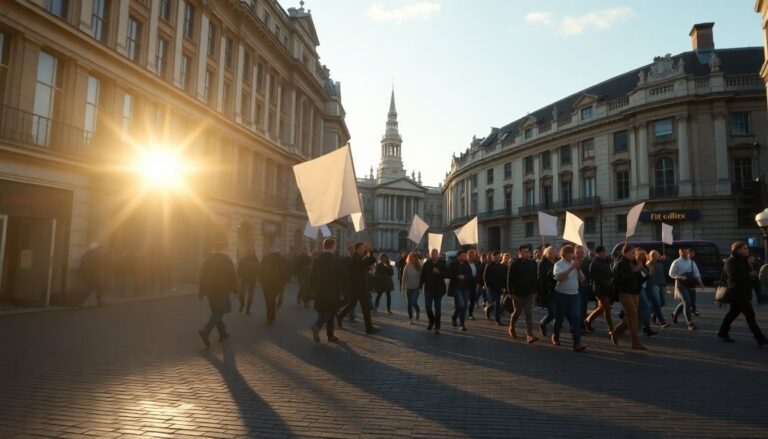
The streets of London echoed with chants of protesters on Saturday, marking a decade since the UK’s momentous Brexit referendum. Under the banner We Want Our Star Backapproximately 1,500 individuals marched from Temple station to Parliament Squaretheir messages of unity and discontent painted vividly on homemade signs and flags.
The National Rejoin March (NRM) brought together a diverse group of individuals, each with their own reasons for advocating for the UK’s return to the European Union. The event was a colorful display of EU flags and blue and yellow attiresymbolizing the protesters’ desire to reclaim their European identity.
The Personal Impact of Brexit
Among the marchers was Madeleine Kaya 32-year-old newlywed from Sheffieldwho is currently navigating the complexities of moving to Germany to be with her husband, Johann. Kay’s story is one of many that highlight the personal ramifications of Brexit.
“I think Brexit was a travesty for the United Kingdom,” Kay stated, emphasizing the personal impact it has had on her life.
Kay’s concerns extend beyond her personal circumstances. She expressed a desire for a better future for the UK, particularly for the young people who were unable to vote in the 2016 referendum. “It is really important that we make our cause visible,” she said, underscoring the importance of continued campaigning for EU re-entry.
The protesters’ messages were as varied as their reasons for marching. One homemade banner read Brexit suckswhile another proclaimed, I don’t want to take my country back, I want to take my country forward. The Croydon for Europe group carried a banner that read, The UK should be more like Crystal Palace, Champions of Europedrawing a parallel between the football club’s success and the UK’s potential within the EU.
Scientific Concerns and Professional Impacts
The march also attracted Arttu Rajantiea Finnish theoretical physicist living in Reading, Berkshirewho works in London. Rajantie’s concerns revolve around the impact of Brexit on scientific research. He held a banner that read Scientists for EUhighlighting the loss of access to European funding and the restrictions on freedom of movement.
Rajantie explained that the visa process and associated bureaucracy have made it difficult to recruit European researchers. “We can’t recruit young European researchers in the same way as we could,” he said, noting that the 27 EU countries offer more accessible opportunities compared to the UK’s visa requirements.
The Scientists for EU banner was a stark reminder of the broader implications of Brexit, extending beyond personal stories to professional and academic sectors. The loss of collaborative opportunities and funding has left a significant void in the scientific community.
The Organizers’ Perspective
Clare Hallone of the organizers of the NRM, expressed her hopes for the future. “I would just like to see full rejoin,” she said, emphasizing that the past decade has demonstrated the negative impacts of Brexit. Hall pointed out that the initial concerns about immigration have been proven unfounded, and the loss of freedom of movement has had a detrimental effect on the UK.
Hall also highlighted the economic and social challenges faced by the younger generation, who are set to bear the brunt of Brexit’s long-term consequences. “Life has got harder,” she said, noting the increased costs and bureaucratic hurdles in everyday life.
The NRM served as a platform for these voices, bringing together individuals from diverse backgrounds to advocate for a common cause. The march was a testament to the enduring desire for the UK to reclaim its place within the European Uniondriven by personal stories, professional concerns, and a shared vision for the future.
