Belfast's cultural scene is a tapestry of progress and stagnation, as seen in the Fleadh and Féile events.
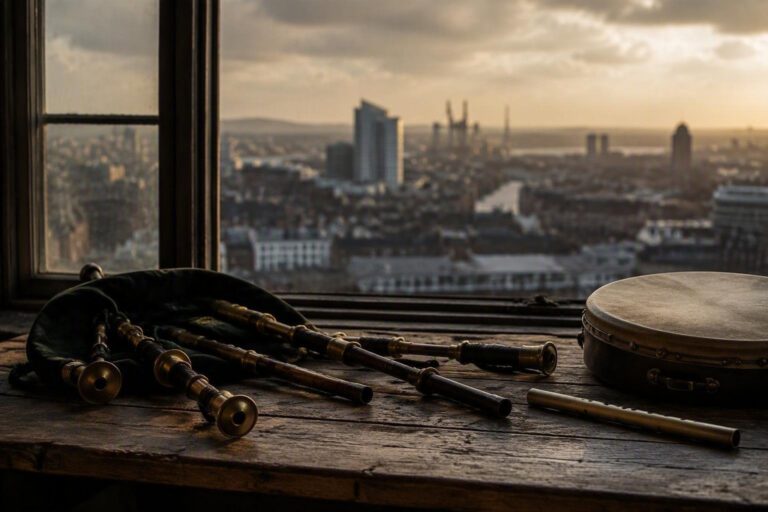
The cultural landscape of Belfast is a complex tapestry, woven with threads of progress and pockets of stagnation. This duality is vividly illustrated by the city’s two major events: the Fleadh and Féile an Phobail. While the Fleadh exudes a sense of community and forward momentum, Féile risks reverting to outdated narratives that hinder the city’s growth.
The Fleadh, with its family-oriented atmosphere and vibrant displays of traditional music, stands as a testament to Belfast’s evolution. The sight of children dancing, musicians performing, and communities coming together in a city once divided by conflict is a powerful symbol of how far Belfast has come.
This event showcases the best of what the west of the city has to offer, proving that the past need not dictate the future.
The Fleadh: A Beacon of Progress
The Fleadh’s success lies in its ability to bring people together in a spirit of celebration and unity.
From the energetic performances of sean nós singers to the intricate melodies played on fiddles and flutes, the event is a celebration of cultural heritage that transcends the divisions of the past. The Fleadh’s family-friendly environment and emphasis on community engagement make it a beacon of progress for Belfast.
The event’s positive atmosphere is a stark contrast to the city’s troubled history. The Fleadh’s ability to attract a diverse audience and foster a sense of shared identity is a testament to the city’s resilience and determination to move forward. It is an event that Belfast can be proud of, one that showcases the city’s cultural richness and community spirit.
Féile an Phobail: A Missed Opportunity
In contrast, Féile an Phobail, while offering a platform for community activism, often finds itself mired in nostalgia for a past that many in Belfast are eager to leave behind. The event’s focus on rebel concerts and the glorification of IRA slogans risks perpetuating a cycle of division and stagnation. This is particularly evident in the behavior of some young attendees, who wave tattered tricolours and drunkenly chant outdated slogans, reducing complex historical narratives to mere status symbols.
The inclusion of performers like the Wolfe Tones and the promotion of so-called rebel songs as badges of honour is a missed opportunity. In a city brimming with talent and creativity, Féile could be a platform for showcasing the best of contemporary culture and fostering a sense of shared identity that looks to the future rather than the past.
The Case of Martina Anderson
The story of Martina Anderson a former IRA member and now a prominent figure in Sinn Féin highlights the dangers of radicalisation and the cult-like nature of certain movements. Anderson’s decision to have an abortion so she could continue her involvement with the IRA is a stark example of how far radicalisation can stretch the human mind and life experience. Her story, recounted in her book and on RTÉ’s Sunday with Miriam, serves as a warning of the dangers of movements that prioritise ideology over individual well-being.
Anderson’s unwavering commitment to the republican movement, even after being unceremoniously dumped by Sinn Féin, raises questions about the extent to which individuals can be indoctrinated. Her story could have contributed to deconstructing the processes of radicalisation and deterring others from reaching similar points of no return. Instead, her narrative remains confined to a republican bubble, a missed opportunity for broader reflection and education.
Looking to the Future
The Fleadh and Féile an Phobail present contrasting narratives of Belfast’s cultural scene. While the Fleadh showcases the city’s progress and community spirit, Féile risks reverting to outdated narratives that hinder growth. The challenge for Belfast is to build on the successes of events like the Fleadh and use platforms like Féile to foster a sense of shared identity that looks to the future. Only then can the city truly move forward, leaving behind the divisions of the past.