

Hundreds of thousands of young people are set to march across Germany while France braces for a massive police deployment this Halloween weekend.
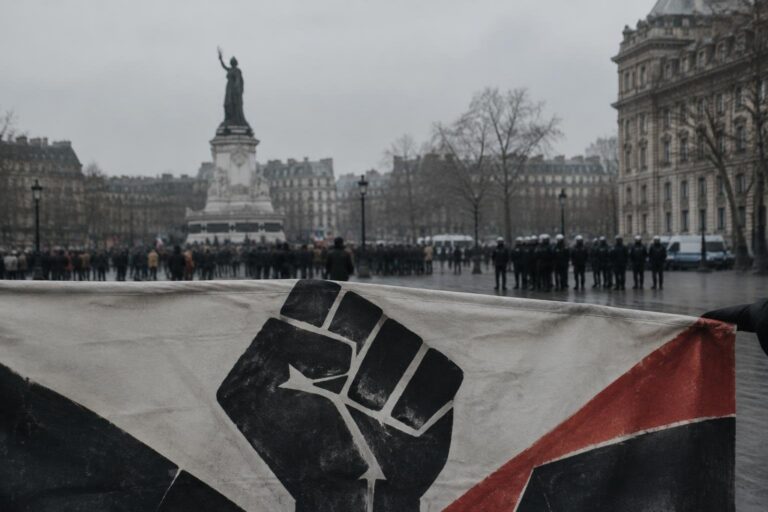
Across Europe a wave of youth-led protests has gathered momentum, with students and young workers demanding relief from soaring living costs, failing school infrastructure and a perceived lack of future prospects. The unrest mirrors three consecutive weekends of demonstrations in France, where similar grievances have already sparked looting and confrontations with law enforcement.
In Germany, the flashpoint arrives on Saturday, 30 October 2026. Roughly 150,000 individuals have signed up to march in about 30 cities, including major hubs such as Berlin, Frankfurt, Cologne (Köln) and Munich. The protest banner, Gen Z regelt! – roughly translated as “Gen Z has got this!” – frames the movement’s claim that the younger generation deserves a seat at the policy table.
German demonstrations: scale, organization and security measures
The German side combines massive numbers with a decentralized structure. While the central call originates from the Gen Z regelt! network, each city organises its own rally; Cologne is expected to host the largest gathering, followed by Berlin, Hamburg and Munich.
The agenda lists six core demands: increased funding for schools, addiction help and psychotherapy; affordable living costs; a fair distribution of fiscal burdens; abolition of conscription; protection of fundamental rights against expanding surveillance; and urgent climate action. Participants stress that they seek a peaceful demonstration, rejecting any form of vandalism.
Security agencies have pre-emptively drawn a line at potential troublemakers. The Bundespolizei, acting on instructions from the Bundesinnenministerium, announced that individuals suspected of intending violence could be turned back at the border. Officials say they are in close contact with French and Italian authorities, who have recently experienced flare-ups. A spokesman added that, to date, no concrete intelligence points to imminent violent outbreaks linked to the scheduled protests.
France prepares security and business response
Across the border, French officials are bracing for a parallel surge of activity. The interior ministry has earmarked 70,000 police officers for the weekend, closing more than 40 metro stations in Paris and imposing a ban on face-covering masks – a measure aimed at curbing anonymity during the Halloween celebrations. Business owners, represented by France’s Chamber of Commerce, have taken precautionary steps; luxury jewellery shops and clothing boutiques have boarded up windows in anticipation of possible looting.
During a live interview on France Inter, chamber president Ailain Di Crescenzo voiced the commercial sector’s anxiety: “Shopkeepers can’t wait for Saturday to be over,” he warned, adding that the holiday’s tradition of mask-wearing would further complicate policing efforts. The statement echoes the interior minister’s description of a “very high risk” of disorder, a sentiment amplified after three weekends of protests that already led to sporadic clashes and property damage.
Outlook for the weekend
Analysts caution that while the German police have not detected explicit calls for violence, fringe elements from both the left-extremist scene and overseas extremist networks have tried to latch onto the mobilisation. At the same time, political figures from across the spectrum – including the federal family minister, the SPD youth spokesperson and leaders from the Greens and Die Linke – have publicly acknowledged the legitimacy of the youngsters’ concerns, urging calm and dialogue.
With tens of thousands set to take to the streets in both countries, the weekend will test the balance between democratic expression and public order. Whether the rallies remain largely peaceful or descend into the unrest witnessed in recent French episodes remains uncertain, but the sheer scale of participation underscores a generational demand that European governments can no longer ignore.
