Healey’s debut budget mixes modest growth forecasts with targeted tax changes and new relief for households and businesses.
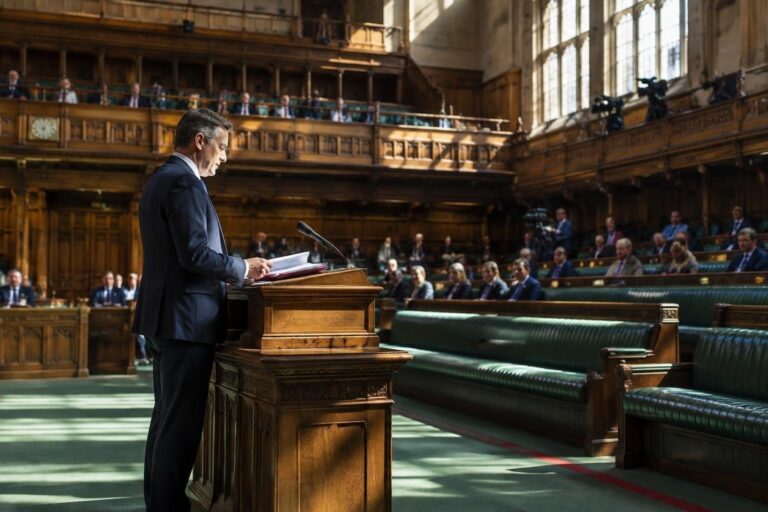
The new chancellor, John Healey, delivered his inaugural budget to the House of Commons, framing it as a package that will give “breathing space” to families while keeping the economy on track. He underscored the difficulty of shielding millions of struggling households without resorting to heavier taxes that could suppress economic growth.
The speech, broadcast live, set out a series of fiscal adjustments, energy-bill reforms and tweaks to the tax system.
Economic outlook and public finances
Growth projections
The Office for Budget Responsibility lifted its short-term growth outlook to 1.2% for the current year, followed by 1.0% in the next year.
Longer-run forecasts climb to 1.6% in 2028, 1.8% in 2029, then taper to 1.7% in 2030 and 1.6% in 2031. Healey claimed these numbers show Britain has out-performed expectations and that the measures announced today will help the country “beat the forecasts again.”
Debt, borrowing and fiscal headroom
The Treasury announced that debt-interest payments will rise by £14 billion this year, according to the OBR. Borrowing is projected to fall to 4.2% of GDP this year, then to 3.4% next year, 2.9% in 2028/29, 2.1% in 2029/30 and finally 1.8% by 2030/31. The chancellor said the fiscal “headroom” – the cushion for future spending – will stand at £15 billion in 2029/30 and rise to £22 billion in 2030/31.
Tax policy and business incentives
Corporate and personal tax adjustments
Healey kept the full expensing regime for qualifying corporate assets and boosted the main first-year allowance from 40% to 50%, while trimming the main writing-down allowance from 14% to 12%. The threshold for the Business Asset Disposal Relief was halved, from £1 million to £500 thousand, a move that will not affect three-quarters of current claimants. From April 2027, tax on income from property and savings will rise by two percentage points. The chancellor also raised the small-business rate-relief threshold for retail, hospitality and leisure from £12 k to £18 k.
Bank surcharge and other levies
To fund additional household energy help, the government will impose a further 3 % surcharge on banks’ profits. The existing bank surcharge, previously cut to 3 %, will be reinstated at a higher level. Meanwhile, the Machine Games Duty on high-stakes gambling machines will jump from 20% to 25%.
Minimum wage, ISA and pension reforms
Approximately 2.3 million low-pay workers will benefit from a 3.9% rise in the National Minimum and Living Wage. The Chancellor rejected the previous plan to halve the cash ISA allowance, keeping the tax-free limit at £20 000. The “triple lock” for state pensions will be altered from 2030, moving to a rise based on inflation (2.5 %) rather than the higher of earnings or inflation. The personal allowance for pensioners will be adjusted so that those whose only income is the state pension remain tax-free.
Energy costs and household support
Gas standing charges and electricity VAT
From 2027, or as soon as practicable thereafter, the Treasury will scrap standing charges on gas supplied to homes and businesses – a fixed daily fee that presently costs the average household about £108 per year. In parallel, the value-added tax on electricity bills will be eliminated, cutting a further cost component for consumers.
Direct cash aid and fuel duty
Twenty-million households in council-tax bands A-D will receive a one-off £100 Household Energy Payment, financed by a £2.6 billion scheme. The 5p cut to fuel duty and the reduction in red-diesel rates – the lowest in over two decades – will stay in place until July. Over 100 food items, from chocolate to gherkins, will continue to benefit from suspended import tariffs, translating into modest weekly savings for shoppers.
Industrial competitiveness scheme
To bolster manufacturing, the British Industrial Competitiveness Scheme will offer a 25% discount on electricity charges for 10,000 eligible firms, aiming to improve the sector’s global standing.
Overall, the budget strives to balance modest growth ambitions with targeted relief for energy bills, low-pay workers and small businesses, while securing additional revenue through selective tax increases on banks, gambling machines and certain property income.