

Everton’s owners signal a swift exit, sparking billionaire interest and transfer turmoil.
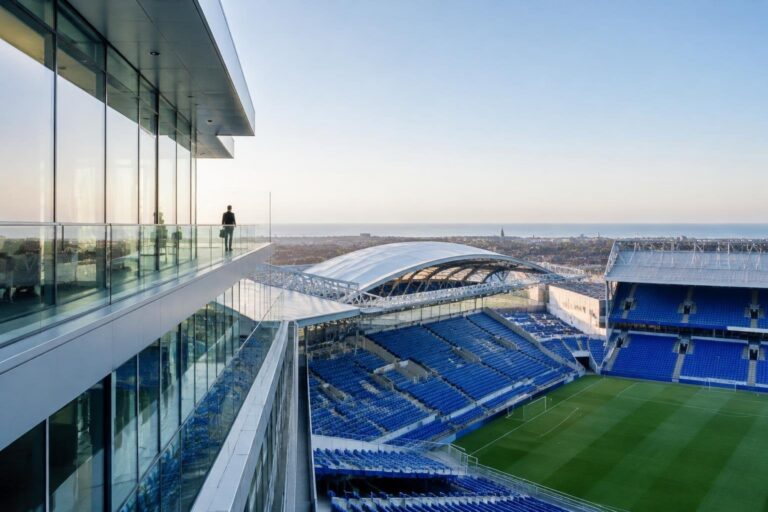
Everton Football Club, long regarded as the blue half of Merseyside, entered 2026 under the shadow of a newly declared sale. The Friedkin Group, which completed its takeover in December 2024, surprised the football world by putting the club back on the market less than two years later.
The decision, framed as a move to “stabilise the business” and hand the reins to owners capable of taking the Toffees to the next level, arrived just weeks after a turbulent summer transfer window that saw key targets slip away and star forward Iliman Ndiaye depart for £65 million.
Why the Friedkin Group is looking to exit
The Friedkin executives have repeatedly stressed that the club’s finances are now on a firmer footing than they were a decade ago. A state-of-the-art waterfront stadium, set to host Euro 2028 matches, offers diversified revenue streams that extend beyond match-day tickets.
Corporate hospitality suites, event hosting capabilities and a modern infrastructure have collectively lifted the club’s valuation, making it a more alluring prospect for high-net-worth investors. Nevertheless, chief executive Angus Kinnear admitted that the owners informed him of the sale plan only an hour before the announcement became public, underscoring the speed of the decision.
Dan Friedkin’s personal connection to Everton appears minimal; despite owning the Italian side AS Roma and making frequent trips to the UK, he has never attended a match at Goodison Park. This lack of emotional attachment fuels speculation that the group views the club primarily as a financial vehicle. By putting Everton up for sale now, Friedkin hopes to capture the premium attached to a Premier League franchise equipped with a new stadium and a promising youth cohort.
Potential suitors and the emerging billionaire interest
Within days of the announcement, a handful of serious bidders emerged. The most prominent name resurfaced this week: Michael Dell, founder and CEO of Dell Technologies, who already owns a 5% stake in the Las Vegas Raiders. At 61, Dell is listed by Forbes as the world’s fourth-richest individual and has previously been linked to a takeover bid in 2024. While his camp initially downplayed the rumors, recent reports suggest a renewed, vigorous approach to acquiring Everton.
Beyond Dell, a broader American consortium of wealthy families is said to be evaluating a £1 billion-plus package to challenge Liverpool’s dominance on Merseyside. The allure lies in the club’s improved fiscal health, the revenue-generating stadium, and a squad that, according to insiders, is “only a few players away” from a genuine European push. The Friedkin Group expects the sale process to be swift, contrasting it with the protracted exit of former owner Farhad Moshiri.
Transfer window fallout and squad outlook
While the ownership saga unfolds, manager David Moyes faces a summer market fraught with disappointment. The Toffees secured two league wins, four draws and two losses, but failed to replace departing midfielder Beto and lost striker Iliman Ndiaye for a modest fee. Moyes has identified a genuine No 9 as the club’s number-one priority, and sources confirm that scouting teams are actively pursuing several targets for the January window.
Young talents such as Jarrad Branthwaite, Tyrique George, and Harrison Armstrong have emerged as bright spots. Branthwaite, a promising defender, remains on the radar of Manchester United and Liverpool, though recent concussion protocols have limited his availability. Meanwhile, the midfield trio of Kiernan Dewsbury-Hall, Tyler Dibling and newcomer Hayden Hackney are being praised for their adaptability, giving Moyes tactical flexibility despite the transfer limbo.
Managerial future and the Carabao Cup test
Amid ownership uncertainty, Moyes’ contract situation is equally ambiguous. The Scottish veteran, now at 761 Premier League appearances, is inches away from surpassing Arsène Wenger’s record. Yet, he has publicly stated that contract negotiations are not his immediate focus. Should a new ownership group take charge, a managerial change could be on the horizon, though the fanbase remains divided.
The Toffees’ upcoming Carabao Cup quarter-final against Newcastle United is being treated as a decisive encounter. Newcastle, fresh off a historic domestic cup win in 2025, presents a formidable challenge. Analysts stress that a victory would propel Everton into the last eight, offering a realistic trophy route. Moyes is expected to field his strongest XI, with key players like Jack Grealish and Vitalii Mykolenko aiming to regain full fitness.
Everton stands at a crossroads where ownership ambitions, transfer market dynamics, and managerial stability intersect. The next few months will determine whether the club can harness its modern stadium assets and youthful squad to secure a new era of competitiveness, or whether the rapid turnover at the top will leave the Toffees adrift.
