Edinburgh’s drainage complaints pile up as the council clears just a fraction of blocked gullies.
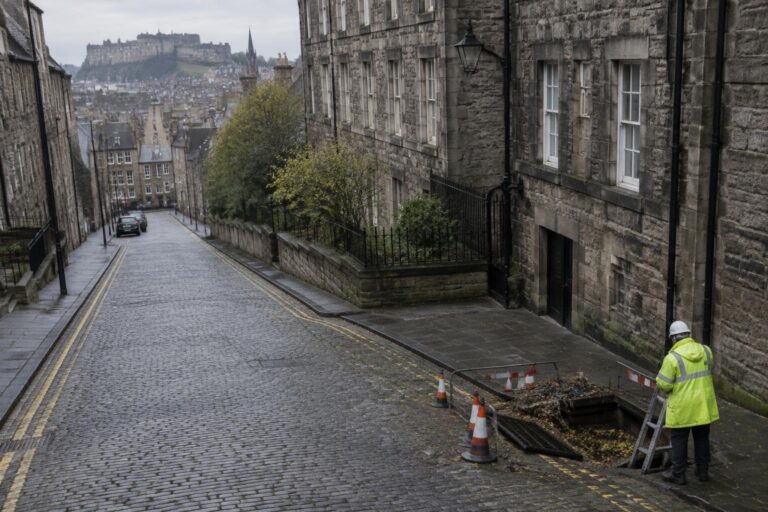
The recent release of request data shows that the Edinburgh council has dealt with a tiny share of reported drainage problems. Out of a total of 2,590 submissions from residents asking for blocked road drains to be cleared, only 172 were addressed within a month – a success rate of just 6.6 per cent over the last six months.
These figures emerge after a period of unusually wet and windy weather that has filled gullies with leaves and debris, heightening the city’s flood risk. The backlog, according to council officials, stems from a combination of staffing shortages and a limited vehicle fleet, which together have hampered the ability to respond promptly.
Scope of the backlog across Edinburgh
Requests have not been evenly distributed across the city. The wards of Morningside, Inverleith and the combined Corstorphine/Murrayfield area each generated more than 200 complaints, making them the hotspots for blocked gullies. Yet, in the Corstorphine and Murrayfield ward, the council’s drainage team managed to attend to only two of those reports within the accepted one-month window.
The disparity is striking when contrasted with the overall figure of 172 timely completions. While the council claims to run a regular cleaning programme, the sheer volume of ad hoc calls – those that arise outside the scheduled routes – has overwhelmed resources, leaving many residents without relief.
Council’s explanation and operational plan
Council representatives attribute the shortfall to two main constraints: insufficient staff levels and an ageing fleet of maintenance vehicles. In response, they highlight a cyclical programme that has cleared more than 19,000 gullies city-wide over the past six months, focusing on routes deemed most critical.
Labour’s Stephen Jenkinson, chair of the transport and environment committee, explained that the council aims to assess ad hoc requests within three months. He added that recent shortages have been addressed, allowing additional resources to be shifted toward the backlog of unscheduled reports.
Political reaction and public impact
Liberal Democrat council leader Ed Thornley denounced the outcome as “a serious failure by the Council,” noting that his own ward suffers from chronic surface-water flooding. He warned that when fewer than seven per cent of reports are dealt with swiftly, public confidence erodes, and residents may stop reporting problems altogether.
The criticism underscores a broader concern: as blocked gullies increase the likelihood of flash flooding, the city’s ability to protect homes and businesses hangs in the balance. Residents are left questioning the value of reporting issues if the chance of a timely fix remains so low.