A promise of endless sea retirement turned into a frantic seven‑hour evacuation as fuel costs sank the Villa Vie Odyssey.
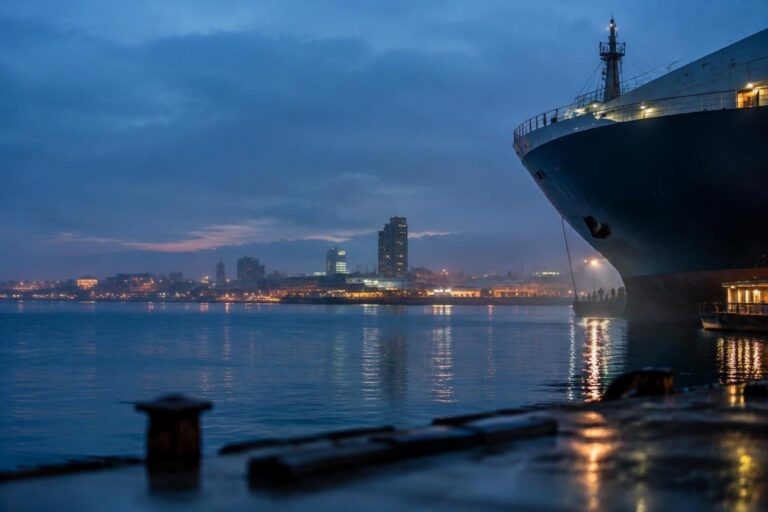
In October 2024, a 642-foot vessel formerly known as MS Braemar departed Belfast, Northern Ireland, under a new banner: the MV Odyssey. Operated by Villa Vie Residences, the ship was billed as an affordable residential cruise that let retirees and digital nomads spend a presidential term at sea for $319,998, with an optional permanent-residency upgrade costing a few hundred thousand more.
The package promised a pool, a pickleball court, a theatre, bars, a gym, and a rotating list of exotic ports, positioning the Odyssey as a budget-friendly alternative to the ultra-luxury MS The World, whose apartments run from $2 m to $15 m.
From Belfast to a sudden Cambodian dock
After leaving Belfast, the Odyssey traced a circuit that included Caribbean stops, a brief episode in Mariel, Cuba in March 2020, and later Asian ports such as Bangkok. The itinerary was marketed as a way to “skip forward” four years for passengers uneasy about the re-election of Donald Trump, offering a floating refuge far from U.S.
politics. By the time the ship entered the Gulf of Thailand, more than 200 residents—most of them Americans—had made the vessel their home, decorating cabins with personal rugs, pictures, and, in the case of Holly Hennessy, a Siamese cat named Captain.
However, the global context shifted dramatically in late February when a conflict sparked a steep rise in oil prices. The company later disclosed that monthly fuel costs per cabin in parts of Asia jumped from $1,800 to as much as $8,000, creating “under unsustainable financial pressure.” The Odyssey, a 196-metre ship that “drinks petrol by the metric tonne,” required roughly 150 tonnes of fuel for a single top-up, a bill approaching $800,000. Unable to bridge that gap, Villa Vie announced that the vessel had only seven hours to evacuate passengers.
Fuel surge and financial collapse
On a Tuesday, Villa Vie Residences released a stark statement: “Since the conflict began in late February, we have taken significant steps to reduce fuel consumption, including slowing the itinerary and spending more time in port. Those measures have not been enough to offset the extraordinary increase in fuel costs, and we have been unable to continue carrying the resulting operating losses.” The company added that it had “run out of money owing to the soaring price of oil.” The statement also promised coordination of “disembarkation and temporary living arrangements” for both residents and crew over the next 60 days.
Passengers were instructed to pack their belongings and board buses that ferried them to the port city of Sihanoukville in Cambodia. The abrupt halt marked the end of a journey that had begun with the optimism of a floating retirement community but concluded with a frantic scramble for accommodation. No list of local hotels was supplied, and the company’s subsequent offer of charter-flight tickets to the United States arrived after many passengers had already found their own way home.
Passengers’ reaction and aftermath
“People were shell-shocked, numb, crying,” recalled Kit Cassingham, a U.S. resident who had spent two years aboard with her husband Randy. Their cabin had become a lived-in space, complete with personal décor. “We went through the five stages of grief,” Kit added, describing the collective anger, hysteria, and disbelief that swept the ship’s community when the announcement blared over the loudspeaker.
Randy echoed the sentiment, noting that the ship’s energy shifted dramatically after the Hormuz incident, when the crew began cutting back on meals, excursions, and even the frequency of fuel purchases. “We were buying 150 metric tonnes of fuel at a time, which would cost about $800,000,” he said. “When the price per cabin jumped to $8,000 a month, the math stopped making sense.”
Other residents shared similar stories. Holly Hennessy, who had been living with Captain the cat, posted photos of their makeshift home and expressed gratitude for the experience despite the abrupt ending. Meanwhile, a Swedish couple, Lanette Canen and Johan Bodin, who had documented their life aboard on YouTube, warned that financial distress signs had been visible weeks before the final notice. “I’m Mr Super Positive, but I felt drained the last two months,” Bodin said in a video posted shortly before the evacuation.
Australian pilates instructor Rina Cavazza summed up the mood: “We knew worst-case scenarios, but we didn’t think they would become reality.” A former resident, Sherrie Cornett, vented on Facebook that the group was “dropped unceremoniously in the middle of town, left to our own devices.” The crew of 156, including a ship’s doctor and two nurses, also found themselves stranded in Cambodia, with no clear timeline for repatriation.
Analysts suggest that the Odyssey’s downfall underscores the fragility of the nascent residential ship market. Professor Andrew Coggins noted that only a handful of vessels—MS The World and the ill-fated Odyssey—have attempted this model, and both require massive capital and stable fuel prices to stay afloat. He warned that any future attempts will have to reconcile “high operating costs” with “premium pricing” to avoid a repeat of the Odyssey’s fate.
Despite the setback, passengers like Randy remain optimistic. He now blogs about his experience, emphasizing resilience: “We are lucky to have survived; we are not crying in our soup. We will land on our feet.” Kit, a transformation coach, echoed the sentiment, urging readers to “live your dreams, go for the gusto, and enjoy the adventure while you can.”