British prime minister Andy Burnham signals willingness to discuss a formal apology for Britain’s role in the transatlantic slave trade, while firmly dismissing any financial reparations, ahead of a Commonwealth leaders summit in the Caribbean.
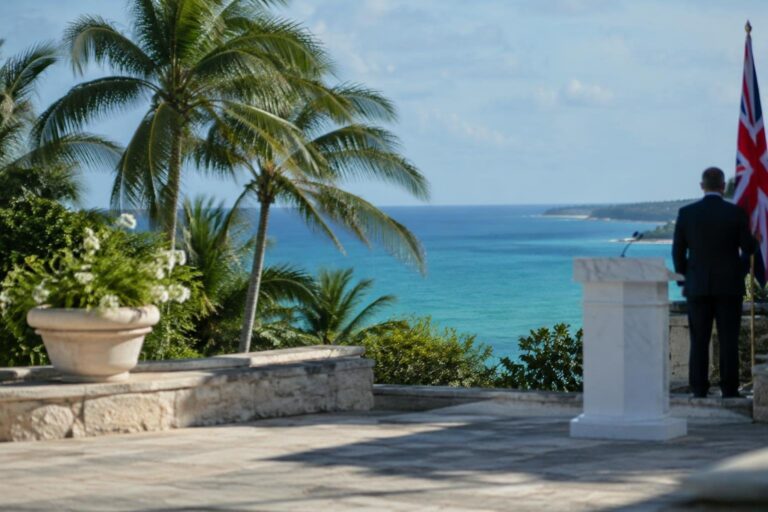
British prime minister Andy Burnball has publicly said he is “open” to the idea that the United Kingdom could issue a formal apology for its involvement in the transatlantic slave trade. At the same time, he rejected the notion of paying financial reparations, describing them as “not the right answer”.
The statements were made in the run-up to a Commonwealth leaders summit that will be held in the Caribbean later this week.
Burnball explained that he wants a “dialogue with those affected by the slave trade” and is receptive to “calls for an apology”.
In a piece for the Guardian he wrote: “I do not think that British people today can be held liable for historical wrongs, however heinous, that happened in a different age under different laws and in which they played no personal part.” He added that a “structured dialogue” would be the first step towards any possible acknowledgement.
Caribbean pressure and the Commonwealth summit
Caribbean leaders have renewed demands for a British apology and for a clear framework to discuss reparations as King Charles III tours the region. The prime minister of Barbados, Mia Mottley, welcomed Burnball’s openness to dialogue but reaffirmed that her government will continue to seek “reparatory justice“. The visit coincides with a broader geopolitical context: President Vladimir Putin hosted a Russia-Africa summit in Moscow this week, underscoring competing influences in the region.
Downing Street argues that maintaining a strong Commonwealth is in the United Kingdom’s strategic interest, especially as rival powers seek footholds in the Caribbean. A government source told the BBC that offering an apology is “morally the right thing to do“. The upcoming meeting of Commonwealth heads of government in Antigua will include discussions on the legacy of slavery, a topic that has dominated public debate in the UK following a recent poll showing significant public support for reparations talks.
Historical backdrop and reactions from activists
The United Kingdom has never issued an official apology for its role in the slave trade, nor has it provided reparations. The British Parliament abolished slavery in 1833, but the legislation compensated plantation owners for the loss of enslaved people. The final instalment of that debt was not paid off until 2015. Activist Denis O’Brien, founder of The Repair Campaign, called Burnball’s remarks “disappointing” and urged the government to give a “full and formal apology now”, calling it a necessary first step toward “reparatory justice“.
While Burnball dismissed reparations as an unsuitable solution, he acknowledged that the transatlantic slave trade was a “brutal and barbaric violation” and that Britain must “face up to the past“. The prime minister’s stance reflects a continuity with his predecessors, who have also avoided committing to financial compensation. The debate remains alive, with Caribbean nations, NGOs and some UK politicians pressing for a more decisive acknowledgment of historical wrongdoing.