Sir Chris Bryant’s intervention ends a two‑week showdown over the Drumcree march, but the legal fight is just beginning.
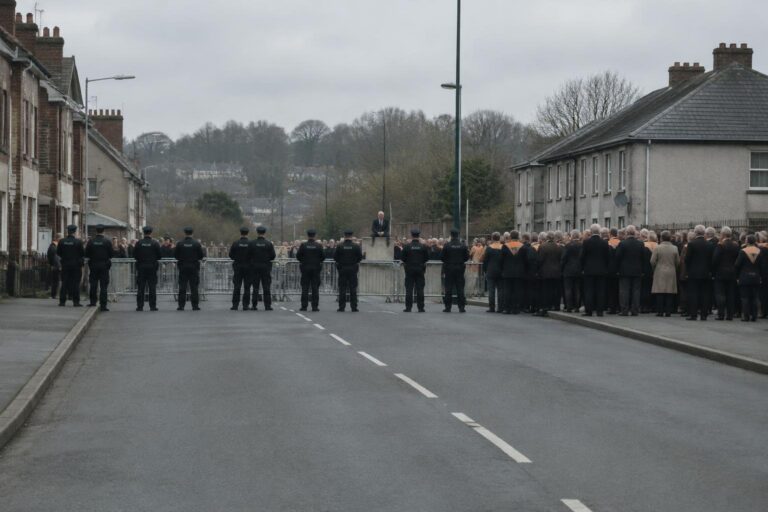
The long-running dispute over the Orange Order’s Drumcree procession reached a dramatic turning point on Monday, 10 October 2026. After two weeks of police containment on Garvaghy Road in PortadownSir Chris Bryant Secretary of State for Northern Ireland, exercised his statutory power to cancel the march.
The decision followed a stark warning from Chief Constable Jon Boutcher that any attempt to force the parade would risk “serious injury, disorder and a wider contagion effect across Northern Ireland”.
Legal basis for the ban and immediate reaction
Under the Public Processions (Northern Ireland) Act 1998 the Secretary of State can overturn a determination made by the Parades Commission.
The Commission had, for the first time since 1998, approved the Orange Order’s right to march down Garvaghy Road on 27 September, albeit with restrictions. Sir Chris Bryant explained that the chief constable’s assessment rendered the original determination “no longer of enduring legal effect”.
He added that the “public interest” required the procession to be halted, emphasizing that those who broke the law would face the full consequences.
Political fallout and community response
The ban immediately split the political landscape. First Minister Michelle O’Neill praised the decision, stating she would “go through the process” and that the outcome was “the right decision”. Sinn Féin and the SDLP welcomed the move, while unionist parties blasted it as capitulation to “mob rule”. DUP leader Gavin Robinson demanded an explanation from the Secretary of State and warned against allowing the situation to erode confidence in the rule of law. DUP MP Carla Lockhart even hinted that “profound consequences” could follow, including the possible removal of Ms. O’Neill from office.
Grassroots voices on the ground
Residents of Garvaghy Road gathered in a community hall after the announcement, expressing a mixture of relief and lingering sorrow. Brendan Mac Cionnaith spokesperson for the Garvaghy Road Residents Coalition, described the verdict as a “win” but cautioned that the community must remember the “price paid” over decades of tension. Meanwhile, loyalist activist Jamie Bryson led a delegation to the Royal Courts of Justice in Belfast, seeking urgent judicial review of the Secretary of State’s order.
Judicial review and upcoming court dates
Late on Friday, the Orange Order filed a request for judicial review, arguing that Sir Chris Bryant’s use of the 1998 Act was “unlawful and irrational”. On Saturday, Lady Justice McBride addressed the delegation, noting that while the matter was “important” and required urgency, it was not an emergency, and the hearing would be scheduled for the following Monday. The court will need to assess whether the Secretary of State acted within his powers and whether the residents’ challenge to the Parades Commission’s original decision can proceed.
Legal scholars note that the case pivots on two questions: first, whether the Secretary of State can withdraw a right that the Commission had already granted; second, whether the “public interest” rationale satisfies the statutory test. Lady Justice McBride emphasized that the timing – a matter of days rather than weeks – would not prejudice the parties, but the decision will set a precedent for future procession disputes.
Cost, policing and the wider picture
The policing operation accompanying the standoff has already cost roughly £3 million, according to the Police Service of Northern Ireland (PSNI). Officers have been instructed to issue letters to individuals “reasonably suspected” of involvement in unlawful protests, signalling a formal investigation into the recent blockades. The PSNI chief constable reiterated that a forced march could have “catastrophic long-term consequences for trust and confidence in policing, the Northern Ireland Executive and the peace process”.
With the court hearing set for Monday, the immediate future of the Drumcree march remains uncertain. Both sides have pledged to respect the rule of law, but the underlying communal mistrust that fueled the original 1990s riots still lingers. As the legal battle unfolds, the outcome will likely influence how future parades are negotiated, the scope of the Secretary of State’s powers, and the fragile balance of peace in post-conflict Northern Ireland.