Scotland is paying over a billion pounds to turn off wind farms, a cost that now eclipses the government's planned spend on new nuclear technology.
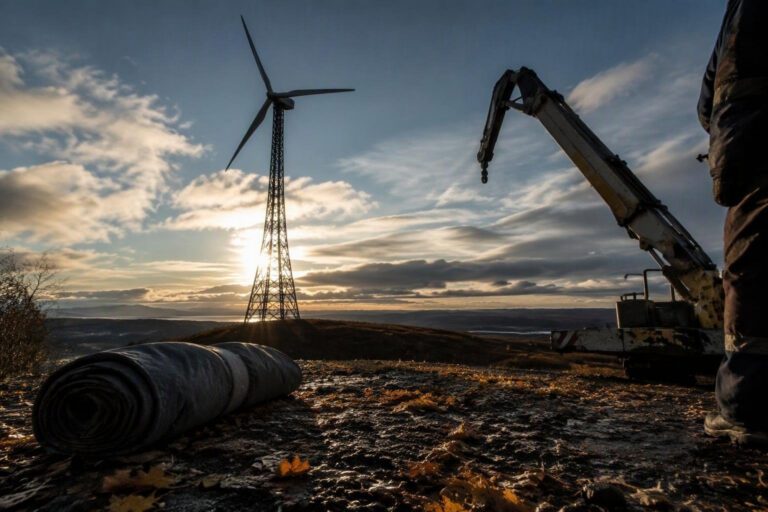
Since the start of the year, electricity generators in Scotland have been handed more than £1 billion in constraint payments – money paid to producers when the national grid cannot accept their power. The figure, released up to the end of August, marks a 60 per cent rise on the same period last year and is on track to reach £1.5 billion by year-end.
By contrast, the UK government’s announced budget for small modular reactors (SMRs) in Scotland stands at £2.8 billion a sum that will be spread across the remainder of the decade.
Constraint payments climb sharply in Scotland
In the twelve months ending August, the Treasury disbursed £1.04 billion in payments to wind farm operators, up from £648 million at the same point last year.
The rise is directly linked to stronger wind conditions: when turbines generate more electricity than the transmission network can move, system operators issue curtailment orders, triggering the payments. Since the 2022 shutdown of the Hunterston B nuclear plant, the volume of these payments has accelerated, after a modest £250 million were recorded in 2021, the year before the plant’s closure.
The mechanism behind the payments is simple but costly. Constraint payments are made to electricity generators when the grid is congested and cannot transport the power to where it is needed. When there is an excess of wind generation, the system must either store the electricity – a capability that remains limited – or pay producers to halt output, a practice that inflates the
Government’s SMR investment plan and site controversy
The Department for Energy Security and Net Zero has earmarked £2.8 billion for the development of SMRs, a technology promising compact, low-carbon baseload generation. Potential locations include the former nuclear sites of Torness, Hunterston and Dounreay, each already linked to the high-voltage transmission network. However, the rollout has hit a political snag: the Scottish government, which controls planning permission, has so far blocked the proposals, and the Scottish National Party (SNP) has publicly opposed new nuclear builds.
Tom Greatrex, chief executive of the Nuclear Industry Association, warned that “Scottish network costs are getting out of control”. He added, “Scotland shouldn’t pay twice as much to compensate wind generators as the UK is investing in SMRs. We should build back baseload power on the existing transmission corridors to hold down bills and get the jobs and investment that come with new nuclear.” His plea underscores a broader call for a “balanced mix of power sources” that can deliver both stability and affordability.
Future grid balance, transmission upgrades and cost outlook
The National Energy System Operator (NESO) forecasts that balancing costs could double by the end of the decade once Torness – Scotland’s last operating coal-derived plant – retires in 2030. Without additional baseload capacity, the system will rely increasingly on variable renewables, amplifying the need for expensive curtailment measures.
To mitigate the looming shortfall, billions of pounds are slated for new transmission infrastructure across Scotland. While these upgrades promise to relieve congestion and accommodate higher renewable output, the capital expense will be recouped through consumer electricity bills, adding another layer to the affordability debate.
A spokesperson for the Scottish government countered that “new nuclear is expensive, takes decades to deliver and produces radioactive material that needs to be securely stored for many years”. They emphasised that the devolved administration does not set constraint payments, which remain a UK-wide responsibility, and highlighted that renewable projects can be deployed more rapidly, citing examples elsewhere in the UK where nuclear costs have spiralled.
Meanwhile, a Department for Energy Security and Net Zero representative reiterated that “breaking the link with fossil fuels, upgrading our network and transitioning to clean power is the only way to bring down bills for good”. The department noted recent measures such as the removal of £150 million in costs and a temporary cut to VAT on electricity to ease household budgets.