

Uncover the complexities of the Philippines' political system and the crucial role of political parties in shaping its future.
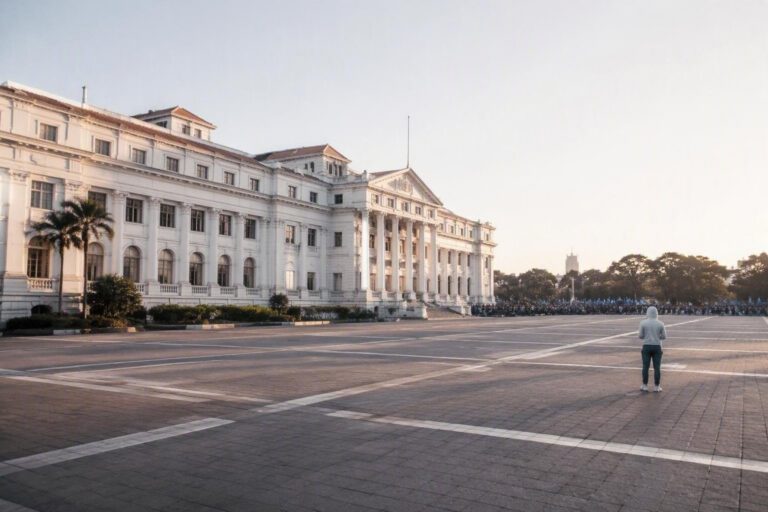
The Philippines is a nation brimming with politicians, yet it struggles with the absence of genuine political parties. This paradox is more than just an amusing quirk; it poses significant challenges to the country’s democratic framework. The call for a shift from a unitary-presidential system to a parliamentary system within a federal republic has been gaining traction, but there’s a catch: parliamentary government cannot thrive without real political parties.
Many Filipinos mistakenly believe that parliamentary government is merely about replacing the president with a prime minister. However, the fundamental difference lies in political accountability. In the current presidential system, a single, powerful national figure is elected for six years, assembling a cabinet and navigating a complex political landscape.
This often leads to a chaotic dance of shifting alliances and political opportunism.
The Illusion of Parliamentary Government
Imagine, for a moment, transplanting today’s political habits into a parliamentary system. The result would be a spectacle of shifting loyalties and opportunistic alliances, a testament to the Filipino knack for adapting institutions to local political culture.
The problem isn’t parliamentarism itself, but the attempt to graft parliamentary institutions onto a political culture rooted in personalities, patronage, and dynasties.
The Need for Genuine Political Parties
In a functioning parliamentary system, voters should choose parties based on their governing programs. The majority forms the government, with its leader becoming the prime minister, and ministers answerable to parliament. An organized opposition presents alternatives, ensuring continuous scrutiny and accountability. However, the cornerstone of this system is the existence of real political parties.
Without genuine parties, the machinery of parliamentary government collapses. Parties must stand for clear ideologies—whether it’s welfare versus markets, autonomy versus centralization, or higher taxes versus tax cuts. Elections should offer real choices, not just empty promises to end poverty, fight corruption, and create jobs. The serious question is how these goals will be achieved.
From Patronage to Program
The institutionalization of parties could revolutionize Philippine politics. Imagine politicians relying less on the favor of one president because their careers depend on strong parties with dues-paying members, transparent financing, and established procedures for selecting candidates. Picture aspiring leaders entering politics through parties that educate and train them, rather than through famous surnames. Envision political parties existing year-round, not just resurfacing every election cycle like Lazarus.
Elected representatives would be accountable not only to their campaign financiers but to thousands of ordinary party members who can demand explanations. This was the vision behind the Centrist Democratic Party (CDP), which aimed to foster membership ownership, political education, internal elections, party discipline, and continuous community engagement between elections.
Federalism and the Danger of Decentralized Oligarchies
Federalism, while promising to bring government closer to the people, could also decentralize political capture. Without safeguards, it might create several regional oligarchic systems, each with its own governor, dynasty, and family corporation masquerading as democracy. This would democratize feudalism, not democracy. To prevent this, political-party reform must precede federalism. It is a precondition, not an accessory.
First, we must build the vehicles of democracy—strong, principled political parties—that can navigate the complex terrain of Philippine politics. Only then can we hope to steer the nation towards a more accountable and responsive government.
