

Trump’s ‘sleep as energy’ act sparks laughter as Swiss legislators seek nap rooms to boost parliamentary performance.
The United States is grappling with an energy bottleneck that stretches from artificial intelligence data centers to cryptocurrency mining rigs. Amid a backdrop of geopolitical tension – notably a presidential blockade of the Strait of Hormuz – the White House introduced an unconventional remedy that bypassed legislation and executive orders alike.
Instead of a new bill, President Donald Trump staged what his team called an “executive listening position” during a briefing on an $18 billion steel plant in Iowa. As senior officials outlined the investment, the president lowered his eyelids, remaining motionless for several seconds.
Observers interpreted the gesture as a deliberate power-nap a claim later amplified by his adviser Natalie Harp.
Trump’s “sleep as energy” demonstration and public reaction
According to the White House narrative, the brief period of eye-closure was intended to illustrate a novel approach to the nation’s energy dilemma: conserving power through sleep.
Harp suggested that “if a president can listen without watching meetings end sooner, saving millions of hours that can be re-invested as additional rest, thereby generating more productivity.” The statement was delivered amid a low-frequency hiss – described as air flowing past the president’s soft palate – which added an almost theatrical quality to the moment.
Following the incident, a newly formed National Institute of Presidential Wakefulness announced a research program to determine whether information can be absorbed through closed eyelids. Health secretary Robert F. Kennedy Jr. admitted that early findings were inconclusive, emphasizing the need to allocate the $92 million budget quickly. Critics pointed to a series of previous public appearances in which Trump appeared to doze, while supporters argued that the president’s familiarity with every subject allowed him to “absorb new information without even looking at it.” Vice-president JD Vance, when pressed about the president’s REM state, responded with a terse “wake up and smell the coffee” before ordering the Secret Service to remove further questioning.
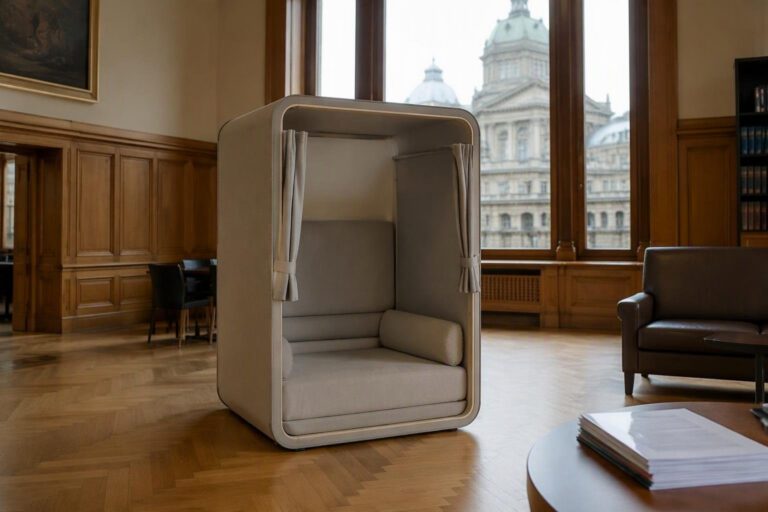
Swiss parliament study reveals reduced rest and proposes nap rooms
Half a world away, a separate sleep-related controversy unfolded in the Federal Palace of Switzerland. A project spearheaded by sleep scientist Björn Rasch of the University of Fribourg monitored 16 members of the National Council and Council of States. The data showed an average nightly sleep of six hours and ten minutes – roughly fifty minutes less than the legislators’ normal patterns. The shortfall was linked to late-night parliamentary sessions, after-hours aperitifs, and occasional reliance on sleeping pills.
Rasch argued that fatigue directly impairs decision-making, making lawmakers more prone to risky choices and less able to assimilate complex information. To counteract this, he proposed the creation of dedicated “+power-nap rooms” within the palace, allowing parliamentarians to take brief, restorative rests during the day. The rationale mirrors findings from corporate research that short naps can boost cognitive performance. Rasch also called for a broader national health strategy that treats sleep as a preventive measure, noting that chronic sleep deprivation is a warning sign for stress-related burnout.
Both episodes – the White House’s theatrical eye-closure and the Swiss parliament’s data-driven nap-room proposal – highlight a growing awareness that sleep, far from being a luxury, may be leveraged as a strategic asset. While Trump’s approach remains framed as a symbolic gesture, the Swiss initiative is rooted in empirical research and offers a concrete policy recommendation. Together they illustrate how leaders across the political spectrum are confronting the same physiological reality: staying awake long enough to govern effectively is increasingly difficult, and the search for practical solutions is gaining traction worldwide.
