Europe is battling its worst wildfire crisis on record, with Greece and France at the epicenter of devastating blazes driven by extreme weather conditions.
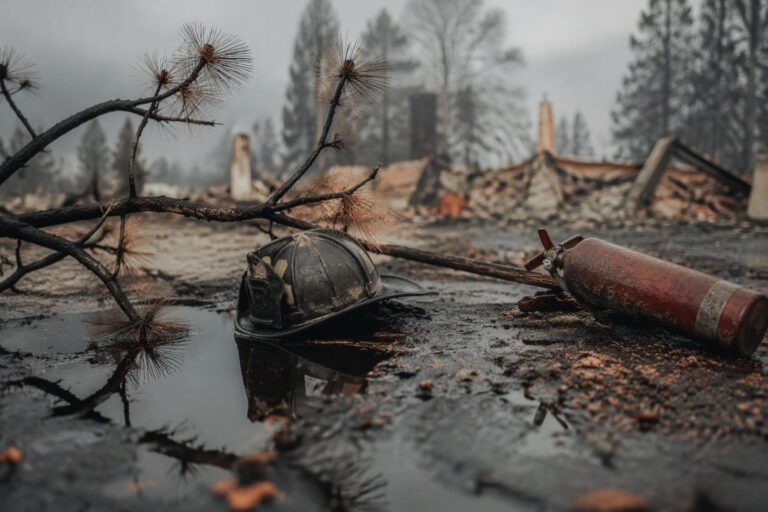
The wildfire crisis in Europe has reached a critical juncture, with Greece and France bearing the brunt of devastating blazes. As gale-force winds exacerbate the situation, communities are being evacuated, and firefighters are stretched to their limits. This crisis is unfolding against the backdrop of Europe’s fastest-warming continent, where climate change is intensifying the frequency and severity of wildfires.
The immediate danger is most acute in Greece, where violent gusts are driving flames deeper into western Attica, threatening villages and industrial districts. Meanwhile, France is guarding a still-burning scar four times the size of Paris, with active pockets continuing to pose a significant risk.
Spain, too, has seen major fires, though they have finally stopped advancing.
The Situation in Greece
In Greece, the wildfires have forced fresh evacuations as gale-force winds hamper firefighting efforts. The flames are advancing through western Attica, threatening villages along the Geraneia mountains and an industrial district outside Megara.
Nearly 500 firefighters and 23 aircraft are deployed, but the winds are strengthening the fire while crippling the response.
The winds are driving flames through dry forest and making it impossible for some aircraft to descend to the sea for water. Smoke is rising over the mountains as evacuation orders are issued for the communities of Kandili, Agia Skepi, and Toutouli. Prime Minister Kyriakos Mitsotakis is closely monitoring the operation, with particular concern for Porto Germeno, a seaside community on the Gulf of Corinth.
The fire began near Agios Vasileios on Friday before sweeping towards Porto Germeno and into the forested mountains west of Athens. Firefighters have evacuated 254 people by sea from Agios Vasileios and another 12 from Porto Germeno. Wildfire meteorologist Theodore Giannaros estimated that the blaze has affected 40 to 50 square kilometers, though authorities have not issued an official figure.
Local farmer Minas Tzortzanis expressed the devastation, stating, “A pristine forest, a paradise, was surrendered to the hands of the fire. There are no words to explain what has happened. Destruction. Total destruction.”
The Situation in France
France’s largest wildfire remains contained but is still burning after scorching 420 square kilometers of forest in just 10 days. The Gironde megafire has forced 224,000 people to flee, making it one of the largest civilian evacuations outside wartime. Active pockets still burn across the devastated forest, and nearly 3,000 firefighters are deployed against this blaze and a second, still-uncontained fire in Provence.
Dry conditions and soaring temperatures around Bordeaux, combined with afternoon winds, create a continued risk of renewed flames. Additional firefighters from Ukraine, Lithuania, and French Polynesia are expected to reinforce the operation. Hundreds of kilometers away, nearly 1,500 firefighters are battling a separate fire in the south-eastern Var department that tore through roughly 18 square kilometers in little more than a day.
Authorities say the fire in the Gros Bessillon hills was stabilized on Sunday morning, meaning its perimeter had not expanded overnight. However, unlike the Gironde fire, it has not yet been declared contained. Firefighting aircraft are supporting crews working to keep the flames away from villages among the vineyards, olive groves, and wooded hills of the region known as Green Provence.
About 2,500 people were evacuated as the fire threatened communities. The blaze was the fourth major fire to strike the central Var since July 19. A separate, smaller fire near Brignoles earlier in the week forced Hollywood actor George Clooney and his family, along with about 700 other residents, to evacuate before it was brought under control.
The Broader European Context
Fires in France and Spain alone have driven roughly a third of a million people from homes and tourist sites, emptied communities at the height of the European summer, and stretched firefighters, aircraft, and emergency services across simultaneous disasters. Europe entered 2026 after its worst wildfire year on record, with more than 10,000 square kilometers burned.
Wildfires cause estimated economic losses of about two billion euros in a typical year, according to the European Commission’s Joint Research Centre. The crisis is unfolding on the world’s fastest-warming continent. Europe has warmed at more than twice the global average since the 1980s, according to the European Union’s Copernicus Climate Change Service.
Human-caused climate change doubled the likelihood of the extreme fire conditions that fueled the French blazes, scientists at World Weather Attribution calculated in a rapid analysis on Thursday while the fires were still burning. The crisis highlights the urgent need for global action to address climate change and its devastating impacts.