Tunisia faces renewed protests as economic hardships and political repression intensify, reviving demands from the 2011 revolution.
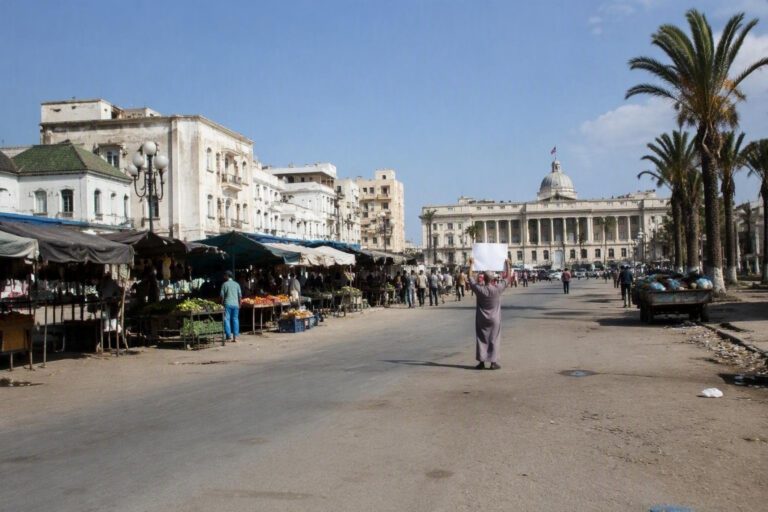
Tunisia, a nation that once inspired the Arab Spring, finds itself at a crossroads. Fifteen years after the revolution that toppled President Zine El Abidine Ben Ali, familiar cries for employmentfreedom and national dignity echo through its streets. However, the context has shifted dramatically, with President Kais Saied’s centralized rule exacerbating economic woes and stifling dissent.
This summer, Tunisia grappled with extreme temperatures, reaching a scorching 49.8°C (121.6°F) in Kairouan. The heat wave exposed the fragility of the country’s infrastructure, leading to widespread electricity outages and water shortages. The Tunisian Company of Electricity and Gas implemented rotating power cuts, further straining households already burdened by rising prices and medicine shortages.
The Unfulfilled Promises of Political Reform
On July 25, 2021 President Kais Saied suspended parliament, dismissed the government, and began ruling by decree. His actions, framed as necessary to end political paralysis, initially garnered support from a populace weary of corruption and inefficiency.
However, five years later, the promised economic turnaround has yet to materialize.
The decade following Ben Ali’s ouster brought competitive elections and greater civil liberties, but also frequent government changes and persistent economic challenges. Unemployment remained high, particularly among youth and in rural areas, while public services deteriorated. By the end of 2020, unemployment stood at 17.4 percent according to the World Bank.
Saied’s consolidation of power, including the adoption of a new constitution in 2022, has significantly strengthened presidential authority. However, this centralization has come at the cost of judicial independence and civil liberties. Opposition figures, journalists, and activists have faced prosecution in cases criticized as politically motivated by groups like Human Rights Watch.
The ‘Conspiracy Case’ and the Erosion of Dissent
The so-called ‘conspiracy case’ has become emblematic of the crackdown on dissent. In April 2025 a Tunis court sentenced 37 defendants to prison terms ranging from four to 66 years for alleged involvement in a plot against state security. On November 27, 2025 an appeals court upheld convictions against 34 of the 37 defendants sentencing them to between five and 45 years in prison.
Critics argue that the case is part of a broader effort to silence opposition. The authorities, however, maintain that the defendants were prosecuted for serious offenses against state security. The erosion of judicial independence, marked by the dissolution of the independent High Judicial Council and the arbitrary dismissal of judges, has further undermined public trust in the legal system.
Economic Hardships and Political Repression
The current protests in Tunisia are not confined to traditional opposition groups. The Nafas movement which has organized recent demonstrations, seeks to unite political parties and independent figures beyond the established opposition. These protests have attracted citizens who had not previously engaged in political activism.
For many Tunisians, the shortages of water and electricity are part of a broader struggle to afford basic necessities. The extreme heat has also strained the healthcare system, with doctors warning of increased pressure on emergency departments. The economic hardship, coupled with political repression, has left many feeling disillusioned.
Journalist Manel Derbali highlights the shrinking space for dissent. After the 2011 revolution, Tunisians gained new freedoms and access to information. However, since Saied’s power grab, journalists and activists have faced increasing restrictions, with official bodies often leaving requests unanswered for months.
The protests show how economic and political grievances are increasingly intertwined. Before 2021, Tunisians could blame a democratic system they saw as ineffective. After 2021, Saied dismantled much of that system, promising better governance. Five years later, many of the same grievances persist, but the avenues for addressing them have narrowed.
The demands of the 2011 revolution—employmentfreedom and national dignity—remain unresolved. As Tunisia grapples with economic hardships and political repression, the future of the nation hangs in the balance.