Trump's visit to Beijing combined imperial-style pageantry with urgent conversations on Taiwan, AI export controls and critical mineral dependencies
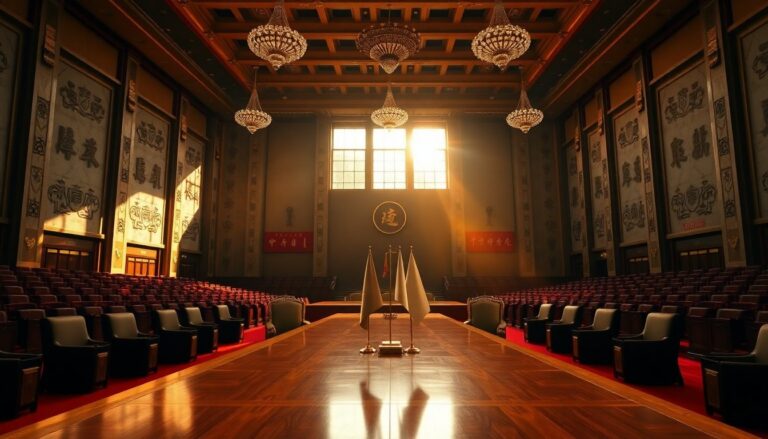
The meeting between President Donald Trump and President Xi Jinping in Beijing on May 14, 2026 began with spectacular state ceremony and quickly shifted to serious diplomacy. At the Great Hall of the People, a military band, cannon salutes and schoolchildren waving flags created a dramatic backdrop to an encounter that mixed theatre with strategy.
Xi opened the talks with a reference to the Thucydides Trap, an idea that warns of the danger when an established power perceives a rising rival as a threat. That framing set the tone: leaders who staged impressive visuals also brought stark cautions about the risks of confrontation.
After roughly twenty minutes of public spectacle, the two presidents moved into a private, roughly two-hour bilateral session attended by senior cabinet officials and a delegation of major U.S. business leaders. Executives from companies such as Tesla, Apple and Nvidia joined portions of the discussions, underscoring the economic dimension of the visit.
According to a White House summary, topics ranged from expanding market access and encouraging Chinese investment to stepping up cooperation to stop the flow of fentanyl precursors. Both sides also discussed energy security—notably the need to keep the Strait of Hormuz open—and reiterated that Iran must never acquire a nuclear weapon. It was Mr. Trump’s first face-to-face with Mr. Xi since the Iran war erupted on February 28.
Ceremony, symbolism and diplomatic signals
The public portion of the visit was heavy on symbolism: ceremonial troops, orchestrated salutes and a red-and-gold dais that highlighted national pride on both sides. For observers, these rituals were not merely decorative; they were a form of communication. The warm handshake and the president’s visible enjoyment of the hospitality signaled a desire to keep channels open, while Xi’s classical reference warned that cordial photo-ops do not eliminate strategic friction. The use of formal military honors conveyed Beijing’s confidence in projecting state power, even as officials sought to shepherd the discussions toward practical cooperation on trade and security.
Pageantry with purpose
Beyond optics, the inclusion of American corporate leaders in the meeting conveyed a dual message: both governments recognize the economic stakes and want business to play a constructive role. The presence of chief executives underscored how trade, investment and technology access are central bargaining chips. At the same time, the display of domestic support—students waving flags, synchronized proceedings—was a reminder that domestic legitimacy and national image remain critical considerations for leaders on both sides as they negotiate sensitive issues.
Core issues: Taiwan, tariffs and technology
At the heart of the private talks were disputes that could alter the trajectory of U.S.-China ties. Xi cautioned that mishandling Taiwan could push relations into a dangerous zone; Trump pressed for greater access for American businesses and relief from trade measures. Equally consequential was the technology portfolio: China has long sought relief from U.S. restrictions on advanced components, while Washington wants assurances that sensitive tools will not accelerate military competition. These competing priorities made the summit less about immediate settlements and more about setting boundaries and expectations for future negotiations.
AI talks and strategic leverage
Artificial intelligence emerged as a critical theater of contention. U.S. specialists argue that the United States retains a lead in large models—an advantage measured in months of developmental headway—which can translate into operational superiority in both commercial and defense applications. Experts have recommended pairing a narrowly focused AI safety dialogue with a robust tightening of export controls to widen the lead and create incentives for Beijing to comply with future safety commitments. The logic is straightforward: a larger capability gap increases the effectiveness of verification and deterrence, while rushed technology transfers could shorten that window and raise global risks.
Supply chains, critical minerals and energy resilience
Beyond chips and code, the summit highlighted structural dependencies in raw materials. China’s dominance in critical minerals and permanent magnet production gives it leverage over high-tech manufacturing and defense replenishment, an imbalance magnified by U.S. munitions use in recent conflicts. The White House and Beijing discussed ways to stabilize supply and increase purchases of U.S. energy to reduce reliance on chokepoints. These conversations reflect a recognition that geopolitical competition increasingly runs through supply chains, not just tariffs or military deployments.
In the end, the Beijing summit combined pageantry with substantive negotiation: ceremonial gestures opened the door to candid exchanges on security, technology and trade. Neither side left with a sweeping agreement, but both signaled an interest in managing rivalry and preventing escalation. Observers will now watch whether the meeting spawns narrow technical dialogues on AI safety and tighter export controls, or whether strategic competition continues to intensify around critical minerals and Taiwan—issues that will shape the relationship long after the headlines fade.