

Practical two-year vocational courses in sport and public services that combine expert coaching, specialist options and work placements to launch careers or progression to higher study.
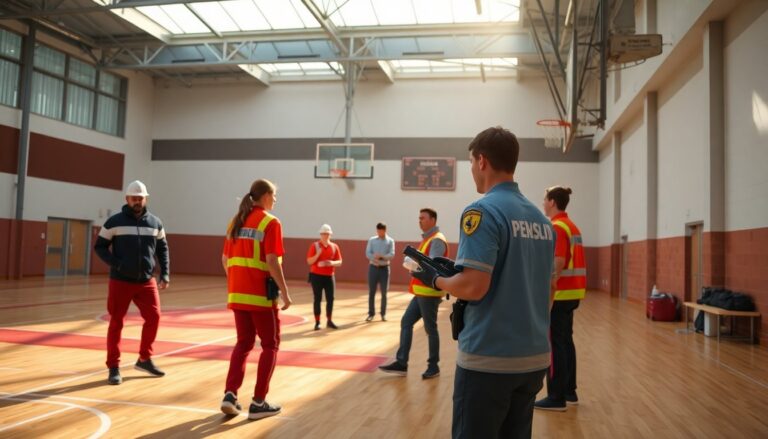
The college runs focused two-year vocational programmes that prepare students for careers or further study in the sport and public services sectors. Each course combines practical training with theoretical study to develop job-ready skills for roles such as fitness instructor, sports coach and positions within the emergency services and uniformed professions.
Both Level 2 and Level 3 routes include supervised coaching, workplace-style assessments and mandatory placements that reflect industry standards. Students progress through structured modules that embed the core employability qualities of commitment, collaboration, confidence and resilience into classroom sessions and enrichment activity.
Level 3 sport: specialist pathways and professional preparation
Facilities, coaching and enrichment
The programme is delivered in purpose-built practical spaces, including a performance gym, treatment rooms and multi-use sports halls. These facilities support repeated practice of hands-on skills and simulated workplace scenarios.
Specialist coaches and qualified practitioners deliver tuition and mentorship. Teaching combines structured practical sessions with applied theory to reinforce skill transfer into employment settings.
Enrichment opportunities extend classroom learning. Regular workshops, employer visits and short industry placements provide real-world context and professional networking.
Assessment uses industry-standard tasks and portfolios to demonstrate competency. External associations and awarding bodies validate vocational outcomes and support progression to employment or higher study.
Pathway-specific enrichment includes live client clinics for the sport massage pathway, supervised group training sessions for the fitness instructing pathway and coaching placements with local clubs for the sports coaching pathway. Each option emphasises practical experience and professional standards.
Past learners complete accredited first aid and safeguarding units as part of programme requirements. These credentials enhance employability and meet common employer expectations across the sector.
Building on these credentials, the programme operates from a dedicated sport centre equipped for practical training and performance work. Tutors bring elite-level experience to classroom and field instruction. The curriculum includes guest masterclasses from industry professionals, practical trips and structured work-experience placements designed to strengthen employability.
Learners may join sports academies that provide two hours per week of expert coaching. Sessions focus on technical and tactical practice, strength and conditioning, personalised training plans and performance analysis. Coaching uses measured targets and video review to track progress.
Curriculum, assessment and progression
The curriculum aligns with industry standards and employer expectations across the sector. Teaching combines practical modules, classroom theory and supervised placement activity. Assessment is competency-based and uses a mix of observed practice, written assignments and practical examinations.
Progression routes include advanced vocational study, higher education and direct entry to coaching, fitness and sports support roles. Ongoing employer engagement helps ensure the programme stays relevant to workplace needs and evolving professional standards.
A programme grounded in ongoing employer engagement prepares learners for workplace standards and evolving industry expectations. Key curriculum areas include anatomy and physiology, fitness training, sports massage, sports leadership, sports psychology and sports coaching. Assessment reflects real job tasks and comprises written reports, practical demonstrations, professional discussions and presentations. A practical question follows: how closely do assessments reproduce workplace demands? The answer is deliberate alignment, with tasks designed to mirror typical employer requirements. In year two, learners may add accredited qualifications such as a Level 3 diploma in sports massage, a Level 2 certificate in gym-based exercise or a coaching certificate to strengthen employability.
Level 2 sport: foundation skills and academy involvement
The Level 2 sport pathway offers a structured introduction for learners beginning a vocational route into sport. It covers participation, anatomy and physiology for exercise, healthy exercise and nutrition, basic fitness and injury management, sport and society, and an introduction to business concepts relevant to the sector. The programme also includes outdoor and adventurous activities to build practical confidence and resilience.
Students may access sports academy sessions run by fully qualified FA staff. Those sessions focus on skill development, conditioning and competitive fixtures. Assessment mixes practical tasks and written assignments to consolidate technical ability and develop transferable skills such as teamwork and clear communication. Many learners use the certificate to progress to Level 3 study or to add vocational qualifications, like a gym-based exercise certificate or a coaching award, that strengthen immediate employability.
Public services level 3: preparing for uniformed careers
The public services Level 3 pathway prepares students for careers in uniformed and civil protection roles. The curriculum emphasises operational awareness, leadership under pressure, and sector-specific procedures. Practical training and scenario-based assessment simulate workplace conditions and test decision-making, communication and fitness standards required by employers. Pathways commonly support progression to apprenticeships, higher education or direct recruitment to public service roles.
Building on pathways that lead to apprenticeships, higher education or direct recruitment to public service roles, the Level 3 public services course prepares learners for uniformed-sector careers and related study areas.
Practical experiences and assessments
The programme targets learners aiming for roles in policing, fire and rescue, the armed forces and custodial services. It emphasises realistic, workplace-relevant tasks and the behaviours expected by emergency and uniformed services.
Students take part in practical activities such as rock climbing, hill walking, canoeing and kayaking. They also visit local training facilities, including a fire training centre, to observe and practise operational procedures. Guest speakers from the police, armed forces and the prison service deliver career briefings and practical insight.
Assessment is coursework-based with no formal written exams. Methods include role play, presentations and written assignments that replicate workplace scenarios. Evaluations measure applied skills, decision-making and adherence to professional standards.
The course places particular emphasis on self-discipline, appropriate conduct and maintaining fitness for role. These competencies are developed through repeated practical tasks, simulated incidents and reflective written work.
Uniforms, equipment and entry requirements
Students follow a standard uniform policy for lessons and practical training. Walking boots or army-style boots are required for navigation and outdoor exercises. Protective kit is supplied for specialist tasks, but students must provide basic personal kit such as socks and underlayers.
Entry to Level 3 routes typically requires five GCSEs at grades 9–4, including English language. Applicants may alternatively present a 9–4 in English plus a Merit in a relevant Level 2 qualification. Providers also expect an active interest in sport or public service careers and regular participation in organised training.
Programmes may require pre-enrolment checks. These commonly include identity verification, a basic fitness or medical screening and a criminal record check where placements involve vulnerable people. Candidates should confirm specific requirements with the course provider before applying.
Assessment, placements and careers
Assessment combines practical observation, simulated incidents and written reflection. Tutors use defined criteria to judge competence in skills such as leadership, navigation and first aid. Summative assessments occur at planned points and inform final grading.
Work placements form a core component of the course. Providers arrange placements with local emergency services, cadet units or community organisations. Placement durations vary but are designed to expose students to operational routines and professional standards.
Placement participation depends on meeting safeguarding and health checks. Students must complete any mandatory training and documentation before attending on-site duties. Providers normally give clear timelines for these requirements.
Graduates move into a range of roles in the uniformed and public service sectors, or progress to higher-level study and apprenticeships. Employers prioritise demonstrable practical competence, teamwork and reliability when recruiting from these programmes.
Future developments in the sector emphasise vocational assessment and industry partnerships to align course outcomes with employer needs.
Work experience and career pathways
Students follow workplace-style assessment methods and a mandatory five-day work placement to support transition into employment. These elements build practical skills and align outcomes with employer expectations. The college supplements course activities with an enrichment programme designed to enhance personal development and employability.
Learners should expect to commit about 15 hours per week to private study in addition to timetabled sessions. Career routes from the programmes include roles such as personal trainer, sports development officer and fitness instructor, and positions in the police, fire service or armed forces. Enrichment options — from performing arts and clubs to badminton, cricket, football, netball, volleyball and table tennis — are linked to the college’s Positive Futures activities, employer talks and placement opportunities to increase work readiness.
