

A recent on-ice incident saw Team GB penalised for a double touch after heightened attention from a separate Canada-Sweden clash. Officials, technology and player reactions have all played a role in the unfolding drama.
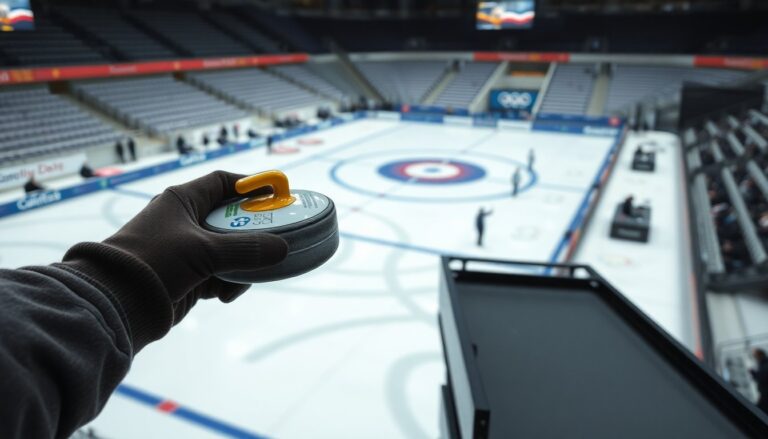
Video reviews and electronic sensors are reshaping tight moments in Olympic curling — and not always quietly. After a heated Canada–Sweden exchange, officials at the Winter Olympics tightened enforcement of delivery rules. That shift produced a high-profile midgame decision: a Team GB stone was removed after footage appeared to show contact with the granite following release.
What happened
– During a match against Germany, camera angles showed a finger brushing the stone after it had crossed the hog line. Referees removed the delivered stone under double-touch rules. Team GB accepted the call and went on to win the game, but the episode quickly became a talking point.
– Crucially, the opposing team did not lodge a formal protest; the ruling came after officials reviewed visual evidence and sensor readings under the newer, stricter approach to enforcement.
Why this matters
– Elite curling is now being policed more visibly: marginal technical infractions that might once have gone unnoticed are getting replay scrutiny and immediate intervention.
– Referees are under pressure to be consistent after the earlier Canada–Sweden row. That episode — which featured on-ice exchanges picked up by mics and amplified by broadcasters — prompted organisers to make clearer calls and show they are applying the rules evenly.
The rules in plain language
– Hog line: the stone must be released by the time it reaches the hog line.
– Double touch (or post-release contact): if a delivered stone is touched in a way that affects play and later contacts another stone, officials can remove the delivered stone and restore any displaced stones.
– World Curling has reiterated these procedures and is applying them more strictly at high-profile events.
Technology and the judgment call
– Modern stones often include sensors that register handle release and certain contacts, but sensors don’t always catch body contact with the granite. Meanwhile broadcasters use high-frame-rate cameras that can show fleeting touches the sensors miss.
– That gap leaves referees balancing device readouts against slow-motion footage. Combining both sources improves accuracy but complicates on-ice timing and public perception: viewers see replays and expect immediate, clear outcomes.
Voices from the rink
– Bruce Mouat (Team GB) said fairness matters and urged consistent officiating. He described such disputes as avoidable when standards are applied evenly.
– Marc Kennedy (Canada), involved in the earlier row, defended his actions and rejected claims of wrongdoing. Swedish players maintained their complaint was justified.
– Broadcasters apologised on air after profanity from the Canada–Sweden exchange was picked up by live mics. World Curling has warned teams that repeated inappropriate behaviour could bring sanctions.
What experts say
– Engineers note current sensors weren’t designed to detect every kind of contact; placement and thresholds matter. Technical committees are considering sensor calibration, multi-angle video standards, and clearer overturn thresholds.
– Coaches and teams are already adapting: training now includes drills to polish release technique and simulated officiating scenarios so players can perform cleanly under closer scrutiny.
Where this could lead
– Expect pilots of improved sensor setups, standardized video review protocols, and clearer on-ice communication from officials. Technical committees will collect test data and may propose formal rule or tech changes before the next major events.
– The governing bodies face two linked goals: protect competitive integrity and keep matches flowing for players and viewers. Transparent procedures and consistent application will be essential to restore confidence. With cameras and sensors feeding instant replay, referees are quicker to intervene, and teams must adapt. Whether that produces calmer, fairer competition or a new battleground over technology remains to be seen — but the sport is entering a period of rapid procedural and technical change.
