Motor shows keep shaping cars by sparking new tech, powering industry trends and steering public perception – a pulse that keeps every major browse top of the engineering queue.
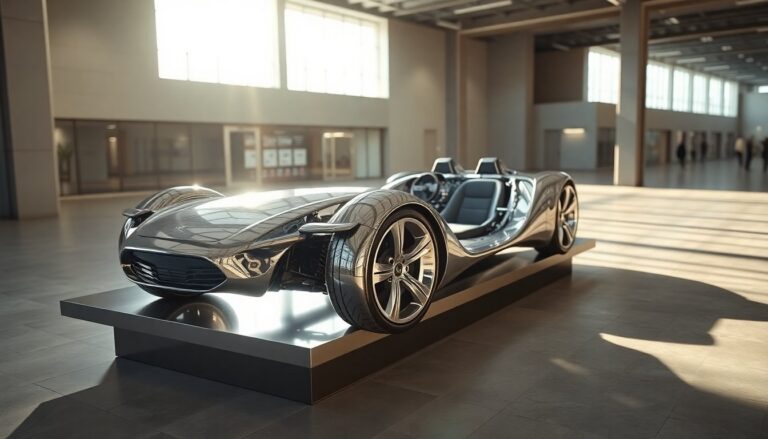
When the world of cars looks sideways at an Expo, it’s rarely just a display of shiny bodies. From prototype globes on rust-free catwalks to electric engines roaring at the stalls, the on-site buzz translates into tomorrow’s market waves.
A single tow behind a show floor can keep a whole sector awake.
Why motor shows aren’t dying out
Every August, the corridors of the Geneva Motor Show have grown shorter, yet the lines outside remain. That marked proof shows that fans still cling to that instant of excitement when the curtain lifts on a fresh concept.
Here, advertising meets innovation and the level of consumer abandonment remains high.
From my experience, even a single model screened on the big screen ripple backwards dozens of production schedules. The silicon of the new battery system displayed in Paris found its way into the next year’s street-legal line-up.
Carmakers count the measured applause as a market-trigger, not just a crowd-paying demo.
Igniting innovation at the show floor
Players from small-scale designers to global giants test legitimacy in a proof-of-concept environment. A single folding seat or anti-collision prototype can feel like a technological lighthouse, drawing engineers and planners to a new direction. Those working in the field know that, without the public presentation, iteration can stall for years.
Moreover, electric vehicle rollout has largely found its voice in the Expo halls: a NASA-level hawk-eye view on battery range and energy efficiency is now a standard product pitch. Designers negotiate materials and safety compliance in the same room where the market dictates what future cars will carry.
Economic ripple effects beyond the gate
Dealer inventories adjust to the headlining models unveiled at stations
like Detroit’s 2023 showcase. A 2025 model launched in Berlin can suddenly increase volume in one continent and create a surplus of localization jobs in another. That shift is invisible behind a bustle of promotional vans, but the regional links are strong: local suppliers, logistics and after-sales hubs bear the consequences of chassis choice and assembly line changes.
Substitutes such as autonomous driving modules, renewable fuels or even autonomous platform leasing are now part of the bargaining board. Automotive producers migrate supply-chain grunt to intangible, software-heavy items. In industry language, that makes the product of a factory shorter, sometimes even shorter than the chassis itself.
Future shows in the digital age
When a video launch can unskip a 20-minute keynote or a social-media clip can crush the kitchen table, physical meets digital. Exhibitors now finance immersive VR arenas, while virtual touring has become a regular chore in demo strategies. Yet the core remains the same: proof of concept and credibility through the tactile experience.
Direct experience shows that the fusing of on-site hull-shifting marketing and remote demonstration keeps buzz alive for longer than the 12-hour festival. Meanwhile, data leaks from these experiments provide real-time sentiment moments that shift next-year strategy in dashboards.