A practical guide to the homework, provenance checks, inspection essentials, estimate decoding, bidding psychology, and post-sale costs of buying a vintage car at auction
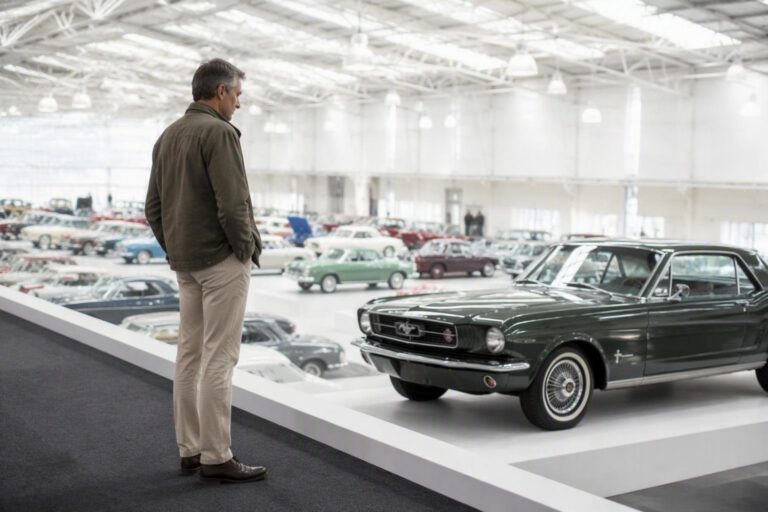
How to prepare for vintage car auctions and values guide 101
Vintage car auctions bring together passion, competition and financial risk. At its simplest, a vintage car auction is a marketplace where vehicles exchange hands through competitive bidding rather than fixed-price negotiation.
Buyers and sellers converge around lot catalogues, condition reports and public sale rooms or online platforms; understanding the mechanics and vocabulary of that marketplace is the first step to making informed decisions.
This guide explains why careful preparation is essential, what to check about a car’s history and condition, how to interpret auction estimates and fees, and how market cycles and bidding psychology influence outcomes.
It previews structured sections on pre-auction homework, provenance checks, inspection essentials, estimate and fee decoding, bidding strategy, and post-sale costs to give a complete, practical roadmap for prospective buyers.
Pre-auction homework and research
Effective preparation begins with focused research: compile the lot list, read every catalogue entry, and cross-reference the car with independent registries, marque clubs and prior sale records.
Use the auction house catalogue as a starting point but seek machine-readable records, vintage registries, and owner forums to triangulate information. Create a checklist that includes the car’s matching numbers, service history, restoration receipts, and any known periods out of use. Set a clear maximum bid based on condition, rarity and comparable sales, and factor in taxes, commissions and transport—this prevents emotionally driven overspending during the sale.
Provenance checks and documentation essentials
Provenance is the documented chain of ownership and events that link a vehicle to its historical identity and significance. Verify title documents, past registration papers, maintenance invoices and any certificate of authenticity issued by a recognized authority or marque club. Pay attention to gap years in ownership records, undocumented restorations, or inconsistent chassis and engine numbers; any discrepancy can materially affect value. When available, request photographic evidence of matching numbers, factory build sheets or original warranty cards. If doubts remain, consider commissioning a professional provenance report or contacting a marque specialist for an independent assessment.
Inspection essentials and condition reporting
On-site inspection or a trusted third-party inspection is indispensable. A thorough inspection covers bodyshell integrity, matching numbers verification, rust and corrosion mapping, mechanical condition, and the authenticity of trim and fittings. Use a structured template to record paint thickness readings, evidence of repairs, suspension and underbody condition, and engine compression tests where possible. Condition reports from auction houses are useful but often optimistic; treat them as summaries rather than definitive technical appraisals. For high-value lots, commission a specialist who can deliver a written report, photographs and repair-cost estimates that can be used to refine the maximum bid.
Decoding estimate bands, fees and market cycles
Auction house estimates represent a probable price range based on recent comparable sales and the house’s marketing strategy. Interpret the estimate band as an informative signal rather than a price guarantee: the lower estimate suggests a likely floor, the upper estimate signals aspirational value. Factor in the buyer’s premium, transaction taxes, export clearance and shipping—these additional costs often add a significant percentage to the hammer price. Understand that vintage car values follow long cycles tied to collectability, rarity, and broader economic conditions; a car that is desirable in one cycle can underperform in another. Use multiple comparables across cycles to set realistic expectations.
Bidding psychology and practical strategies
Bidding at auction is a behavioral contest. Emotions, momentum and anchoring can push prices beyond intrinsic value. Adopt disciplined tactics: register absentee or telephone bids when appropriate, set and adhere to a strict ceiling price, and avoid open escalation strategies that reveal maximum willingness to pay. If bidding in the room, position calmly and observe other participants for signaling patterns. Consider placing a pre-auction reserve offer with the seller or using proxy bidding tools that escalate only when necessary. Remember that winning the lot is not always the best outcome if it exceeds the pre-determined budget.
Post-sale costs, transfer and ownership considerations
After the gavel falls, account for immediate and ongoing costs: payment of buyer’s premium, taxes and duties, transport to a secure facility, storage, insurance, and any remedial work uncovered by a post-purchase inspection. Plan for registration or titling delays if numbers require re-verification. Establish a maintenance schedule and a budget for parts that may be rare or require fabrication. If resale is part of the plan, document every repair and service to preserve provenance and future value—transparent records increase market confidence and can support higher prices when offered for sale.
Insights, exceptions and special cases
Certain categories of cars demand specialist handling: concours-level originals, race cars with competition histories, and rare coachbuilt examples may require unique provenance documents, bespoke transport, or specialist insurers. Cars with disputed provenance or extensive undocumented restoration often carry steeper due-diligence costs and carry resale risk; in such cases, a conservative valuation approach is usually warranted. For international purchases, import regulations, homologation and emissions rules can create unexpected hurdles—obtain local regulatory advice before bidding across borders.
Ultimately, success at vintage car auctions arises from disciplined preparation, rigorous provenance verification, meticulous inspection, clear understanding of costs and fees, and a controlled bid strategy that resists emotional escalation. With a documented process and realistic financial thresholds, collectors and buyers can make informed acquisitions that balance passion with prudence.